Customers who viewed this item also viewed
Download the free Kindle app and start reading Kindle books instantly on your smartphone, tablet or computer – no Kindle device required.
Read instantly on your browser with Kindle for Web.
Using your mobile phone camera - scan the code below and download the Kindle app.
Follow the authors
OK
Data Analysis: A Bayesian Tutorial
This text is intended as a tutorial guide for senior undergraduates and research students in science and engineering. After explaining the basic principles of Bayesian probability theory, their use is illustrated with a variety of examples ranging from elementary parameter estimation to image processing. Other topics covered include reliability analysis, multivariate optimization, least-squares and maximum likelihood, error-propagation, hypothesis testing, maximum entropy and experimental design.
The Second Edition of this successful tutorial book contains a new chapter on extensions to the ubiquitous least-squares procedure, allowing for the straightforward handling of outliers and unknown correlated noise, and a cutting-edge contribution from John Skilling on a novel numerical technique for Bayesian computation called 'nested sampling'.
- ISBN-100198568312
- ISBN-13978-0198568315
- Edition2nd
- PublisherOUP Oxford
- Publication date1 Jun. 2006
- LanguageEnglish
- Dimensions23.62 x 2.03 x 15.75 cm
- Print length260 pages
Customers who viewed this item also viewed
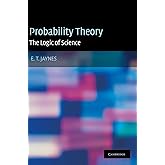
- Probability Theory: The Logic of ScienceHardcoverUSD 18.69 deliveryOnly 2 left in stock (more on the way).
Product description
Review
About the Author
Rutherford Appleton Laboratory
Chilton
Oxon
OX11 5DJ
John Skilling
Maximum Entropy Data Consultants
42 Southgate Street
Bury St Edmonds
Suffolk
IP33 2AZ
Product details
- Publisher : OUP Oxford
- Publication date : 1 Jun. 2006
- Edition : 2nd
- Language : English
- Print length : 260 pages
- ISBN-10 : 0198568312
- ISBN-13 : 978-0198568315
- Item weight : 522 g
- Dimensions : 23.62 x 2.03 x 15.75 cm
- Best Sellers Rank: 3,027,783 in Books (See Top 100 in Books)
- 687 in Engineering Physics
- 31,298 in Scientific, Technical & Medical
- Customer reviews:
About the authors

Discover more of the author’s books, see similar authors, read book recommendations and more.

Discover more of the author’s books, see similar authors, read book recommendations and more.

Discover more of the author’s books, see similar authors, read book recommendations and more.
Products related to this item
Customer reviews
Customer Reviews, including Product Star Ratings, help customers to learn more about the product and decide whether it is the right product for them.
To calculate the overall star rating and percentage breakdown by star, we don’t use a simple average. Instead, our system considers things like how recent a review is and if the reviewer bought the item on Amazon. It also analyses reviews to verify trustworthiness.
Learn more how customers reviews work on AmazonCustomers say
Generated from the text of customer reviewsSelect to learn more
Top reviews from the United Kingdom
- 5 out of 5 stars
the best introduction to practical Bayesian inference that exists
Reviewed in the United Kingdom on 13 April 2012I rarely write reviews on Amazon but I have to say here that of the many, many books on Bayesian theory and practice that I have read over 20 years of running a consultancy which specialises in the use of these techniques, this is certainly the best as an introduction to the modern approach to Bayesian thinking in scientific problems.
After the first chapter shows why the ideas are important and where they came from, it exudes practical advice rather then unnecessary theory and continues in a carefully-considered fashion developing the complexity and background until at the end we are exposed to some pretty advanced ideas where the appropriate level of theory is then injected.
Once you have absorbed the various messages thoroughly including e.g.
- the caveats
- how to specify realistic prior knowledge
- where approximations are useful and when they are not
you will be armed to use your own expert knowledge to attack problems which - although they may at first seem to be unmanageable - will be forced to yield to the subtlety and power of probability theory via Bayes' theorem if you can collect enough data of useful quality.
I disagree strongly with one of the other reviewers here who likes everything except the section on Nested Sampling by John Skilling at the end. It may be a little different in tone but the technique is sound, important and rather easy to implement, and variations have been making waves in difficult high-dimensional problems in areas such as astrophysics for years now. It has a bright future and this is an excellent introduction to it.
If you are interested in the modern Bayesian perspective and want real gravity, rigour and depth (along with long-winded bluster, humour and personal attacks on critics) then go for Jaynes' "Probability Theory: the Logic of Science"
Probability Theory: The Logic of Science: Principles and Elementary Applications Vol 1
which is the 'reference book' (though untypical in form & slightly unfinished) to support this excellent practical introduction.
20 people found this helpfulSending feedback...Sending feedback...HelpfulThank you for your feedback.Sorry, we failed to record your vote. Please try againThank you. We’ll investigate in the next few days.Sorry, We failed to report this review. Please try againWe’ll check if this review meets our community guidelinesOpens in a new tab. If it does not, we will remove it.
CancelReport - 5 out of 5 stars
Five Stars
Reviewed in the United Kingdom on 1 November 2016Good introductory book an Bayesian statistics.
Concise and quite complete, requires some background in calculus but very accessible book.
One person found this helpfulSending feedback...Sending feedback...HelpfulThank you for your feedback.Sorry, we failed to record your vote. Please try againThank you. We’ll investigate in the next few days.Sorry, We failed to report this review. Please try againWe’ll check if this review meets our community guidelinesOpens in a new tab. If it does not, we will remove it.
CancelReport - 4 out of 5 stars
Solid text with unsympathetic narrator
Reviewed in the United Kingdom on 12 August 2016A solid introduction but, as a statistician by trade, I detected more than a little bias towards the "Bayesian is great, everything else sucks" which plagues this type of text. An early dismissal of the concept of randomness without any real discussion was also particularly frustrating. The content is good but the writer comes across as more than a little arrogant. It does an excellent job mathematically and includes some C code (not something I'm familiar with so I can't comment on it's usefulness). There are also plenty of examples to illustrate the theory which is always nice.
Next time I would look for something a little more friendly, but the factual content is good.
Sending feedback...Sending feedback...HelpfulThank you for your feedback.Sorry, we failed to record your vote. Please try againThank you. We’ll investigate in the next few days.Sorry, We failed to report this review. Please try againWe’ll check if this review meets our community guidelinesOpens in a new tab. If it does not, we will remove it.
CancelReport - 5 out of 5 stars
Great book for applied Bayesian
Reviewed in the United Kingdom on 24 October 2016One of the best books in practical application of Bayesian statistics. It has clear examples and solutions applied.
One person found this helpfulSending feedback...Sending feedback...HelpfulThank you for your feedback.Sorry, we failed to record your vote. Please try againThank you. We’ll investigate in the next few days.Sorry, We failed to report this review. Please try againWe’ll check if this review meets our community guidelinesOpens in a new tab. If it does not, we will remove it.
CancelReport - 5 out of 5 stars
A must have book
Reviewed in the United Kingdom on 15 June 2013A must have book for the professional statistician who wants to aquire more knowledge about challenging aspects of the Bayesian inferences.
2 people found this helpfulSending feedback...Sending feedback...HelpfulThank you for your feedback.Sorry, we failed to record your vote. Please try againThank you. We’ll investigate in the next few days.Sorry, We failed to report this review. Please try againWe’ll check if this review meets our community guidelinesOpens in a new tab. If it does not, we will remove it.
CancelReport - 5 out of 5 stars
good book.
Reviewed in the United Kingdom on 30 September 2017One of my favourites. Well written, good book.
One person found this helpfulSending feedback...Sending feedback...HelpfulThank you for your feedback.Sorry, we failed to record your vote. Please try againThank you. We’ll investigate in the next few days.Sorry, We failed to report this review. Please try againWe’ll check if this review meets our community guidelinesOpens in a new tab. If it does not, we will remove it.
CancelReport - 5 out of 5 stars
A fantastic introduction to Bayesian analyses
Reviewed in the United Kingdom on 5 August 2010This is a _great_ book. The early chapters which introduce the broad concepts underlying Bayesian reasoning are particularly strong. Although it's aimed at students of physics, it would be useful to a much broader range of disciplines (I'm a psychiatrist which is about as far from physics as you can get...).
7 people found this helpfulSending feedback...Sending feedback...HelpfulThank you for your feedback.Sorry, we failed to record your vote. Please try againThank you. We’ll investigate in the next few days.Sorry, We failed to report this review. Please try againWe’ll check if this review meets our community guidelinesOpens in a new tab. If it does not, we will remove it.
CancelReport - 4 out of 5 stars
Kindle version
Reviewed in the United Kingdom on 20 September 2020Bought the "Kindle" version, my Kindle oasis says it's not supported on this device... I can read it on my iPad though. Annoying..
Sending feedback...Sending feedback...HelpfulThank you for your feedback.Sorry, we failed to record your vote. Please try againThank you. We’ll investigate in the next few days.Sorry, We failed to report this review. Please try againWe’ll check if this review meets our community guidelinesOpens in a new tab. If it does not, we will remove it.
CancelReport
Top reviews from other countries
Karina5 out of 5 starsGreat!
Reviewed in Belgium on 22 September 2025Great book, actually. It came in perfect condition. (:
Sending feedback...Thank you. We’ll investigate in the next few days.Sorry, We failed to report this review. Please try againWe’ll check if this review meets our community guidelinesOpens in a new tab. If it does not, we will remove it.
CancelReport
Matt5 out of 5 starsEvery STEM major should be familiar with this book
Reviewed in Canada on 16 April 2021Easily accessible step by step walkthrough of Bayesian data analysis and associated techniques and a good introductory resource that formalizes a lot of knowledge that may be imprecisely assumed. Every STEM graduate student could benefit by going through this in their spare time to elevate the quality of their data analysis.
Sending feedback...Thank you. We’ll investigate in the next few days.Sorry, We failed to report this review. Please try againWe’ll check if this review meets our community guidelinesOpens in a new tab. If it does not, we will remove it.
CancelReport
A user5 out of 5 starsAn excellent tutorial: not only introductory
Reviewed in Germany on 30 October 2024Beware: this high-quality text puts considerable demands on the reader's ability to comprehend and use mathematics. On the other hand, this is exactly what the text is for.
Numerous, excellent examples; almost all calculations are presented, so the reader can find a step if he/she missed one. Hence: a tutorial.
Highly recommended.
Sending feedback...Thank you. We’ll investigate in the next few days.Sorry, We failed to report this review. Please try againWe’ll check if this review meets our community guidelinesOpens in a new tab. If it does not, we will remove it.
CancelReport
Pedro Sandoval5 out of 5 starsRecomendable
Reviewed in Mexico on 24 October 2018Muy buena compra
Sending feedback...Thank you. We’ll investigate in the next few days.Sorry, We failed to report this review. Please try againWe’ll check if this review meets our community guidelinesOpens in a new tab. If it does not, we will remove it.
CancelReport
Francis5 out of 5 starsStrong text for students and practitioners alike
Reviewed in the United States on 13 December 2013This is a truly excellent text; it differentiates clearly between conventional statistical and probabilistic methods, and those unique to the Bayesian tradition(s). It provides clear examples, and walks the reader through procedures that might otherwise be most opaque. The authors' intentions are clearly to expound a tradition of academic and scientific excellence, rather than simply to produce a textbook for graduate students to work from.
Possible cons: This material is not easy to pick up. The authors make it as lucid as I, as a self-motivated student and researcher, can imagine it being in a text, but it is simply not easy material to work with. That being the case, one potential objection might be that in some cases the reader may not understand WHY a particular technique is important to use in the manner it is being described without significant reflection.
Cons aside: I recommend this book very highly to any serious student of probability and/or statistics, and to any mathematician or computer scientist who wants to expand her/his horizons and capabilities. It is possible that an advanced student of Bayesian methods might find most of the material in the book familiar, but it is unlikely that she/he will have learned ALL of it, or have a reference book readily available that is so clear about every topic included as this one. It is also uniquely affordable, for such a significant purchase.
Sending feedback...Thank you. We’ll investigate in the next few days.Sorry, We failed to report this review. Please try againWe’ll check if this review meets our community guidelinesOpens in a new tab. If it does not, we will remove it.
CancelReport