A recent legislative hearing covered the bases on the future funding of roads and bridges in Oklahoma. Most of the money comes from motor fuel taxes, but the rise in electric vehicles and a drop in fossil fuel consumption could mean funding will come up short to maintain the infrastructure safely.
Tulsa World’s Randy Krehbiel says lawmakers could consider an alternative tax source, such as a levy on miles driven, instead of capturing funding at the fuel pump.
Read the Tulsa World story here.
While the Oklahoma Employment Security Commission (OESC) was already planning a technology upgrade, the COVID-19 pandemic exposed just how dated the unemployment claims system was. On Tuesday, OESC announced a new technology upgrade plan that should be completed in 18 months.
 “Considering the constraints that come with 40-year-old technology, we are incredibly proud of the work we’ve been able to accomplish during this pandemic,” said Shelley Zumwalt, executive director of OESC. “We have made significant progress in streamlining the processes now, but there is much more work to be done. This digital transformation project will help OESC process claims quickly and help get Oklahomans the money they need.”
Some of the work on OESC’s systems began in recent months. The goal is to finish the upgrade by the end of the first quarter of 2022.
Zumwalt says this will improve on the previous technology rollout plan.
“We are focused on people first,” Zumwalt said. “That’s why we’ll be working hard over the next several months to ensure our systems and processes are up-to-date and meet the demands we’re seeing today. This plan is ambitious and aggressive, but way overdue. The previous technology modernization plan, the 5/39 Plan, was created pre-pandemic and did not anticipate the needs that arose with the pandemic. We’re looking at this transformation and its requirements from the viewpoint of what we have learned from the past six months and we have reworked the previous technology plan to meet the greater need of the state’s citizens for OESC services.”
Zumwalt hopes this will give the agency the ability to handle another tidal wave of unemployment claims in the future should the need arise.
“Our goal for our digital systems is to create something that is sustainable, supportable, scalable, standardized, and user-friendly,” Zumwalt said. “We want to build something to last.”
Congressman Markwayne Mullin has been working to ensure Native American Tribes have access to federal public health data on the same footing as a state government currently enjoys. The House passed H.R. 7948, the Tribal Health Data Improvement Act, on Tuesday.
 “Our sovereign Tribal Nations and Tribal Epidemiology Centers were always supposed to have equal access to public health data that states, counties, and cities have. But for years, many Tribes have faced numerous challenges while trying to access this public health data,” Mullin said. “Now more than ever, Tribes need access to this data in order to make decisions for their communities and the Tribal Health Data Improvement Act makes that happen. I am glad this bill passed the full House today and I encourage the Senate to take it up quickly so Tribes don’t have to wait any longer for the data they need.”
The measure now heads to the Senate for consideration.
By Congressman Tom Cole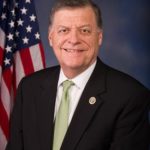
Throughout most of this year, the coronavirus pandemic has greatly disrupted our lives and dealt harsh hits to our economy out of nowhere. Sadly, some of the most ruthless economic hits have been felt by America’s small businesses. While the federal government has done a lot already to help save and sustain struggling small businesses and their workers, there is more that could be done if Speaker Nancy Pelosi would allow the U.S. House of Representatives to vote on a simple and commonsense piece of legislation related to the Paycheck Protection Program.
For background, the Trump Administration and Congress worked together earlier this year to create and provide initial funding for the Paycheck Protection Program (PPP) through passage of the CARES Act. As you might remember, once the PPP opened to potential applicants, it was so popular and successful that Congress replenished funding for the program just a few weeks later back in April. Since then, the PPP has saved approximately 51 million American jobs across the country. In Oklahoma alone, the PPP has directly helped more than 66,000 businesses stay afloat and retain their dedicated employees.
While funding that Congress provided specifically for the PPP is not yet used up, the program unfortunately became closed to new applications on August 8 – nearly two months ago. In fact, there is roughly $135 billion of unspent funds that could be helping small businesses if the program were reopened. Indeed, as the pandemic continues, pausing business as usual as we race toward a vaccine and cure, it is absolutely in our country’s best interest to keep existing resources available to our small business job creators. As the lifeblood of our economy, small businesses are key in our nation’s economic recovery in the short-term and the long-term.
Though a simple extension of the PPP shouldn’t be a point of contention, Speaker Pelosi has decided to make it one. Amid weeks of stalling meaningful negotiation with the Trump Administration for needed additional coronavirus relief, it seems Speaker Pelosi thinks it wise to hold a PPP extension hostage in the meantime. That approach is incredibly misguided. So too is her belief that Congress and the Administration must agree on everything before they can agree on anything in terms of another coronavirus relief bill. It’s worth noting that members of her own party are becoming dissatisfied with Speaker Pelosi’s tactics.
I certainly hope that Speaker Pelosi will change course and put the livelihoods of the American people first. A worthwhile place to start would be consideration of legislation authored and introduced by House Small Business Committee Ranking Member Steve Chabot. His legislation would simply extend the PPP through the end of the year, make some practical modifications to the application process and enable certain eligible businesses to apply for a second loan. Last week, I was proud to sign a discharge petition led by Congresswoman Jaime Herrera Beutler to allow a vote on the legislation. Once 218 signatures are collected, the petition will be able to force a vote in the House. While it is disappointing that Republicans must resort to a discharge petition to pressure Speaker Pelosi to free up money already provided and intended to aid small businesses, I am hopeful a majority of House members will sign it and allow this important vote to occur.
Again, this is not and should not be a controversial or partisan issue. It is a matter of protecting American livelihoods that remain at risk because of a deadly virus that originated in China. While we should all be encouraged by how rapidly the U.S. is racing toward a safe and effective vaccine to restore our way of life, struggling small business job creators need our help in the meantime. Congress can and should do its part by reopening the Paycheck Protection Program. However, as we were reminded last week during National Small Business Week, we can all help by supporting our favorite local businesses on Main Street. Even in this era of social distancing, there are plenty of ways we can show our support, whether by shopping online, ordering to-go or buying gift cards.
Finally, while the coronavirus crisis has caused unprecedented hardships and challenges for us all, I am encouraged that Republicans are committed to working with President Trump to restore our way of life and rebuild our economy as quickly as possible. Remember, before the deadly invisible enemy struck the world, America’s economy was booming and unemployment was at 50-year low. We can and will get there again. Indeed, one of the best ways we can recover and rebuild our economy is by helping small business job creators survive these difficult times. Our future success depends on their existence. Learn more at CommitmentToAmerica.com.
Over the past couple of weeks, Heritage Action has been floating a “Police Pledge” in D.C. circles to build a political opposition to defund local police departments. All four Republicans in Oklahoma’s House Delegation have signed onto the pledge.
Congressman Kevin Hern was the first to signal his support of the “Police Pledge” in light of a recent shooting which left one Tulsa police officer dead and another wounded.
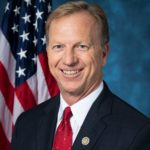 “I have the utmost respect and admiration for our police force,” said Hern. “It was not a hard decision to sign this pledge – it’s a written commitment of the values I live by every day. The movement to ‘defund the police’ is dangerous and would be harmful to our community. While many argue that ‘defund’ does not mean ‘defund’, local officials in at least 13 cities across our country have already taken legislative steps to do just that, with many activists calling for the complete dissolution of their local police departments. In addition, police officers are facing exponentially increased danger in the line of duty for no reason other than the uniform they wear. My constituents ask me about this every day, they’re concerned about the security of our community and the safety of those who choose to serve and protect their neighbors.
“Tulsa had a hard summer following the shooting of Sergeant Craig Johnson and Officer Aurash Zarkeshan. The grief of Sgt. Johnson’s death was felt by the entire community, who rallied around the Johnson and Zarkeshan families with support, encouragement, sympathy, and love. There is no doubt about it, the movement to ‘defund the police’ has no place in Oklahoma. I cannot and will not support legislative action that harms our people by cutting or eliminating law enforcement.”
Congressman Tom Cole signed onto the pledge to show his support. One of the major towns in his district, Norman, is going through a controversy over the cut of a proposed funding increase for the Norman Police Department.
“Police officers are in an honorable yet difficult profession, and they selflessly risk their lives every day to keep all of our communities safe,” said Cole. “It is their sworn duty to uphold the law, and their bravery and sacrifice should not go unnoticed. As they carry out their responsibility to serve and protect, I will do what I can to ensure funding is upheld so that they can continue to protect our communities. By signing this pledge, I am proud to stand with America’s police.”
Congressmen Frank Lucas and Markwayne Mullin have since signed onto the pledge.
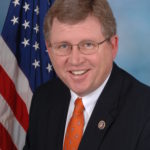 “Oklahoma’s law enforcement officers, and hundreds of thousands more across the United States, risk their lives every single day to ensure the freedoms and property of every single individual are protected. Our communities are forever indebted to the men and women of America’s police departments who take an oath to uphold the law and carry out their responsibility to serve and protect,” said Lucas. “We need our law enforcement, which is why I oppose any legislative attempt to ‘Defund the Police’ and, why I’ll always stand with the men and women in blue who protect our communities.”
“The men and women of our law enforcement put their lives on the line each day to keep their communities safe and they deserve our full support,” Mullin said. “We are a nation of laws and the laws must be enforced. Defunding the police is not a serious answer to the issues our country is facing and will only lead to anarchy. I am proud to sign this pledge and stand with our nation’s brave law enforcement officers.”
So far, 167 House members have signed the pledge. Twenty U.S. Senators have done so, including U.S. Senator Jim Inhofe.
Oklahoma Senator Rob Standridge is looking for the right language to put in a bill protecting the budgets of police departments. He contends local governments should not be able to “ignore the will of their citizens” when considering a cut to law enforcement budgets.
 “We’re still working on the language, but basically, if the citizens voted to increase police personnel or additional funding, their local government couldn’t just come back in later and slash that budget,” Standridge said. “The issue would have to go back to the voters to decide if they wanted those reductions or not.”
Under his proposed law, local governments would not receive state aid or grants if they cut law enforcement budgets.
“I’m very concerned about what’s happening, not just around the country, but here in Oklahoma,” Standridge said. “If a local government decides to do that, then I think there should be consequences. That’s what I want to address with my legislation.”
Standridge represents Norman which is in turmoil over the cut to a proposed increase in the Norman Police budget. It has sparked a recall effort which was unsuccessful to unseat the mayor, but did manage to challenge a council member.
Standridge plans to introduce his bill for the next legislative session.
A group of parents with children in Stillwater Public Schools filed a lawsuit on Monday asking a Payne County District Judge to force the district to reopen schools and return to in-classroom learning.
Tulsa World’s Barbara Hoberock writes the parent’s filing says “The Defendants’ decision to implement Distance Learning ignores the needs of their student body as well as the harsh reality that parents and guardians, even if available, are not equipped to provide the same standard of education that is accessible through In-Classroom services provided by a credentialed teaching staff.”
In a statement, Stillwater Public Schools said “it is disappointing that the pandemic has led to such a situation.”
Read the Tulsa World story here.
By Oklahoma Institute for Child Advocacy CEO Joe Dorman
The Oklahoma Institute for Child Advocacy (OICA) applauded a federal court decision last week that ordered the extension of the Census deadline to the original October 31 date. That extra month will make a huge difference, especially as we work to ensure historically undercounted groups – including children age zero-to-five, one of the hardest-to-count groups.
OICA will use our upcoming Political Hacks’ Chili Cookoff fundraiser, set for Saturday, October 17, as a Census-promoting event. The chili cook-off is slated for the parking lot behind OICA’s building, located at 2915 N. Classen Boulevard in Oklahoma City. OICA will observe social distancing with entries set up tailgate style. We will distribute samples via drive-thru pick-up for those wishing to try them and people can vote online from our website for the people’s choice.
Further, OICA will have a notary on hand to notarize absentee ballots and offer copy service to those who need to copy identification to send in with their absentee ballots. OICA is also partnering with the Oklahoma Blood Institute to accept blood donations, with a goal to have 50 donors at the event. Go to oica.org for more information and we will continue to add sponsors and information as it is solidified.
In addition, OICA has several awards which are under nomination at this time. They will be presented at our Fall Forum on November 18. Please go to oica.org to nominate for these recognitions.
The Laura Choate Resilience Award recognizes someone who has risen from traumatic experiences as a child and works to help young Oklahomans overcome those similar issues that they are currently facing.
The Steven A. Novick Child Advocacy Award identifies an “unsung hero” for young people in our state. This award is given to a person who has dedicated themselves to helping children in our state lead better lives.
The third of the awards is the Moran Kidizenship Award. The Kidizenship Awards is the Oklahoma Institute for Child Advocacy’s statewide recognition rewarding excellence in youth philanthropy for those under 18 who have made the state better for their peers.
We are also looking for the next Oklahoma “Kid Governor” to represent our state. Candidates should address statewide issues affecting the well-being of Oklahoma’s children. Kid Governor candidates must be between the ages of 7 and 11, live in Oklahoma, and submit a one-minute campaign video to OICA.
The video should outline the following:
- A little about themselves (name, age, school and where they live).
- Why they want to be Oklahoma’s Kid Governor.
- The qualities and skills as a spokesperson they will bring to the position.
Applicants must talk about an issue involving the state’s children that they think is particularly important and why it is essential. The issue could be child abuse and neglect, education, foster care, the physical or mental health of children, or any appropriate topic chosen by the candidate.
Videos longer than one minute will be disqualified. To submit a video, upload the video to Google Drive at https://tinyurl.com/okkidgov or post it on our Facebook page at https://www.facebook.com/OKChildAdv.
Finally, OICA also is seeking entries for our calendar art contest – the 365 best will be in our calendar and the best in show wins $100. The art can be uploaded at https://oicaart.artcall.org. The theme is “A Healthy Future for Oklahoma’s Children.” Please encourage children under 18 in your lives to submit their work and also reach out to your local schools to promote this as a class project.
As promised on Saturday, President Trump nominated Federal Judge Amy Coney Barrett to the U.S. Supreme Court to fill the vacancy left by the death of Justice Ruth Bader Ginsburg. Barrett current sits on the 7th Circuit Court of Appeals and was a clerk for Supreme Court Justice Antonin Scalia.
One of those who will help decide if Barrett is confirmed to the Supreme Court is U.S. Senator James Lankford.
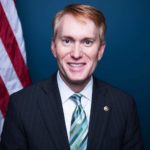 “I look forward to meeting Judge Barrett and considering her nomination to fill the Supreme Court vacancy. Her distinguished professional resume includes a law degree from University of Notre Dame, clerking for Justice Antonin Scalia, teaching law at her alma mater, and serving on the Seventh Circuit Court of Appeals. She is a dedicated mother of seven, a wife, and a person of strong faith. She is clearly well prepared for the task. Her education, experience, and personal convictions all play an important role in her judicial philosophy as a strict constructionist. The Senate confirmed her nomination for the Seventh Circuit three years ago, so a great deal of the background work on her judicial philosophy has already been done. I supported her nomination in 2017 for the Court of Appeals, and I look forward to working through the process of advice and consent for the highest court in the land.”
Congressmen Frank Lucas and Tom Cole have signed the discharge petition to force a House vote on H.R. 8265. The bill would extend the Paycheck Protection Program (PPP) through the end of the year, release $135 billion of unspent funds for the program, and enable certain eligible businesses to apply for a second forgivable loan.
“Across Oklahoma, small businesses are on the brink of closure. Through no fault of their own, Main Street businesses throughout the Third District have had to scale back business hours and lay off dedicated employees just to stay afloat during the pandemic,” said Lucas. “One critical program that has helped more than 66,000 Oklahoma small businesses is the Paycheck Protection Program. Sadly, last month, this vital program expired with $135 billion left unspent, leaving many small businesses without a lifeline to weather the pandemic’s economic conditions. While Speaker Pelosi has failed to address this lapse and has called targeted legislation on unemployment benefits and the Paycheck Protection Program ‘piecemeal’, my House Republican colleagues and I are working to force a vote to bring this common-sense legislation up on the House Floor. I thank my colleague, Congresswoman Jaime Herrera Beutler, for leading this discharge petition to extend the Paycheck Protection Program, and I hope this bill can see a vote on the House Floor so that Oklahoman businesses and employees can continue to receive the help they need.”
“It is disappointing that Republicans must resort to a discharge petition to pressure Speaker Pelosi to free up money already provided and intended to aid small businesses struggling because of the coronavirus pandemic,” said Cole. “Since it was created, the Paycheck Protection Program has helped millions of small businesses keep their doors open and their workers employed. As the race for a vaccine continues in order to restore our way of life, Congress should ensure vital and existing PPP aid remains available. Indeed, it is simply commonsense to renew the program so that it can help even more American job creators weather the storm. This is not and should not be a controversial or partisan issue. It is a matter of protecting American livelihoods that remain at risk because of a deadly virus that originated in China. I urge Speaker Pelosi and House Democrats to allow a vote on this simple PPP extension legislation.”
If the discharge petition gets 218 signatures in the U.S. House of Representatives, it will force consideration and a vote on H.R. 8265.


