SoCo Correspondent delivers the latest news from the County of Sonoma, twice a month, to your email inbox. Subscribe in English or Spanish and share with your friends and neighbors. | | Mobile crisis teams transform County’s response to mental health emergencies | | |
Responding to a mental health crisis requires a different set of skills than responding to a crime or medical emergency. Increasingly in Sonoma County, that response comes from trained behavioral health professionals who can de-escalate crises, provide compassionate care and connect people with ongoing support.
A new report presented to the Board of Supervisors on Tuesday shows the County’s mobile crisis system has become a vital part of the local safety net, helping divert people from jail and hospital emergency rooms. It is comprised of three local programs that now handle an average of 1,300 calls for help every month, or more than 15,600 each year.
In Santa Rosa, the inRESPONSE team answers calls within city limits. The SAFE team – Specialized Assistance for Everyone – serves Petaluma, Cotati, Rohnert Park and Sonoma State University. The County’s own Mobile Support Team responds in Cloverdale, Healdsburg, Windsor, Sebastopol, Sonoma and all unincorporated areas, and also backs up the other teams when needed.
The countywide system now costs about $12.9 million annually to operate. It is funded primarily through Measure O, the voter-approved quarter-cent sales tax for mental health, homelessness and addiction services, along with state behavioral health funds and federal Medi-Cal reimbursements. The Sonoma County Department of Health Services has developed a three-year strategy to strengthen the system’s financial foundation by maximizing available funding, pursuing reimbursement from private health insurers and improving regional coordination.
“Mental health emergencies deserve a response that meets people with compassion and clinical expertise,” said Supervisor Rebecca Hermosillo, chair of the Board of Supervisors. “These mobile crisis teams are helping people get the right care at the right time while easing the burden on our emergency rooms and law enforcement agencies. Our focus is making sure these services remain strong and sustainable so help is available whenever and wherever it’s needed.”
If you or someone you know is experiencing a behavioral health crisis, help is available 24 hours a day by calling the County's crisis line at 1-800-746-8181.
| | Scholarships help foster youth pursue their college dreams | | |
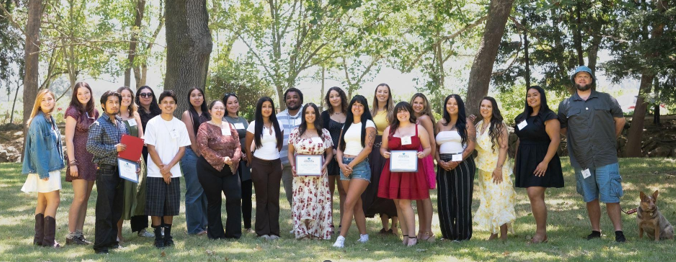
Recipients of this year’s Valley of the Moon Children’s Foundation scholarships gather at La Crema Winery in Windsor on Aug. 6.
Getting a college education can be expensive. The hurdles can be even higher for foster youth, who often enter adulthood without the financial and family support many of their peers rely on.
On Aug. 6, the Valley of the Moon Children’s Foundation lowered those barriers for 43 current and former Sonoma County foster youth, awarding $162,500 in scholarships to help them pursue their education.
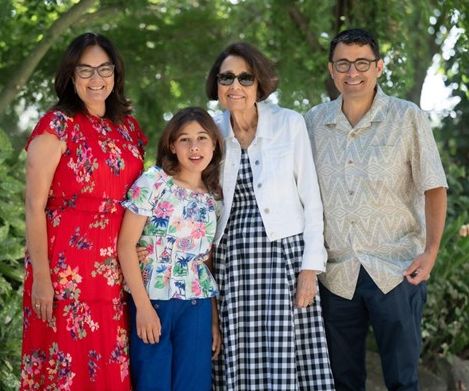
| | Scholarship founder Dianne Edwards, second from right, and members of her family attend the Valley of the Moon Children’s Foundation scholarship lunch. | | |
The scholarship program was founded in 2006 by Dianne Edwards, former director of the Sonoma County Human Services Department. When she retired, Edwards asked friends to donate to a scholarship fund instead of giving retirement gifts. Their generosity launched a scholarship program that has continued to grow through the support of individuals and businesses across the county. Over the last two decades, it has funded 512 scholarships totaling more than $1.8 million.
The scholarships support young people who were removed from unsafe homes because of abuse or neglect and placed in the County’s foster care system.
| | |
The grants help cover cover tuition, books, housing and other educational expenses, enabling students to pursue everything from trade school to associate degrees and even PhDs in fields as diverse as social work, engineering, political science and theology. Many recipients later give back by volunteering with the Foundation or serving on its board.
Many scholarship recipients have personal connections to Valley of the Moon Children’s Center, Sonoma County’s only 24-hour emergency shelter for foster youth. Operated by the Human Services Department, the center provides a safe, stable place where children can begin to heal while awaiting placement with a foster family. Its work is supported by Valley of the Moon Children’s Foundation, a private nonprofit that helps foster youth pursue education and build successful futures.
One scholarship recipient described the difference the award will make:
“Having this scholarship means I don’t need to decide between my education or having food. I’ll be able to move up in life without feeling like I’m stuck in survival mode. This scholarship has given me an opportunity to pursue higher education and also a space to share my story. As someone who stayed at Valley of the Moon Children’s Center as a child multiple times throughout my life, to be able to be here today and achieve this opportunity is extraordinary because this doesn’t happen very often with foster youth.”
| | County investment helps RED Housing Fund finance 632 new homes | | |
Casa Roseland, one of the affordable housing projects built with financing from the RED Housing Fund.
Five years after the County and the City of Santa Rosa joined forces to create the RED Housing Fund, the innovative financing program is helping meet the need for new homes in Sonoma County.
A report presented to the Board of Supervisors this week details the impact of the fund, a nonprofit established to accelerate housing development in the wake of the 2017 wildfires.
The RED Housing Fund provides gap financing that helps developers move housing projects from the drawing board to construction. The fund’s latest annual report shows it has closed six loans totaling $19.7 million, supporting the development of 632 housing units in Sonoma County. Those projects include affordable apartments for families, permanent supportive housing and workforce housing, with transit-oriented developments in Santa Rosa’s Roseland, Railroad Square and downtown neighborhoods.
As projects are completed, money is beginning to flow back into the revolving loan fund to finance additional housing. In 2025, one loan was repaid in full and another was partially repaid early, allowing those dollars to be reinvested in upcoming housing developments. Meanwhile, Casa Roseland, a 75-unit affordable housing development in southwest Santa Rosa, received financing from the fund and is now leasing units. Three other affordable housing projects transitioned from construction financing to permanent loans after reaching completion and stabilization.
The County and the City of Santa Rosa each contributed $10 million to capitalize the fund, using money from their settlements with PG&E over the 2017 wildfires. Since then, the fund has grown to almost $24 million.
“Increasing the supply of affordable housing benefits every part of our community, from young adults, families and seniors to employers and local businesses,” said Supervisor Rebecca Hermosillo, chair of the Board of Supervisors. “The RED Housing Fund is demonstrating that partnerships and innovative financing does help create more homes and strengthens Sonoma County for generations to come.”
On Tuesday, the Board of Supervisors reviewed the fund’s 2025 annual report and confirmed it remains in compliance with the County’s loan agreement. The County’s loan is forgivable over 20 years, provided the fund meets annual performance and reporting requirements.
| | County seeks public comment on future Government Center | | |
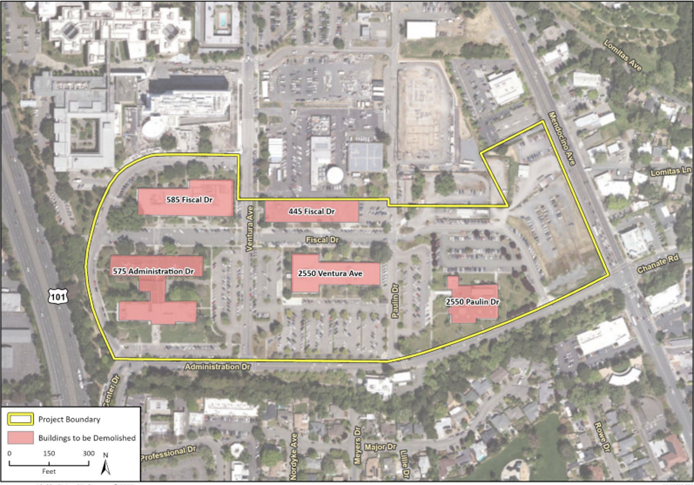
The County Government Center in northeast Santa Rosa has served Sonoma County residents for nearly seven decades. Now, County leaders are planning for its next chapter, one that could include modern public offices, a new Emergency Coordination Center and hundreds of affordable homes.
The proposed project is intended to improve efficiency, accessibility and seismic safety at the County’s aging campus while creating new housing near jobs, transit and public services. A Draft Environmental Impact Report released by the County last month examines how the proposed redevelopment could affect the environment, identifies measures to reduce potential impacts and gives residents an opportunity to review the findings and provide feedback before decisions are made.
As part of the proposed project, five buildings on the County Administration Center campus would be replaced with a new multi-story office building with room for 1,200 employees. A 1-megawatt solar microgrid would provide shaded parking and electricity. A new Emergency Coordination Center would serve as the County’s hub for managing disaster response while providing flexible space for meetings and training when not activated for emergencies. The proposal also includes plans for up to 1,500 residential units – with up to 70% designated as affordable housing – along with approximately 20,000 square feet of retail and commercial space.
The Board of Supervisors held a hearing Tuesday to receive public comments on the Draft Environmental Impact Report. Written comments from the public will be accepted through Aug. 28. County staff will review all comments and provide written responses in a Final Environmental Impact Report, which is expected to return to the Board of Supervisors for consideration in December. If approved, construction could begin as early as 2027 and would occur in phases to minimize disruption to County operations, with full buildout anticipated around 2031.
“Community voices are an essential part of this process. I encourage everyone to learn about the proposal, review the environmental analysis and share their feedback with us as we work on planning the future of one of Sonoma County’s most important public spaces,” said Supervisor Rebecca Hermosillo, chair of the Board of Supervisors.
To submit written comments by Aug. 28, email Robert.Aguero@sonomacounty.gov or send a letter to Permit Sonoma, Attn: Robert Aguero, 2550 Ventura Ave., Santa Rosa, CA 95403.
| | County takes next step to strengthen local agriculture | | |
Two months after approving a countywide action plan to strengthen local agriculture, the Board of Supervisors has taken one of its first steps to help farmers adapt to changing economic conditions while maintaining strong environmental protections.
On Tuesday, the Board tentatively approved new rules that give growers more flexibility when changing crops. It is one of the first actions implementing the Board’s agriculture workplan, adopted in June after supervisors declared agriculture and working lands critical infrastructure essential to Sonoma County’s economy, environment and food security.
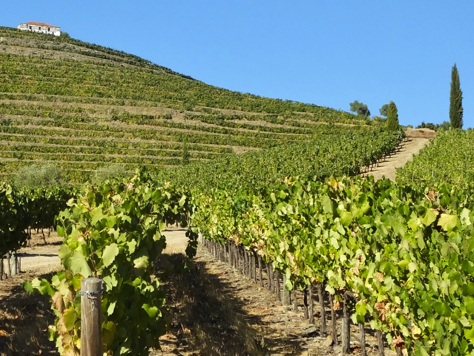
The changes create an alternate permitting pathway for farmers who want to convert land that has already been in agricultural production – such as row crops or other cultivated fields – into vineyards or orchards. Because the land is already being farmed, it can qualify for the same permitting process used to replant existing vineyards and orchards rather than the more extensive review for new development. The change also gives growers affected by market conditions more flexibility to switch to another crop while preserving the opportunity to use the replant pathway if they later return the land to vineyard or orchard production. The changes do not allow growers to expand the amount of land being farmed on a property. The ordinance also clarifies the process for a one-time extension of an existing replant permit, giving growers additional flexibility when market conditions or farming plans change.
The Board directed staff to develop the changes after hearing from farmers about rising costs, changing markets and other challenges affecting the long-term viability of local agriculture. Agriculture and working lands represent about 18% of Sonoma County’s economy and support nearly 34,000 jobs, making it one of the county’s most important economic sectors.
The changes to the County’s Vineyard Erosion and Sediment Control Ordinance, also known as VESCO, maintain existing environmental safeguards. Projects must still meet erosion-control standards; protect streams, wetlands and other sensitive natural resources; and complete biological reviews in designated habitat areas when required. The updates also preserve existing requirements for construction timing and winter erosion prevention.
“Sonoma County’s agricultural lands are an important part of our environment, our economy, and our community, and protecting them means supporting both the farmers who steward the land and the workers who sustain our agricultural industry,” said Supervisor Rebecca Hermosillo, chair of the Board of Supervisors. “These changes provide growers with greater flexibility to adapt to changing conditions while maintaining the environmental safeguards that protect our land and natural resources.”
The updated ordinance is scheduled to return to the Board on Sept. 15 for final adoption.
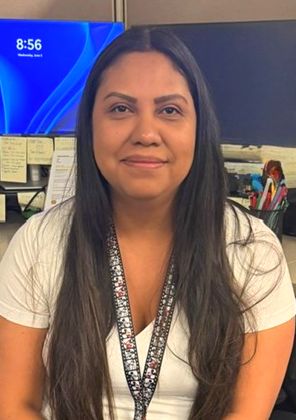
| | Faces of Sonoma County: Meet Marisol Rodriguez | | This is part of an ongoing series of profiles highlighting public servants across a variety of departments at the County of Sonoma. | | |
Name: Marisol Rodriguez
Title: Senior Legal Processor, Sonoma County District Attorney’s Office
Years with County: 12
Personal side: I was born in Oaxaca, Mexico. I moved to Windsor when I was 3 and spent most of my childhood there before eventually making Santa Rosa my home. I’m a proud mother of four sons, ranging in ages from 12 to 22.
Education and/or certifications: I earned a specialized associate degree in Paralegal Studies from Empire College.
What do you do? I serve as a Senior Legal Processor at the District Attorney’s Office, which works to keep our community safe by holding the guilty accountable, protecting the innocent, and preserving the dignity of victims and their families. In my job, I coordinate requests for evidence and other documentation from attorneys, law enforcement agencies and defense counsel. My primary responsibility is to organize and process information needed to support each case. I work closely with established deadlines to ensure all materials are prepared accurately and efficiently.
Collaboration and communication are essential to providing victims and their families with the support they need. During some of the most difficult and challenging moments in their lives, it is important that we approach each situation with compassion, patience, professionalism, and respect. I am grateful to be part of a dedicated team that supports one another, remains committed to serving our community, and makes a meaningful difference in the lives of the people we work with each day.
What gives you fulfillment? I’m very passionate about helping our attorneys. I strive to make their jobs easier by ensuring they have the evidence and information they need to prosecute their cases. These are often serious and complex matters that require accuracy, confidentiality and professionalism. One of the greatest rewards of my job is helping victims and supporting my coworkers during challenging times by making sure critical information is organized and available when it’s needed.
Knowing that the work we do makes a positive difference for the people we serve is one of the most rewarding parts of my career. Every individual on our team plays an important role. We take pride in doing our part to support a fair, professional, and ethical justice system.
Working for the County has given me opportunities to grow, both personally and professionally, while meeting some amazing people along the way. I started as an extra-help legal processor in the Probation Department. When that job ended, I was determined to get back to the County. After a few years of trying and not giving up, I was hired as an office assistant in the Human Services Department in early 2015. Lupe Castaneda, an employment and training counselor at HSD, helped me do mock interviews and prepare myself for my current position. This October, I will celebrate 11 years with the District Attorney’s Office, and I still see opportunities to learn and grow.
What is one of the biggest misconceptions about the District Attorney’s Office? We manage a large volume of cases – approximately 15,000 were referred to us last year, and we filed approximately 9,000. Many require significant time to evaluate and process. We understand that people are often experiencing some of the hardest moments of their lives when they interact with our office. While not every outcome is what someone hopes for, every decision is based on the law and the evidence. We seek truth and justice in a professional manner while maintaining the highest ethical standards. Every case must be handled in accordance with the law, regardless of the circumstances or individuals involved.
Some people mistakenly believe our office can simply dismiss a case if requested by a family member or someone involved in the case. Our decisions cannot be based solely on personal requests; they must be based on the facts, evidence, and legal requirements of each individual case.
Passions outside of work? Outside of work, my family and I love going to Disneyland, watching movies, and attending Warriors and Lakers games. These experiences give us an opportunity to make memories, enjoy each other’s company, and spend valuable time together.
I also serve as a Board Clerk for the Roseland Board of Education, where I have the opportunity to serve students and families in the Roseland community. This role is especially meaningful to me because my youngest child attends school in this district. Being part of the Board allows me to contribute to important decisions that support our students, schools, and community and help create opportunities for our children to succeed.
| | County lawsuit protects consumers and the environment | | |
When Sonoma County residents shop, they should be able to trust that prices are accurate, products are sold legally and environmental claims are truthful. A recent consumer protection settlement highlights the work of the Sonoma County District Attorney’s Office to hold businesses accountable.
The California subsidiary of national rural lifestyle retailer Tractor Supply Co. agreed this month to pay more than $5.1 million in civil penalties and restitution to resolve allegations that it violated California’s price accuracy laws, pesticide regulations and greenwashing laws. The case was brought jointly by the district attorneys of Sonoma, San Diego, Santa Cruz, Sacramento and San Bernardino counties.
The complaint alleged the retailer charged customers more than the lowest advertised or posted price, sold pesticides without required state licensing, and marketed products as “biodegradable” in violation of California laws that prohibit misleading environmental claims. Each of the alleged violations also constituted violations of California’s Unfair Competition Law.
“Businesses in California that fail to comply with all laws and regulations that have been enacted to protect consumers and the environment cause injury to our citizens and our environment and also unfairly compete with businesses that incur the costs to comply with these laws,” Sonoma County District Attorney Carla Rodriguez said. “Our Environmental and Consumer Law Division works with District Attorneys throughout the state to ensure that businesses comply with these laws.”
Under the settlement, Tractor Supply West, LLC must implement new policies and procedures to improve compliance with California laws. After it was contacted by the district attorneys, the company cooperated with the investigation and voluntarily stopped selling pesticides until the proper licensing was in place.
| | Join the conversation at SoCo Chat | | |
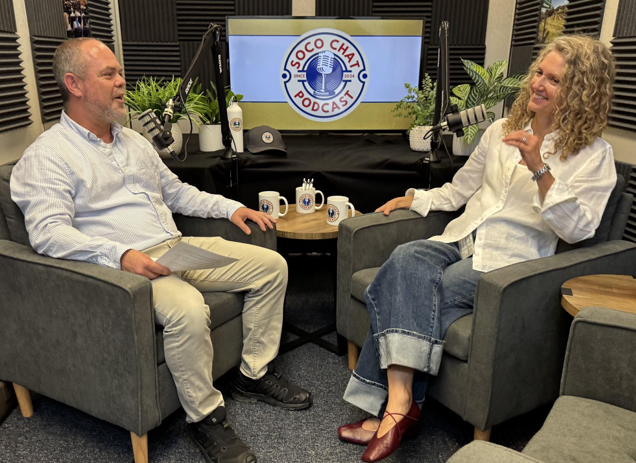
Matt Brown, left, supervising communications specialist in the County Executive’s Office, discusses foster parenting with Meg Easter Dawson, a program development manager in the Sonoma County Human Services Department, during a new episode of SoCo Chat.
Sonoma County urgently needs more foster families to provide safe, stable homes for children who cannot remain with their parents. In a new episode of SoCo Chat, Meg Easter Dawson, program development manager at Valley of the Moon Children’s Center, discusses the realities of foster parenting, the support available to foster families, and the profound difference a caring adult can make in a child’s life. Learn who can become a foster parent, what to expect from the process, and how you can help create a brighter future for a local child in need.
Subscribe to SoCo Chat on Spotify, Apple Podcasts, Amazon Music and YouTube, and check out our growing library of episodes. Recent guests and topics of discussion have included:
| | Find room to grow with a County job | | |
The County currently has more than 30 job openings posted on its website. How can you improve your chances of landing one?
Sign up for the next Start Here! class, which provides an overview of the County of Sonoma’s job application, examination and selection processes. The next two-hour class will be held Sept. 16 at 5:30 p.m. on Zoom.
The free class is intended for the public, whether you are looking for a new position now or planning for a future employment opportunity. Participants will learn how to submit a thorough application, best practices for the interview and examination, and much more.
Contact us at careers@sonomacounty.gov to register for the Sept. 16 class or sign up for our mailing list to be notified of future classes.
| | Adopt the pet of the week | | |
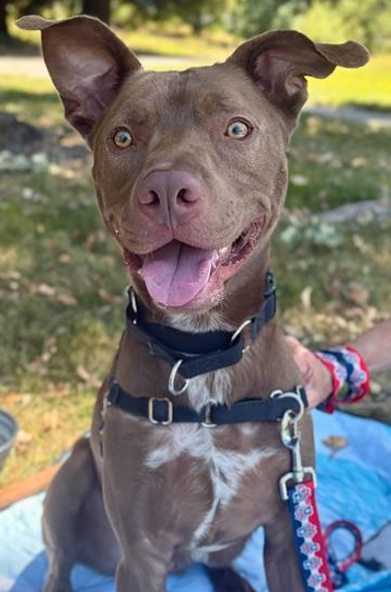
My name is Scout. I’m a 2 ½-year-old pit bull terrier mix who was brought to the shelter in April. I absolutely adore people. I’m happiest when I’m close to my humans, whether I’m soaking up attention or curling up for a cozy snuggle. I’d benefit from continued training and socialization, but my eager-to-please attitude and affectionate personality make me a joy to be around. Will you bring me into your family?
Scout is one of dozens of cats, dogs, rabbits and other animals at Sonoma County Animal Services in need of adoption.
Animal Services helps match pets and families through an adoption process designed to support your lifestyle and the animal’s needs. Shelter staff are ready to assist with applications, answer questions and share details about each animal’s health, temperament and care. All animals adopted through the shelter go home spayed or neutered, microchipped and up to date on vaccinations, giving your new companion the healthiest start possible in your home.
| | Get involved with County government | | |
Government is only as good as the people who step forward to serve. There are many opportunities available now to support the community by serving on County boards, commissions and committees. Here are just three examples:
Check out the full list of vacancies and discover how you can help shape the future of Sonoma County.
| | Volunteer and employment opportunities | | |
(stories may require subscriptions)
| | Upcoming meetings and events | | Upcoming meetings and events | | Getting outside and enjoying the county | | Follow us online or contact us via email | | | | |