

Current campaigns
Read this page in Italian or in Spanish. Guide to Translating Web Pages.
The FSF's campaigns target important opportunities for free software adoption and development, empower people against specific threats to their freedom, and move us closer to a free society.
Our successes are driven by the efforts of supporters and activists like you all around the world. Please take a moment today to make a contribution, by joining the FSF as an associate member, making a tax-deductible donation and volunteering your time.
What are the latest things happening for the campaigns team? Check out the FSF Community Blog, maintained by the campaigns team. Have an idea for something we should cover? Drop us an email. Looking for simple action items, or have an idea for a simple action item for free software supporters? Check out the Action items page at libreplanet.org.
Campaigns Highlight
LibrePhone

LibrePhone is an FSF initiative to research and reverse-engineer proprietary firmware used by common Android devices. LibrePhone's goal is not a new Android distribution, but a long-term project to understand and write free implementations for the binary blobs used in virtually all mobile phones today.
Email Self-Defense

Start encrypting today, or learn how to at Encryptfest.
Even if you have nothing to hide, using encryption helps protect the privacy of people you communicate with, and makes life difficult for bulk surveillance systems. If you do have something important to hide, you're in good company; these are the same tools that whistleblowers use to protect their identities while shining light on human rights abuses, corruption, and other crimes. The FSF's email self-defense guide will teach you a basic surveillance self-defense skill: email encryption.
Getting Started
Freedom Ladder

The "Freedom Ladder" is a new method the FSF campaigns team is developing to help users get their first start in software freedom. Its focus is gently guiding users into GNU/Linux, while at the same time encouraging them to not rest content with nonfree software. We want to help them stay both motivated and determined in their gradual process to eliminate nonfree software from their lives.
LibreLocal
 Every year in May the FSF invites free software supporters to organize
in-person community meetups in their area to bring people together and swap
ideas, learn from each other, and celebrate free software. Everyone is
encouraged to organize events that help spread the free software philosophy
and are grounded in freedom. Some years in now, we're looking at 50 LibreLocal
events globally as part of this successful community campaign.
Free software videos
These videos are perfect for sharing on social media or embedding on your website or blog. Click the links to navigate to the blog post with source files and embed codes.
Upgrade from Windows
Microsoft uses draconian law to put Windows, the world's most-used computer operating system, completely outside the control of its users. Neither Windows users nor independent experts can view the system's source code, make modifications or fixes, or copy the system. This puts Microsoft in a dominant position over its customers, which it takes advantage of to treat them as a product.
Digital Rights
Fight to Repair
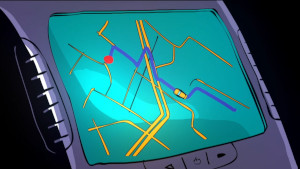
As the world becomes more software-driven, an individual's right to repair both the hardware and software components of the devices they rely on becomes crucial. Fight to Repair is our campaign to support right to repair initiatives around the world, and warn against the day-to-day use of proprietary software in hardware as diverse as self-driving cars, printer cartridges, and "smart" home assistants.
Defective by Design
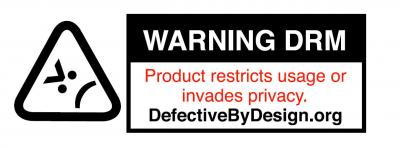
Digital Restrictions Management (DRM) robs us of control over the technology we use and the culture we live in.
Since DRM is inherently incompatible with free software, it also excludes free software users from equal participation in culture. Whether it's streaming dis-services, ebook DRM, or nonfree software that prevents users from doing everyday tasks, DRM is something that must be stopped at all costs.
DefectiveByDesign.org is our anti-DRM campaign, where we mobilize large vocal communities to reject products from businesses that insist on using DRM to control their customers. Learn more at DefectiveByDesign.org and the campaign wiki.
End Software Patents
Software patents create a legal nightmare for all software developers and pose particular problems for the free software movement. So as the FSF campaigns for formats that are free of software patents, we also work on the more fundamental task of ending software patents entirely, through legal and legislative action.
Learn more at endsoftwarepatents.org, see the wiki, or join the action alert mailing list.
Privacy & Surveillance
Surveillance
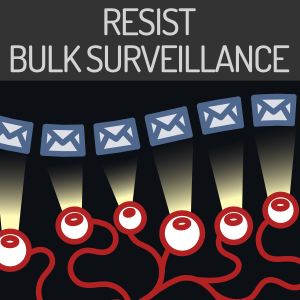
If we want to defang surveillance programs like PRISM, we need to stop using centralized systems and come together to build an Internet that's decentralized, trustworthy, and free "as in freedom." Check out the surveillance campaign area to get involved with the effort to make the Web in general safer and from surveillance.
On an individual level, we also need to start encrypting our personal communication to make bulk surveillance much more difficult and to protect the people we communicate with.
Email Self-Defense
Even if you have nothing to hide, using encryption helps protect the privacy of people you communicate with, and makes life difficult for bulk surveillance systems. If you do have something important to hide, you're in good company; these are the same tools that whistleblowers use to protect their identities while shining light on human rights abuses, corruption, and other crimes. The FSF's email self-defense guide will teach you a basic surveillance self-defense skill: email encryption.
Start encrypting today, or learn how to at Encryptfest.
Software Freedom
The GNU Operating System
The GNU operating system is a complete operating system made entirely of free software. Millions of people are using GNU every day to edit their documents, browse the web, play games, and handle their email, or as part of a GNU/Linux system on their home computer.
Even people who have never heard of it use GNU every day, because it powers many of the sites they visit and services they use. Learn more about GNU, and support progress on fully free operating systems by volunteering or donating to the FSF.
Free JavaScript

The Free JavaScript campaign is an ongoing effort to persuade organizations to make their websites work without requiring users to run nonfree software. The FSF also develops tools such as the LibreJS extension and JShelter to help users protect their freedom when browsing the web.
Working Together for Free Software

Free software is simply software that respects our freedom — our freedom to learn and understand the software we are using. Learning and supporting specific programs and projects -- and teaching users how to make best use of them -- is a key part of this.
To make donations to specific free software projects while supporting the FSF at the same time, learn more about the Working Together for Free Software Fund. Projects interested in joining the fund can visit our fiscal sponsorship pagefor more information.
High Priority Free Software Projects

The FSF's High Priority Projects list and Reverse Engineering Task List serve to foster the development of projects that are important for increasing the adoption and use of free software and free software operating systems. Some of the most important projects on our list are "replacement projects". These projects are important because they address areas where users are continually seduced into using nonfree software by the lack of an adequate free replacement. These are critical projects that need your help.
Hardware Freedom
Respects Your Freedom Certification

As citizens and as customers, we need to promote our desire for a new class of hardware — hardware that anyone can support because it respects your freedom. That is why the Free Software Foundation launched this certification program, to find retailers committed to providing users with devices they can truly own.
The Respects Your Freedom certification program encourages the creation and sale of hardware that respects your freedom and privacy, ensuring that you have control over your device.
Campaign for Hardware that Supports Free Software
Hardware manufacturers are often negligent in offering support for free software. Our hardware directory helps people identify hardware to buy that works with their free software operating system. It is also an important part of the FSF's ongoing work to persuade hardware vendors to respect free software users.
For more information on the FSF's plans, read our whitepaper: The road to hardware free from restriction, or see its most recent revisions on its LibrePlanet wiki page.
Free BIOS
The BIOS is a computer's Basic Input/Output System, which boots the operating system and provides the interface between it and the hardware components. Though users are rarely aware of the BIOS, its foundational role makes it a user freedom chokepoint; if it is not free, users cannot trust it not to modify their computers on behalf of the company that wrote it. Our Free BIOS campaign promotes free BIOSes like GNU Boot or Canoeboot.
The FSF welcomes volunteers in all of its campaigns. You can keep up with the most important happenings in our campaigns by following our news feed, blogs feed Become an associate member at my.fsf.org/join
