
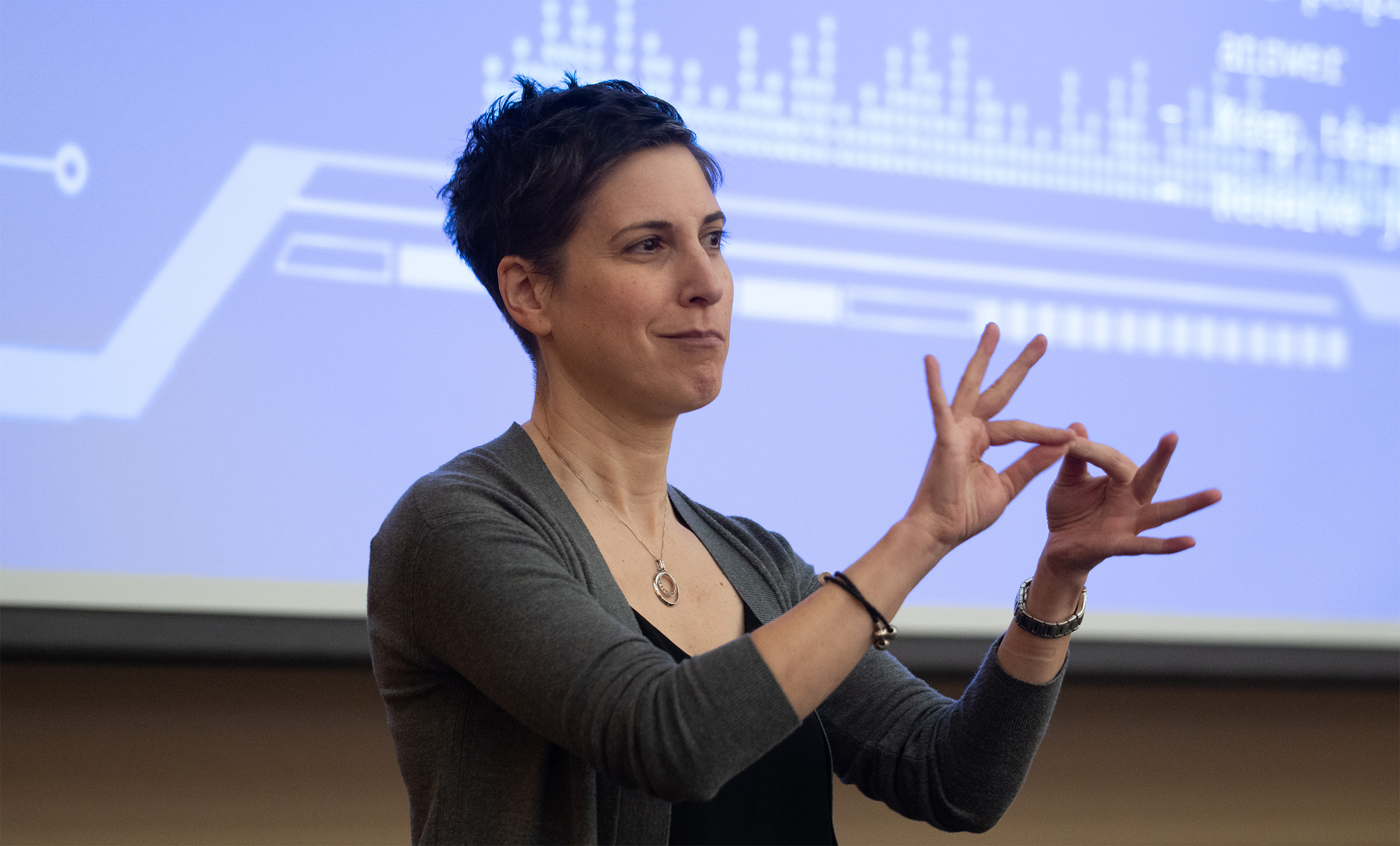
We are committed to preventing, identifying and removing barriers that impede an individual’s ability to access care and services, or to work here.
Sunnybrook’s accessibility policy outlines our continuing efforts to eliminate accessibility barriers, including those that are:
- Physical
- Informational
- Technological
- Attitudinal; and
- Related to policy or practice
Meeting your needs: Contact us if you have a question, want to request accessible formats and communications supports or ask about how we will accommodate your accessibility requirements during your visit. We will work with you to meet your needs.
Contact: accessibility@sunnybrook.ca or 437-999-9029
Share Feedback
If you have concerns, comments or complaints about your experience at Sunnybrook, please contact the Office of the Patient Experience.
Accessibility Resources
Policy Statement
Sunnybrook Health Sciences Centre (Sunnybrook) is committed to preventing, identifying and removing barriers that impede the ability of people with disabilities to access care and services. This includes patients, families, staff, physicians, volunteers and members of Sunnybrook’s community.
In June, 2005 the Ontario government passed the Accessibility for Ontarians with Disabilities Act (AODA). The purpose of this enhanced Act is to develop, implement and enforce standards of accessibility for all Ontarians. Sunnybrook’s Accessibility Policy is consistent with the AODA, 2005 and the Accessibility Standards for Customer Service, Ontario Regulation 429/07 [See Appendix].
Purpose
The purpose of this policy is to outline practices and procedures in place at Sunnybrook to help identify and remove barriers that impede a person’s ability to access care and services.
Definitions
Assistive Devices and Measures:
Assistive devices and measures are supports made available by providers to improve access to care for patients with disabilities. For example, wheelchairs, volunteers, real-time captioning services (on-screen typing of what speakers are saying), sign language interpreters or deaf-blind interveners. Other examples include, Telephone Teletypes (TTY) to communicate with clients who are deaf, hard of hearing, have speech impairments or are deaf-blind.
Disability:
According to the Ontario Human Rights Code, a “Disability” is defined as:
- any degree of physical disability, infirmity, malformation or disfigurement that is caused by bodily injury, birth defect or illness and, without limiting the generality of the
foregoing, includes diabetes mellitus, epilepsy, a brain injury, any degree of paralysis, amputation, lack of physical co-ordination, blindness or visual impediment, deafness or
hearing impediment, muteness or speech impediment, or physical reliance on a guide dog or other animal or on a wheelchair or other remedial appliance or device, - a condition of mental impairment or a developmental disability,
- a learning disability, or a dysfunction in one or more of the processes involved in understanding or using symbols or spoken language,
- a mental disorder, or
- an injury or disability for which benefits were claimed or received under the insurance plan established under the Workplace Safety and Insurance Act, 1997.
The definition includes disabilities of different severity, visible as well as non-visible disabilities, and disabilities the effects of which may come and go.
Personal Assistive Devices:
For the purpose of this policy, Personal Assistive Devices are personal supports used by persons with disabilities that enable them to carry out the activities of daily living and allow access to hospital services. Patient-owned equipment such as power-mobility devices (power wheelchairs or scooters) are regarded as Personal Assistive Devices.
Service Animals:
Service animals are used by people with many different kinds of disabilities. Examples of service animals include dogs used by people who are blind, hearing alert animals for people who are deaf, deafened or hard of hearing, and animals trained to alert an individual to an oncoming seizure and lead them to safety (Guide to the Accessibility Standards for Customer Service, Ontario Regulation).
Support Person:
A “Support Person” accompanies a person with a disability, in order to help with communication, mobility, personal care or medical needs or with access to goods or services. Medical needs may include, but are not limited to, monitoring an individual’s health or providing medical support by being available in the event of a seizure. A Support Person may be a paid professional, a volunteer, family member or friend of the person with a disability (Guide to the Accessibility Standards for Customer Service, Ontario Regulation).
Procedure
Sunnybrook will ensure we are identifying and removing barriers to access for people with disabilities by:
- Encouraging people with disabilities to use their own personal assistive devices to improve access to Sunnybrook’s goods and services.
- Enabling people with disabilities to access our goods and utilize our services by offering assistive devices and measures.
- Communicating with a person with a disability in a manner that takes into account his or her disability.
- Allowing people with disabilities to bring their guide dog or service animal with them to areas of the premises that are open to the public.
- Permitting people with disabilities who use a support person to accompany them and ensuring that a person with a disability has access to his or her support person while on our premises.
- Training staff, physicians, volunteers and students about key principles and accessibility strategies and tools (i.e. Accessibility workshop, E-Learning module and Accessibility Booklet).
- Providing notice when facilities or services that people with disabilities rely on to access our services are temporarily disrupted.
- Establishing a process for people to provide feedback on how goods or services are delivered and explaining how Sunnybrook will respond to any feedback and what action will be taken. It is the responsibility of every staff member to be attentive to the concerns of patients/residents, their families and visitors and to resolve concerns related to accessibility. There are a number of strategies that are available to patients/ families/staff and physicians to provide feedback regarding accessibility.
Sunnybrook Health Sciences Centre’s (Sunnybrook) policy, “Patient-Owned Electrical Equipment for In-Hospital Use”, is consistent with Accessibility for Ontarians with Disabilities Act, 2005 (AODA) and the Accessibility Standards for Customer Service, Ontario Regulation 429/07. Additionally, the policy is consistent with the principles of customer service i.e. dignity, independence, integration and equal opportunity.
Sunnybrook encourages the use of personal assistive devices whenever possible to improve access to hospital services.
Purpose
To maximize patient and staff safety and meet the criteria of the Canadian Standards Association adopted by the hospital.
Policy
All patient-owned electrically operated equipment (e.g., motorized wheelchairs/scooters, fans, radios) shall receive a safety inspection by the Department of Biomedical Engineering prior to being used in the hospital. The only exception to this policy is personal electric razors.
Definition(s)
Patient Owned Electrical Equipment: Any electrical item brought in by patient/family for the patient’s personal use during their inpatient stay/clinic visit.
Procedure
- Advise the patient/family of the mandatory hospital requirement for the safety inspection of any patient-owned electrical equipment brought into hospital for personal use. The item MUST NOT be used until this safety inspection is completed and item passes the inspection.
- Unit staff will ensure the item is clearly marked with the patient’s name and Unit.
- A patient service partner (PSP) is responsible for transporting the item to Biomedical Engineering with completed requisition. Where possible, the item will be inspected immediately.
- Biomedical Engineering will mark the item with an inspection sticker when the item passes inspection.
- Biomedical Engineering will notify Unit when item is ready for pick-up.
- A PSP is responsible for retrieving the patient’s personal electrical equipment and, if the item has passed inspection, return it to the patient for use. If the item has not passed inspection, the PSP will inform the patient’s nurse who will discuss this with the patient and ensure the item is clearly labeled as failed inspection and ensure it is sent home as quickly as possible.
- Staff is accountable to ensure they know their responsibilities when utilizing patient-owned electrical equipment, including safety measures
Policy Statement
Sunnybrook Health Sciences Centre (Sunnybrook) Veterans Centre Residents’ Use of Power Mobility Devices policy is consistent with Accessibility for Ontarians with Disabilities Act, 2005 (AODA) and the Accessibility Standards for Customer Service, Ontario Regulation 429/07.
The Power Mobility Devices policy is consistent with the principles of customer service i.e. dignity, independence, integration and equal opportunity. (See: Accessibility ADM-100).
Sunnybrook encourages the use of personal assistive devices whenever possible to improve access to hospital services.
Mobility contributes to quality of life; therefore independent mobility will be promoted and maintained where possible. It is every resident’s responsibility to operate his/her power-mobility device in a safe and respectful manner. Residents requesting or needing a power-mobility device for traveling within Sunnybrook will be assessed by Occupational Therapy. The assessment includes physical and cognitive abilities and successful completion of the Power Mobility Indoor Driving Assessment (PIDA).
In the event of an accident, or with a significant change in medical condition, the resident’s continuing ability to use the power-mobility device will be monitored and reviewed by the team. When issues related to safety and unsafe operations are identified and documented, a discussion will take place with the resident/family, and the team. This may involve re-evaluation of the resident’s ability to operate a power-mobility device and possibly re-training.
Sunnybrook holds the right to revoke driving privileges at all times.
Definition(s)
Power-Mobility Device (PMD): Power wheelchair or scooter
Procedure
- A referral is initiated following a request from a resident/family or a member of the team for a power-mobility device.
- The Occupational Therapist will complete an initial assessment to determine the most appropriate power- mobility device
- The Occupational Therapist and/or Occupational Therapy Assistant will provide the training in the use of a power-mobility device. The training will be tailored to the resident’s skill and ability and to the environment where they will be driving.
- Throughout the assessment and training, there will be discussion and documentation about the resident’s progress.
- On successful completion of the Power-Mobility Indoor Driving Assessment (PIDA) driving test:
- A driver’s licence will be issued to the resident and attached to the power-mobility device.
- The resident and the Occupational Therapist will sign the Resident Power-Mobility Letter of Agreement [Appendix I]. A copy will be given to the resident and the original will be placed on the resident’s health record.
- The Occupational Therapist will review the safety guidelines and policies, provide the resident with a copy and document the discussion on the resident’s health record.
- When a resident does not successfully complete the power-mobility driving test:
- The reasons for this will be discussed with the resident/family/team and alternative means of transportation will be discussed.
- The discussion and plan will be documented on the resident’s health record.
- Opportunities for further re-training and re-assessment will be discussed when possible.
- Throughout the assessment there will be ongoing discussion with the resident/family/team. The process will be documented on the resident’s health record.
Actions/Incidents That Will Revoke Driving Privileges
Incidents related to safety and/or the unsafe operation of a power-mobility device may lead to a revocation of driving privileges.
Examples of some safety violations are:
- Driving at unsafe speeds (driving above normal walk speed).
- Reckless driving causing accidents.
- Undue damage to the mobility device and the environment.
- Behaving in a harmful, threatening or offensive manner.
- Reacting inappropriately to obstructions and hazards by striking, hitting or ramming with the power mobility device.
All incidents related to unsafe driving must be reported and documented. When incidents are witnessed by residents/families/visitors, they are to inform a staff member as soon as possible of the incident. They should provide an account of the incident, describe the individual/PMD if identity unknown. The staff member will then initiate documentation and an investigation.
All accidents and all incidents of unsafe driving involving the operation of a power mobility device will require:
- An investigation into the circumstances of the accident or incident by the Team.
- Documentation of the accident or incident including the completion of an online Safety Report.
- Discussion and documentation of the incident with the resident/family and team in a timely fashion.
- A plan developed to address the circumstances that contributed to the accident. The plan is then documented and communicated to the resident/family and team members.
Consequences of Driving Incidents
- FIRST DOCUMENTED INCIDENT: A representative of the team will discuss the occurrence with the resident. A written letter from the team, outlining the occurrence and strategies to prevent re-occurrence will be given to the resident within 3 working days of the incident.
- SECOND DOCUMENTED INCIDENT: A representative of the team will discuss the occurrence with the resident. The team will review all aspects of the incident. The power mobility device could be removed for 4 consecutive days. A written letter from the team outlining the occurrence and the consequence will be given to the resident within 3 working days of the incident.
- THIRD DOCUMENTED INCIDENT: A representative of the team will discuss the occurrence with the resident. The team will review all aspects of the incident. The power mobility device could be removed for a period of 8 consecutive days. A written letter from the team outlining the occurrence and the consequence will be given to the resident within 3 working days of the incident. During this time the team will identify further strategies to be implemented to ensure the safety of the resident and the community.
Sunnybrook holds the right to revoke driving privileges at all times.
Appendices & References
Policy Statement
Sunnybrook Health Sciences Centre (Sunnybrook) is committed to allowing dogs and cats onsite for the following purposes:
- Service Animals: Sunnybrook is dedicated to fostering an environment that removes and prevents barriers to accessibility for individuals with visible and non-visible disabilities under the Accessibility for Ontarians with Disabilities Act (AODA). This includes patients, families, visitors, staff/affiliates and members of the Sunnybrook community. Sunnybrook recognizes the important relationship between individuals with disabilities and their service animals and will make every reasonable effort to accommodate them and their service animals.
- Emotional Support Animals: If an emotional support animal satisfies the service animal requirements (i.e. documentation from a regulated health professional confirming the person requires the animal for reasons relating to a disability), follow the Service Animal Procedures. If the requirements are not met, follow the Personal Pet Visit Procedures.
- Personal Pet Visits: In certain situations, a social visit from a personal pet can be beneficial for the emotional well-being of patients and residents. These visits must adhere to Infection Prevention and Control (IPAC) guidelines and relevant legislation.
- Pet Therapy: Pet therapy programs help enhance the quality of life and promote social interaction for patients, residents and their families, and staff. These animals provide companionship and an opportunity for meaningful engagement.
Visitation is ultimately at the discretion of hospital staff or the care team, and this applies in all circumstances. Although Sunnybrook makes every effort to reasonably accommodate service animals in accordance with our legal obligations, other considerations may take precedence when necessary.
Definition(s):
Disability: According to the Ontario Human Rights Code, a “Disability” is defined as:
- any degree of physical disability, infirmity, malformation or disfigurement that is caused by bodily injury, birth defect or illness and, without limiting the generality of the foregoing, includes diabetes mellitus, epilepsy, a brain injury, any degree of paralysis, amputation, lack of physical co-ordination, blindness or visual impediment, deafness or hearing impediment, muteness or speech impediment, or physical reliance on a guide dog or other animal or on a wheelchair or other remedial appliance or device,
- a condition of mental impairment or a developmental disability,
- a learning disability, or a dysfunction in one or more of the processes involved in understanding or using symbols or spoken language,
- a mental disorder, or
- an injury or disability for which benefits were claimed or received under the insurance plan established under the Workplace Safety and Insurance Act, 1997.
The definition includes disabilities of different severity, visible as well as non-visible disabilities, and disabilities the effects of which may come and go.
Emotional Support Animal: is a pet that provides emotional and psychological support and offers comfort, reduces anxiety and supports mental well-being.
Handler: Any individual accompanying and responsible for a pet during a personal pet visit or pet therapy session for a patient or resident, who is not the patient themselves.
Health Care Team: A team of interprofessional care providers who assess and collaborate with patients and families to provide interventions and treatment that meet patient goals.
Most Responsible Prescriber (MRP): Refers to someone with ordering privileges who admits a patient and is accountable for the clinical management of that patient.
Pet: For the purposes of this policy, a domesticated dog or cat (over the age of one year) kept for companionship or pleasure. The purpose for their visit is to provide a social interaction that supports the emotional well-being of patients and residents.
Pet Therapy: A trained dog (over the age of one year), that provides affection, comfort, and emotional support to improve the social, emotional, or cognitive functioning of individuals through interaction. Therapy dogs are categorized under “service animals” only if they perform disability-related tasks and are backed by documentation from a regulated health professional.
Service Animals
A dog individually trained to perform tasks (e.g., alerting of an oncoming seizure, for person that are deaf or hard of hearing, pulling a wheelchair, opening/closing doors, retrieving items, guiding individuals with impaired vision, for autism and anxiety disorders) for individuals with disabilities if;
- The animal can be readily identified as one that is being used by the person for reasons relating to the person’s disability, as a result of visual indicators such as the vest or harness worn by the animal; or
- the person provides documentation from one of the following regulated health professionals confirming that the person requires the animal for reasons relating to the disability:
- A member of the College of Chiropractors of Ontario.
- A member of the College of Nurses of Ontario.
- A member of the College of Occupational Therapists of Ontario.
- A member of the College of Optometrists of Ontario.
- A member of the College of Physicians and Surgeons of Ontario.
- A member of the College of Physiotherapists of Ontario.
- A member of the College of Psychologists of Ontario.
- A member of the College of Registered Psychotherapists and Registered Mental Health Therapists of Ontario. O. Reg. 165/16, s. 16.
Read the Service Animal, Personal Pet Visit, and Pet Therapy policy.
Sunnybrook will provide our community members with a reasonable amount of notice in the event of a planned service disruption that affects access to our facilities or services (i.e. Elevators, accessible parking spaces, etc.).
In the event of an unexpected disruption of service, Sunnybrook will provide notice as soon as possible. During the disruption, we will make every effort to provide alternative accommodations that take into consideration the needs of the individual.
Notifying the Public of a Service Disruption
We will take the following steps to communicate any disruptions to Sunnybrook’s facilities or services.
- Issue is discovered and a work order is placed.
- Tradesperson is dispatched to assess the issue.
- The department manager is notified and an estimate of the time it will take to fix the issue is made.
- Notice of service disruption is posted at the site of the disruption.
- If the disruption is in a critical location (i.e. entrance ways, elevators), the division of Communications & Stakeholder Relations (CSR) is engaged to post information on digital screens throughout the hospital.
- In the case of a disruption that requires people to make alternate arrangements before coming to the hospital (disruption to accessible parking spaces, accessible entrances, elevators, etc.), notice will also be provided on our website.
- Updates to the notice of disruption will be made as needed and posted accordingly.
- Once the issue is resolved and/or repair completed, the department posting the notice will remove signs and contact CSR to remove notice from digital screens and/or website.
Notice of disruption will include the following information:
- The nature of the disruption in service
- The reason for disruption
- The expected duration of the disruption
- A description of alternatives to service, if available
- A contact number for more information
Sunnybrook offers free professional interpretation services to our patients in 180 languages, including American Sign Language.
Sunnybrook Accessibility Plan
This plan is our roadmap for compliance with the Accessibility for Ontarians with Disability Act. The plan outlines the organization’s strategies and steps that we’ve taken, and will take in the future, to ensure that our patients, families, staff, physicians, volunteers and members of Sunnybrook’s community can access care and services.

