Buy New
-16%
$18.43$18.43
FREE delivery Tuesday, April 28 on orders shipped by Amazon over $35
Ships from: Amazon.com Sold by: Amazon.com
Used - Good
$7.43$7.43
FREE delivery May 1 - 5
Ships from: ThriftBooks-Baltimore Sold by: ThriftBooks-Baltimore
Sorry, there was a problem.
There was an error retrieving your Wish Lists. Please try again.Sorry, there was a problem.
List unavailable.
Download the free Kindle app and start reading Kindle books instantly on your smartphone, tablet, or computer - no Kindle device required.
Read instantly on your browser with Kindle for Web.
Using your mobile phone camera - scan the code below and download the Kindle app.
Follow the authors
OK
Time on the Cross: The Economics of American Slavery Reissue Edition
Purchase options and add-ons
First published in 1974, Fogel and Engerman's groundbreaking book reexamined the economic foundations of American slavery, marking "the start of a new period of slavery scholarship and some searching revisions of a national tradition" (C. Vann Woodward, New York Review of Books).
- ISBN-100393312186
- ISBN-13978-0393312188
- EditionReissue
- PublisherW. W. Norton & Company
- Publication dateAugust 17, 1995
- LanguageEnglish
- Dimensions5.6 x 1 x 8.3 inches
- Print length336 pages
Frequently bought together

Similar items that may deliver to you quickly
Without Consent or Contract: The Rise and Fall of American Slavery (Norton Paperback)PaperbackFREE Shipping on orders over $35 shipped by AmazonGet it as soon as Tuesday, Apr 28
Slavery and the Numbers Game: A Critique of Time on the CrossPaperbackFREE Shipping on orders over $35 shipped by AmazonGet it as soon as Wednesday, Apr 29Only 4 left in stock (more on the way).
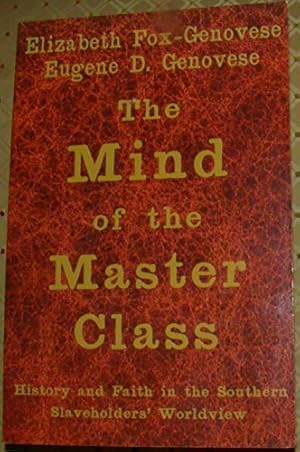
The Mind of the Master Class: History and Faith in the Southern Slaveholders' WorldviewPaperbackFREE Shipping by AmazonGet it as soon as Tuesday, Apr 28Only 11 left in stock (more on the way).
The Political Economy of Slavery: Studies in the Economy and Society of the Slave South (Wesleyan Paperback)PaperbackFREE Shipping on orders over $35 shipped by AmazonGet it as soon as Wednesday, Apr 29Only 9 left in stock - order soon.
Roll, Jordan, Roll: The World the Slaves MadePaperbackFREE Shipping on orders over $35 shipped by AmazonGet it as soon as Tuesday, Apr 28Only 1 left in stock - order soon.
Defending Dixie's Land: What Every American Should Know about the South and the Civil WarPaperbackFREE Shipping on orders over $35 shipped by AmazonGet it as soon as Tuesday, Apr 28
Customers also bought or read
- Without Consent or Contract: The Rise and Fall of American Slavery (Norton Paperback)
Paperback$24.63$24.63Delivery Tue, Apr 28 - Slavery and the Numbers Game: A Critique of Time on the Cross
Paperback$22.00$22.00Delivery Wed, Apr 29 - Old South, New South: Revolutions in the Southern Economy since the Civil War
Paperback$24.10$24.10Delivery Tue, Apr 28 - Defending Dixie's Land: What Every American Should Know about the South and the Civil War
Paperback$24.95$24.95Delivery Tue, Apr 28 - The Price for Their Pound of Flesh: The Value of the Enslaved, from Womb to Grave, in the Building of a Nation
Paperback$10.70$10.70Delivery Tue, Apr 28 - The Real Lincoln: A New Look at Abraham Lincoln, His Agenda, and an Unnecessary War
Paperback$12.28$12.28Delivery Tue, Apr 28 - The Mind of the Master Class: History and Faith in the Southern Slaveholders' Worldview
Paperback$48.65$48.65FREE delivery Tue, Apr 28 - Historical Perspectives on the American Economy: Selected Readings
Paperback$27.00$27.00Delivery Wed, Apr 29 - Slavery's Capitalism: A New History of American Economic Development (Early American Studies)
Paperback$32.52$32.52Delivery Tue, Apr 28 - Albion's Seed: Four British Folkways in America (America: a cultural history) (VOLUME I)
Paperback$24.79$24.79Delivery May 3 - 5 - The White Man's Burden: Historical Origins of Racism in the United States (Galaxy Books)
Paperback$14.38$14.38Delivery May 6 - 9 - Union Terror: Debunking the False Justifications for Union Terror Against Southern Civilians in the American Civil War (Union Terror in the American Civil War)
Paperback$22.42$22.42Delivery Tue, Apr 28 - The Political Economy of Slavery: Studies in the Economy and Society of the Slave South (Wesleyan Paperback)
Paperback$27.19$27.19Delivery Wed, Apr 29 - Enemy of the Disaster: Selected Political Writings of Renaud Camus
Paperback$16.95$16.95Delivery Tue, Apr 28 - Silencing the Past: Power and the Production of History, 20th Anniversary Edition
Paperback$19.00$19.00Delivery Tue, Apr 28 - Black Slaveowners: Free Black Slave Masters in South Carolina, 1790-1860
Paperback$25.00$25.00Delivery Tue, Apr 28 - Allies at War: How the Struggles Between the Allied Powers Shaped the War and the World
Hardcover$21.00$21.00Delivery Tue, Apr 28 - Lincoln's Peace: The Struggle to End the American Civil War
Hardcover$32.62$32.62Delivery Tue, Apr 28 - The Straight State: Sexuality and Citizenship in Twentieth-Century America (Politics and Society in Modern America)
Paperback$17.86$17.86Delivery Tue, Apr 28 - Fighting for American Manhood: How Gender Politics Provoked the Spanish-American and Philippine-American Wars (Yale Historical Publications Series)
Paperback$24.00$24.00Delivery Tue, Apr 28 - Hope Never to See It: A Graphic History of Guerrilla Violence during the American Civil War
Paperback$17.96$17.96Delivery Tue, Apr 28
Editorial Reviews
Review
― New York Times Book Review
From the Back Cover
About the Author
Stanley L. Engerman is an economist and economic historian at the University of Rochester. His controversial writings on the economics of slavery with economist Robert Fogel were some of the first modern treatments of the subject.
Product details
- Publisher : W. W. Norton & Company
- Publication date : August 17, 1995
- Edition : Reissue
- Language : English
- Print length : 336 pages
- ISBN-10 : 0393312186
- ISBN-13 : 978-0393312188
- Item Weight : 12 ounces
- Dimensions : 5.6 x 1 x 8.3 inches
- Best Sellers Rank: #569,481 in Books (See Top 100 in Books)
- #266 in United States History (Books)
- #1,342 in U.S. Civil War History
- #1,375 in Human Resources (Books)
- Customer Reviews:
About the authors

Discover more of the author’s books, see similar authors, read book recommendations and more.

Discover more of the author’s books, see similar authors, read book recommendations and more.
Products related to this item
Customer reviews
Customer Reviews, including Product Star Ratings help customers to learn more about the product and decide whether it is the right product for them.
To calculate the overall star rating and percentage breakdown by star, we don’t use a simple average. Instead, our system considers things like how recent a review is and if the reviewer bought the item on Amazon. It also analyzed reviews to verify trustworthiness.
Learn more how customers reviews work on AmazonCustomers say
Generated from the text of customer reviewsSelect to learn more
Reviews with images
This copy was so marked up with purple marker it was very distracting to try and read.
Top reviews from the United States
There was a problem filtering reviews. Please reload the page.
- Reviewed in the United States on March 4, 2024Format: PaperbackVerified PurchaseVery well written (non-technical) synopsis of their technical papers dealing with the economics of chattel slavery pre War Between the States. Contrary to the prevailing opinion, before this came out in 1976, slavery as economically viable and thriving and not likely to die out.
Interesting ramifications for the factory system and division of labor for the industrial age as well. Must read this book !

- Reviewed in the United States on August 19, 2017This is an outstanding work on slavery in the U.S. The author takes the reader across time from Colonial America to the Reconstruction tragedy years. The work is the idea ideal for the serious observer of history being a product of years of outstanding research. It is actually written as a two volume set. The first takes a serious non-emotion look at Slavery in America with outstanding references. The observations of the author are based on formulamatic surveys found in vol. 2. The reader can rest assured that volume 1 is a stand alone book after I read vol. 2 which explains in detail the equations used and buttresses the information of vol. 1. This is a must for the serious researcher. I highly recommend both volumes.
- Reviewed in the United States on August 7, 2013Format: PaperbackVerified PurchaseGood book a little repetitive on some topics, gives a new perspective on that era in time and the economic perspective.
- Reviewed in the United States on June 2, 2016Format: HardcoverVerified PurchaseIn the course of discovery in old US Government documents, Nobel Peace Prize Winner in Economics Professor Fogel came to the amazing conclusion that on the whole, Southern Slaves fared better overall physically in diet and housing than many of the so called, "Free Working Class People" in the Industrialized Northern States. Slaves were treated much better than we are taught today because in a slave economy their worth is a substantial monetary investment. The facts in the archived US Government documents; production records, bills of lading for food, etc. are irrefutable. In my opinion, the author's conclusions run contrary to the politicaly correct speech of today making for a challenging and thought provoking book.
The Southern States use of slave labor made them a, "economic juggernaut" poised to overtake the Industrialized Northern States economically prior to the Civil War. Of course, we can not put any price on a person's freedom and the author does not suggest otherwise.
- Reviewed in the United States on August 27, 2015Amazing analysis. Hard to figure out how to take it - of course slavery was terrible, but the economic implication is that it wasn't so bad (economically), especially compared with the time since Emancipation. Then try to weigh the economic impact vs the social, family, educational impact, and it puts the economic impact at the bottom of the list, convincing me that we still have a Very Long way to go to repair all the damage to millions of families.
- Reviewed in the United States on November 17, 2019Format: PaperbackVerified PurchaseI started to read this book that was presented in "Book of the Month" in Readers Digest (1974). I read a little & stopped. I wanted to read it from the book so I ordered the book. I could NOT put it down.
- Reviewed in the United States on February 9, 2006Format: PaperbackVerified PurchaseFirst, I will be forthright and say that I am an unreconstructed Southerner. If that makes my review prejudiced, so be it. But I would be willing to wager that all those reviewers who critisize this work and give it only 1 or 2 starrs, while glowingly giving indirect 5 star recommendations to Gutman's works, are just as prejudiced the other way. The fact of the matter is that 'we' rate like we think and no volume of material is going to sway our preconceived or 'brainwashed' notions.
I have read most of the Slave Narratives and I've make a lifelong (I'm 56) study of like in the Antebellum and post-war South, plus I can still remember life in rural Louisiana in the 50's as a small boy and have heard many stories from grandparents born before 1900. I have also read many many works (no longer in print) written right before and right after the war.
First, anyone who believes the Civil War was fought over slavery is just plain foolish and definitely has an agenda and will NEVER learn anything. With that said, and based on all I have read, I believe that the real truth lies somewhere almost in the middle of what 'Time on the Cross' proposes and what Gutman's contradictory writing show.
I believe that before ANY student or academician of this subject can even begin to form an opinion, they need to read the Slave Narratives to form a foundation. Afterall, these were real intereviews, real opinions, from the real people who lived through it. How can any modern author, through the tinted glasses of time, even hope to come close to evaluating this subject without reading these essential compilations? Whether they 'fit' into today's politically correct notions or not, they cannot be ignored (even though they have been suppressed for many years as if they never existed).
Slavery was a terrible thing that happened all over the world, and, I believe that had it not been for the assassination of Lincoln (who believed all blacks should be returned to Africa!), that race relations in this country would have been much different than they were up until 1970. I believe that race relations were hurt terribly by the reconstruction of the South.
Do I believe the United States would be better off today if it was an all-white society? Yes, I do. I believe this not because I don't believe two races can't co-exist (although this is naturally difficult), but because we have become so sensitive today and politically correct that not even Bill Cosby and address the real problems of the black community without being attacked, so how can I expect any better.
I heard tonight on TV that it is 'unknown' why the illigitimacy rate is so high among black teenagers. Well, duh! Simply put, what has happened in this country is that whites and blacks were mixed in the 60's and 70's in order to provide more opportunity to blacks and to raise their standards. Well, this would have been difficult enough to do in the first place since it defies the laws of nature and physics. But, when political correctness and 'race sensitivity' is added to the equation, there was only one outcome.
That outcome is a lowering of standards for blacks and whites alike - not only academically, but socially and morally as well. I know for a fact that in the first half of the 20th century, the moral level of blacks was much higher than it is overall today. Why?
I believe that an environment was created (probably on purpose) where instead of the lower elements (blacks) being elevated to higher levels of morality and academics and socio-economics by whites, that the reverse happened. The standards were pulled down and now today (as evidenced by our high schools) the overall levels of both blacks and whites are lower than either were before integration was even started. It will continue to go lower, I guess, until the US is at the bottom of the list in educational level compared to other countries. Will we ever learn? If we care about all our children, both black and white, are we to sacrifice them on the altar of 'race relations'? Are they to become 3rd rate when compared to countries like China, India, Russia, Japan, and most of Europe on educational levels? Probably so. But, the government and the race panderers will have what they want.
Top reviews from other countries
-
giulianoReviewed in Italy on April 27, 20134.0 out of 5 stars time on the cross
Format: PaperbackVerified Purchaselibro base per capire la visione più recente dell'economia schivista negli stati del sud. vincitore dell'unico premio nobel assegnato alla storia economica
S. SmithReviewed in the United Kingdom on August 20, 20123.0 out of 5 stars A too favourable view of Slavery
Format: PaperbackVerified PurchaseThis book is about a highly sensitive and controversial subject. Its main aim is to shift the debate on slavery away from an anecdotal approach based on impressions to one based on their "cliometric" or statistical methodology, a method which discounts whatever is not measurable. Unfortunately its central aim, which should make it a critical contribution to the study of North American slavery, is overshadowed by the authors' apparent desire to provoke controversy. Its other failing is its authors' unwillingness to engage fully with the brutal nature of slavery, claiming that it is not relevant to their economic study.
Fogel and Engerman attack the historians they regard as economically illiterate, particularly Ulrich Phillips. Phillips believed that slavery was an inefficient user of incompetent labour, financially unprofitable and doomed to failure in competition with free labour, and that it inhibited the economic development of the southern USA. He also argued that the aim of plantation society was less to make money than to control and "civilise" its black slaves and that its leaders were benign patriarchal landlords, not crude exploiters.
Fogel and Engerman disagree on every point. They challenge Phillips' stereotype of slaves as incompetent or inefficient. They also argue that southern farms using slave gang labour were more efficient than northern free farms, and that gang labour was efficient and well managed, often by black managers. Their economic evidence for this efficiency seems credible. However, they also show that gang labour involved forcing slaves to work in conditions in which free labour, black or white, would refuse to work except for wages that would make the plantations uneconomic. The apparent efficiency of gang labour was therefore based on compulsion not purely on economic factors.
Secondly, they argue that the material conditions of slaves were not inferior to those of free farmers, including southern poor-whites. Here, their estimates are based on limited data (often planters' rough estimates) of food produced on southern plantations, or on national, mainly northern, averages frequently from post civil war years. This not only makes their conclusions on living standards dubious, but suggests a less than impartial acceptance of unsuitable data to prove their assumptions.
Fogel and Engerman seem largely insensitive to the human consequences of slavery. They excuse this, claiming that their study is about the economics of slavery in comparison with free farming. This looks like an evasion: Phillips, who they rightly criticise, tried to describe the whole phenomenon of pre-Civil War slavery and these authors' attack on him and others is not limited to economics. For example, their attacks on 19th century accounts of bad plantation conditions, not only from convinced abolitionists, are close to an apology for the plantation system.
Overall, the authors prove some, but not all, of the points they make on the efficiency of slavery, but only in in purely economic terms. However, their optimistic views on the material conditions of slaves and their minimising of its brutality and oppression detract from the value of their account. If you read this book, read it critically, and be aware of its limitations.
One person found this helpfulReport
D. HallidayReviewed in the United Kingdom on January 13, 20152.0 out of 5 stars Severely flawed
Format: PaperbackVerified PurchaseI used this book for an investigation of cliometrics since it's one of the most famous examples of a cliometric study.
It uses cliometric (economic) techniques to investigate the institution of slavery and come up with some revolutionary conclusions.
However, the reader should be aware this work is now regarded as almost completely discredited for many reasons, including sloppy methodology, incorrect source data, misrepresentations, flawed assumptions and outright non sequiturs. In my opinion, it's one of those history works like AJP Taylor's Origins which sets out to be deliberately provocative, cherry picks whatever supports a (politically motivated) preconceived conclusion and ignores contrary evidence to come up with an unconvincing "revisionist" conclusion. Like AJP Taylor's Origins, it received wide acclamation from the general public but severe criticism, even outrage, from experts some of which was published in a detailed rebuttal.
If you want to read it, best would be to read it in conjunction with Gutman's critique:
http://www.amazon.co.uk/Slavery-Numbers-Game-Critique-Blacks/dp/0252071514/ref=sr_1_5
2 people found this helpfulReport