- Roadmap
Making a roadmap: How-tos, templates, and tips
Jump to:
What is a roadmap?
Roadmaps are your strategy at a glance.
As the name suggests, roadmaps are a visual guide pointing you to your goal and giving you directions to get there. They are a type of planning tool that features your targets or objectives, milestones along the way, plans of action, and timelines.
When used correctly, roadmaps can become a single source of truth for you and your team as you tackle a project, navigate challenges, meet milestones, and successfully complete the initiative.
Contrary to popular belief, roadmaps aren’t exclusively just for product planning. From businesses plotting next year’s operational targets to individuals setting their personal resolutions, roadmaps can be used for a wide variety of reasons.
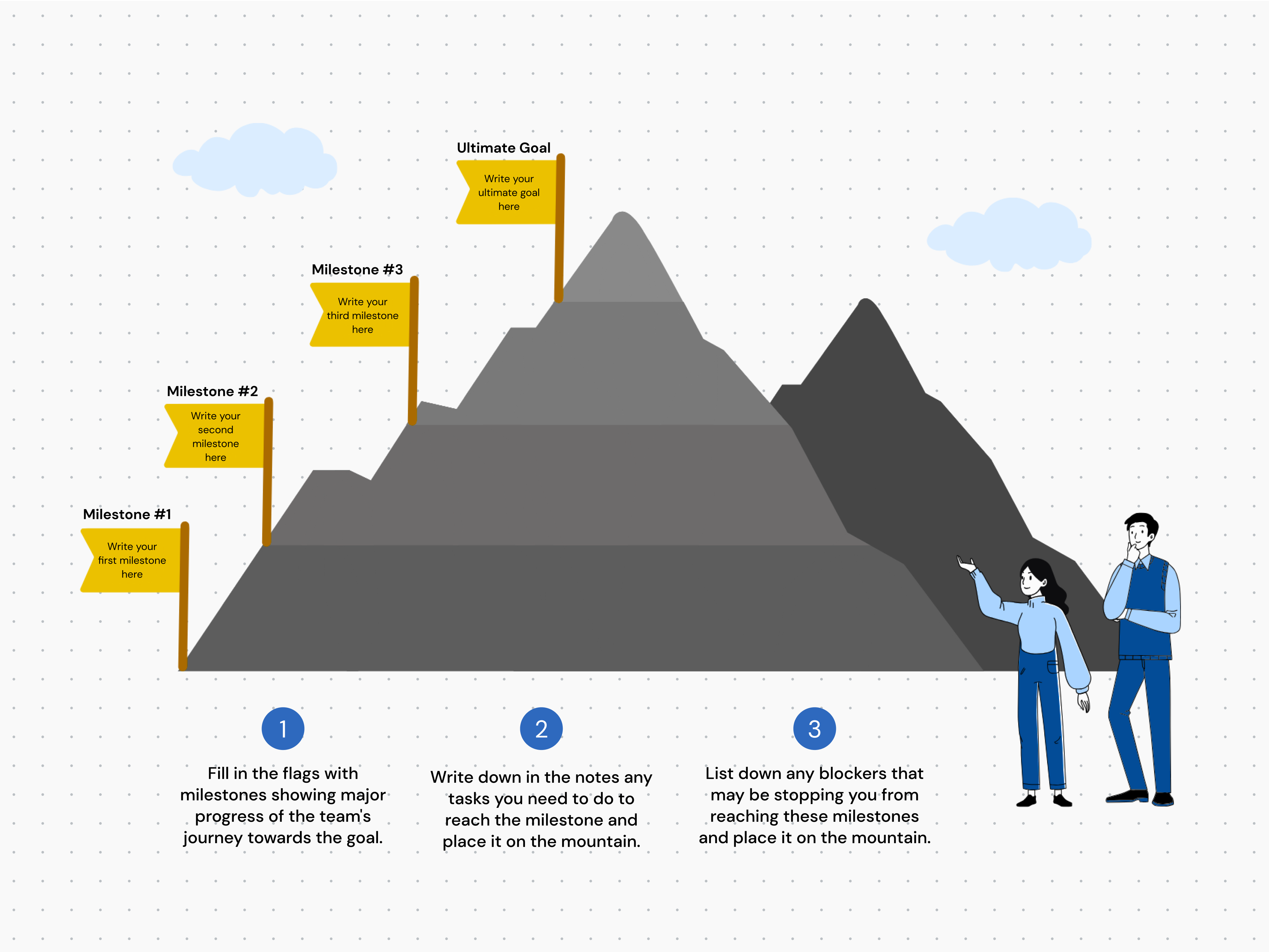
A roadmap shows the milestones you need to achieve to reach your ultimate goal.
Is it another term for the Gantt chart?
Roadmaps and Gantt charts(opens in a new tab or window) are not the same. Although often confused with one another due to their similarities, they serve two distinct purposes. Roadmaps focus on goals; Gantt charts break down timelines.
Roadmaps are for overall targets and deliverables. They are generally high-level, summarizing the entirety of the initiative in terms of goals or milestones set towards an ultimate, final objective.
On the other hand, Gantt charts focus on timelines. They can be incredibly detailed, containing every single project deliverable plotted against a given timeframe. They are used to track schedules and monitor the progress of a project based on due dates.
Beyond that, the most obvious difference between these two planning tools is their appearance. Gantt charts follow a fixed, tabular format. Timeframes are plotted as columns while deliverables are listed as rows. These are then connected to quickly show the readers which items are due for which time period.
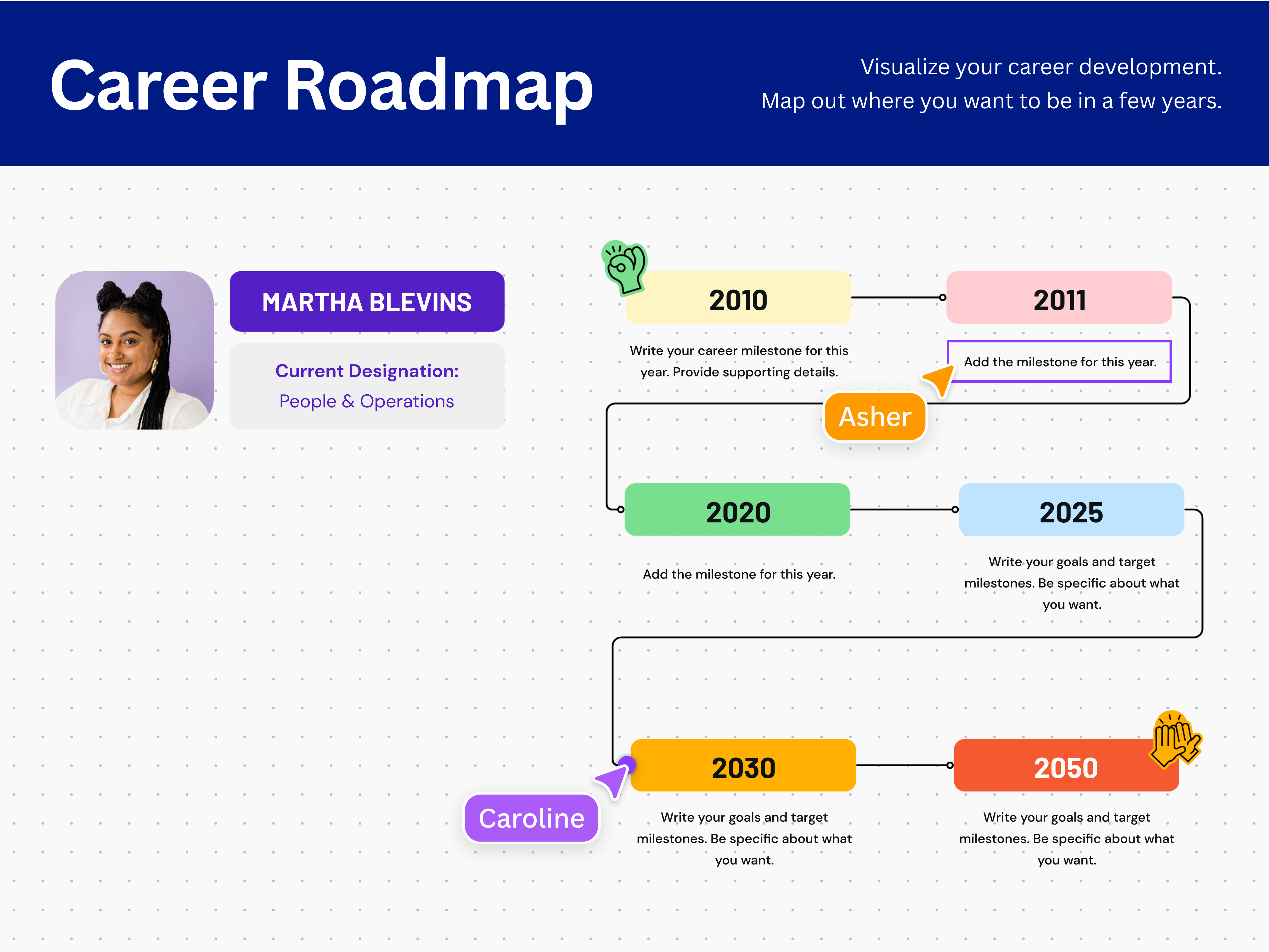
Example of a roadmap about career development over the years.
In contrast, roadmaps don’t have a definitive appearance. They can feature elaborate, colorful graphics and look exactly like a map. They can be a simple graph with a central line and branches to indicate milestones. Or, they can be designed in a tabular format much like a Gantt chart.
The point of building a roadmap is to break down big projects into smaller goals or milestones. As such, looks don’t really matter when it comes to roadmaps. However, making creative use of visuals such as eye-catching colors, engaging designs, and digestible layouts can help you and your team process information better and make it easier to remember your goals.
And since you will be — ideally — referring to your roadmap throughout the course of the project, having a solid, well-made design will definitely come in handy.
Why are roadmaps important to planning and strategy?
Roadmaps are your plans, visualized. They are a tangible reference to your targets and, just like an actual map, guide you to where you need to go and how to get there so you don’t veer off course. With a roadmap, you can stay on track of your goals, facilitate communication between teams, and make your project easier to manage.
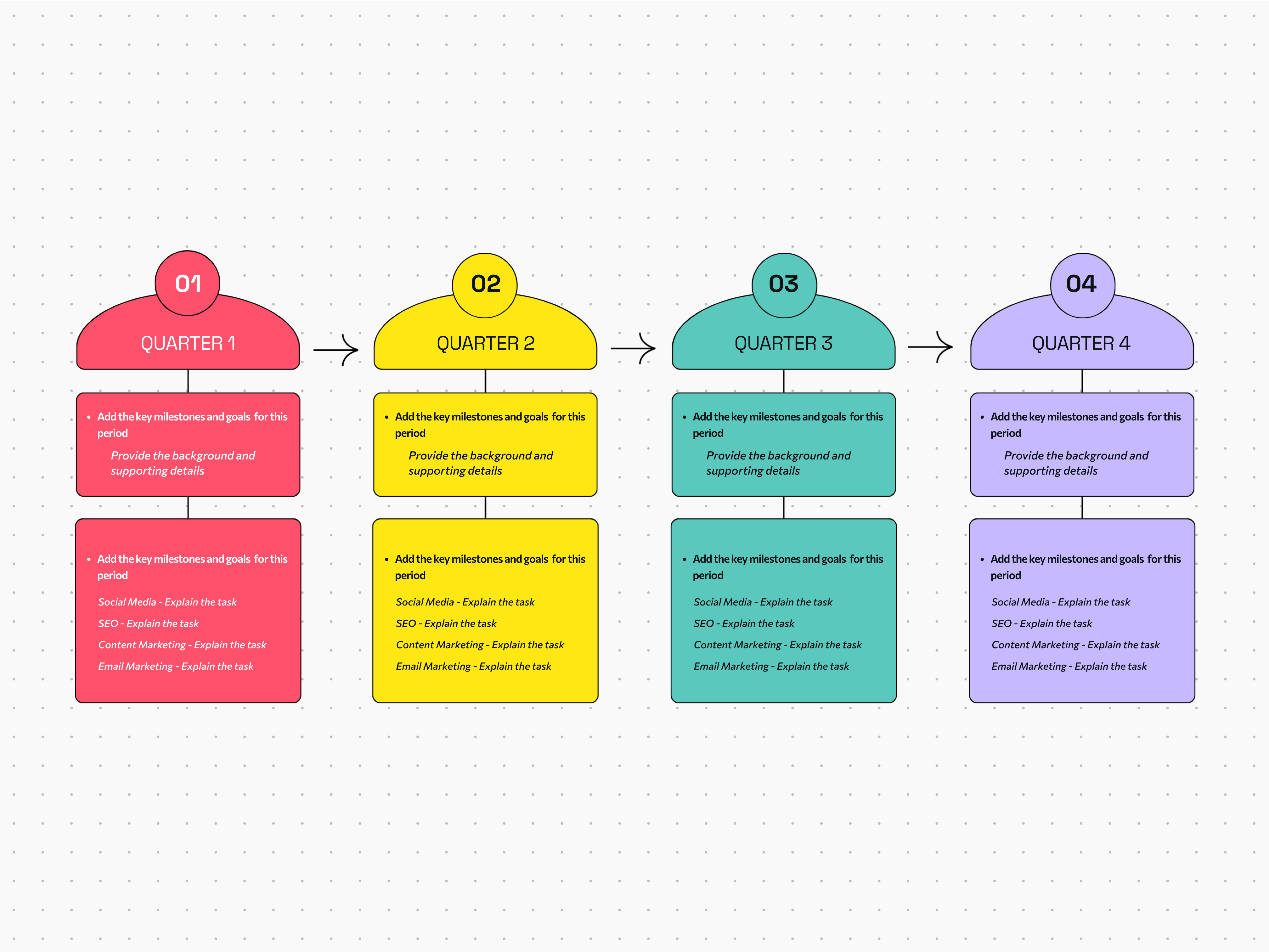
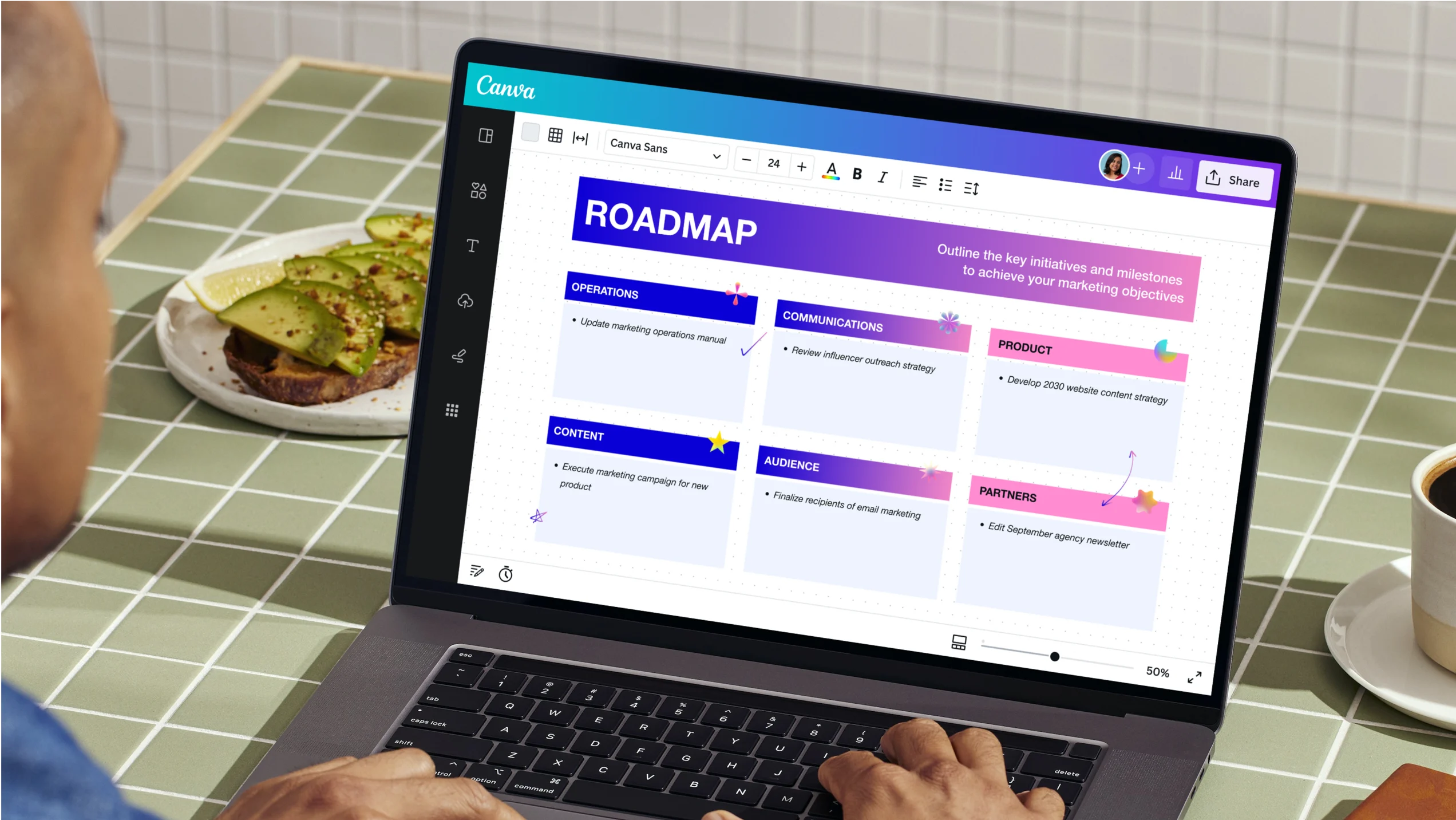
Example of a roadmap visualizing the strategy for a calendar year.
Setting goals is easy. Achieving them… not so much.
One common reason why people fail to reach their target is because they lose sight of their goals — literally and figuratively. With roadmaps, you have a physical copy of your objectives with you at all times, making it easier to remember exactly what you set out to achieve and by when.
Not only that, but the process of creating roadmaps also requires you to take a deep dive into your goals, evaluate your plans to see which ones are realistically doable, and produce a tangible reference to your targets that you can check regularly as you progress.
When working with other people, having a single point of reference is vital. For one thing, it keeps everyone aligned on the same page. For another, it can help minimize repetitive questions and reduce room for misunderstanding.
Over the course of the project, team members can refer to the roadmap anytime they need a refresher on your goals. Instead of waiting for team leaders to dictate what their next course of action should be or determine whether they are still on the right track, members can make the call themselves by reviewing the roadmap. If there is any confusion about the purpose of certain deliverables, they can go back to the roadmap to see if it fits with the plans.
In this way, roadmaps not only lessen the chance of miscommunication within the team but also save people’s time by minimizing the need for alignment meetings.
Roadmaps have just the right amount of information. They are not too high-level that they contain virtually no useful details, but neither are they too comprehensive that they are overwhelming to look at and maintain.
Instead, roadmaps break down big projects into smaller milestones. You can choose to add bite-sized information about timelines (e.g., “From Month X - Month Y”, etc.) as well as short points about relevant plans of action. But for the most part, you can keep things simple and just list down the various milestones leading up to the main goal, thus dividing one big project into smaller, shorter chunks of work.
Who can make and use roadmaps?
Literally, anyone who has a goal can make roadmaps. They are fantastic project planning tools and will especially benefit people making organizational decisions such as business owners, project managers, team leaders, as well as investors and stakeholders.
Business owners
Running a business is no walk in the park and neither is planning strategies to ensure company growth. Roadmaps help business owners visualize their company’s goals and the metrics of success. They are also important for keeping the rest of the business aligned with the bigger strategy, from top leaders and decision-makers all the way through to rank-and-file employees.
Project managers
Roadmaps help keep teams on the same page, which is a big boon for project managers. Not only do they serve as a central point of reference on project goals, outputs, and timelines, but they also help guide team members on their next course of action and expected deliverables.
Team leaders
Team leaders are responsible for structuring their members’ workload and guiding initiatives consistent with wider business goals. They are also primarily in charge of enforcing project plans and ensuring the team delivers on their expected outputs. As such, they can benefit from having their own roadmaps based on the bigger roadmap of the project or organization.
Investors and stakeholders
In general, stakeholders do not make the actual roadmap document. However, their opinions and insights are a key part of the planning process. They also monitor the progress of the project through check-ins and delivered outputs. Roadmaps serve as a reference for a project’s expected developments, making it easier to spot achievements and roadblocks and helping inform decision-making.
What to include in a roadmap?
Whether you’re mapping a business strategy or setting personal resolutions, the foundation of all roadmaps is largely the same. Of course, you can always tweak your own roadmaps to include or remove certain items as needed, such as the ones listed below:
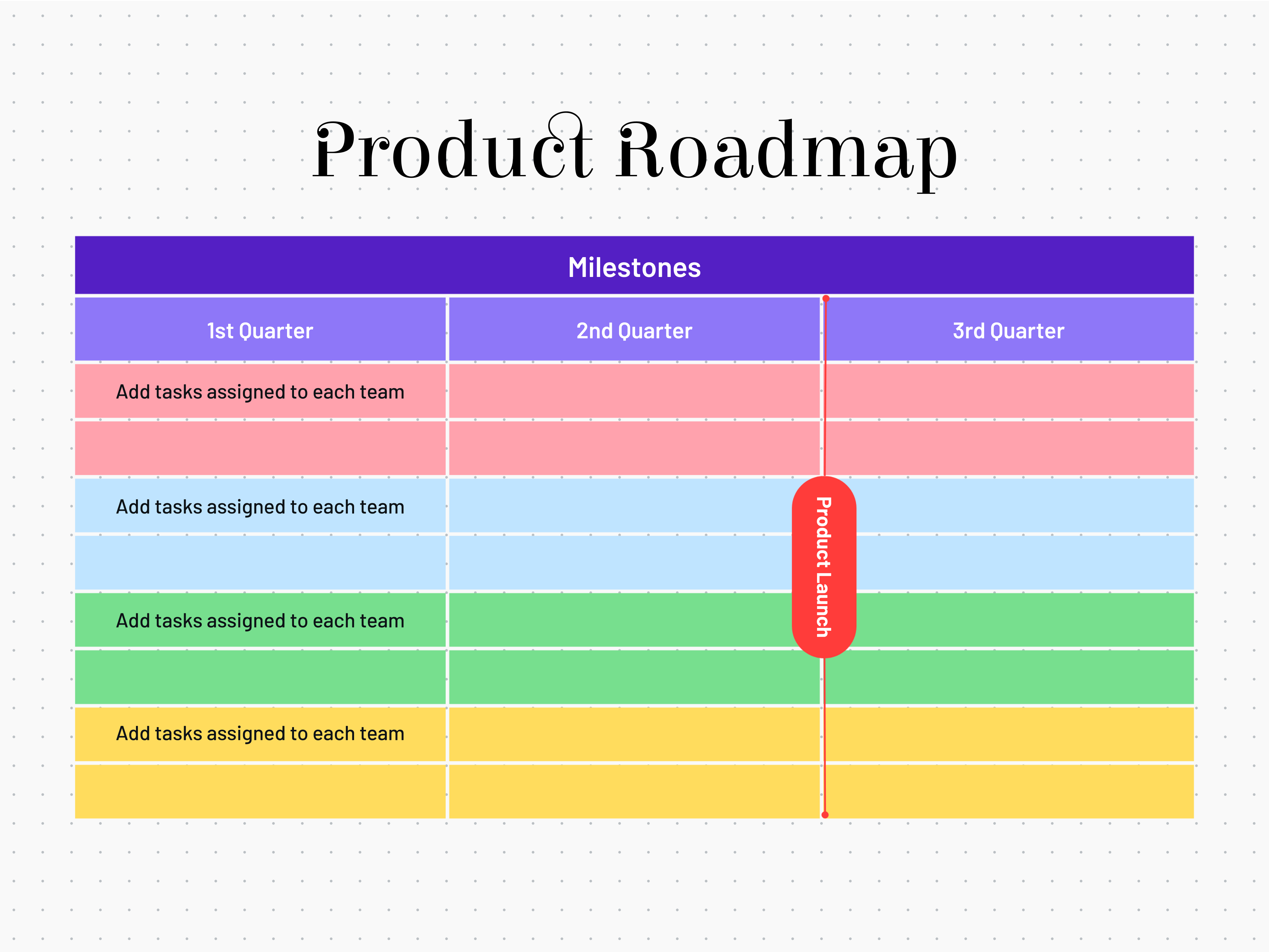
Example of a product roadmap with a colorful palette.
The most important part of any roadmap is the final goal. It is, after all, where the map points to. This is the primary outcome you want to achieve and describes what success looks like for the project.
Think of milestones as stopovers along the way. These are smaller targets achieved in pursuit of a larger, overarching goal. They can be written in terms of outputs produced through the project, such as “Produce XY number of products by YZ month” or “Close AB number of accounts.”
These are the actual tasks or activities needed to move the project forward. Ideally, these are aligned to each milestone to make it easier to understand what needs to be done to accomplish certain objectives.
A key part of project planning is allocating resources. Including details about expected resource needs will help manage expectations for everyone involved. These can cover costs, labor, time, materials, and more.
For projects involving multiple people, it’s best to designate points of contact for each team or item. This will help improve communication lines and boost accountability among the team.
Information about timelines is always vital to any project. Having definitive time periods is helpful, especially if the roadmap document will be circulated as reference material.
In cases where different members or teams are working on different components of the same goal, listing the dependencies is helpful for keeping alignment and reducing miscommunication. This allows people to see the relationship of their tasks to each other so they can manage their own workload and timelines and provide the necessary support.
What are the different kinds of roadmaps?
Roadmaps often come in various types, each with its own unique purpose and benefits. These include product roadmap, feature-based roadmap, business roadmap, strategy roadmap, and goal roadmap. Depending on your project, your roadmap may contain specific features and information to guide that initiative.
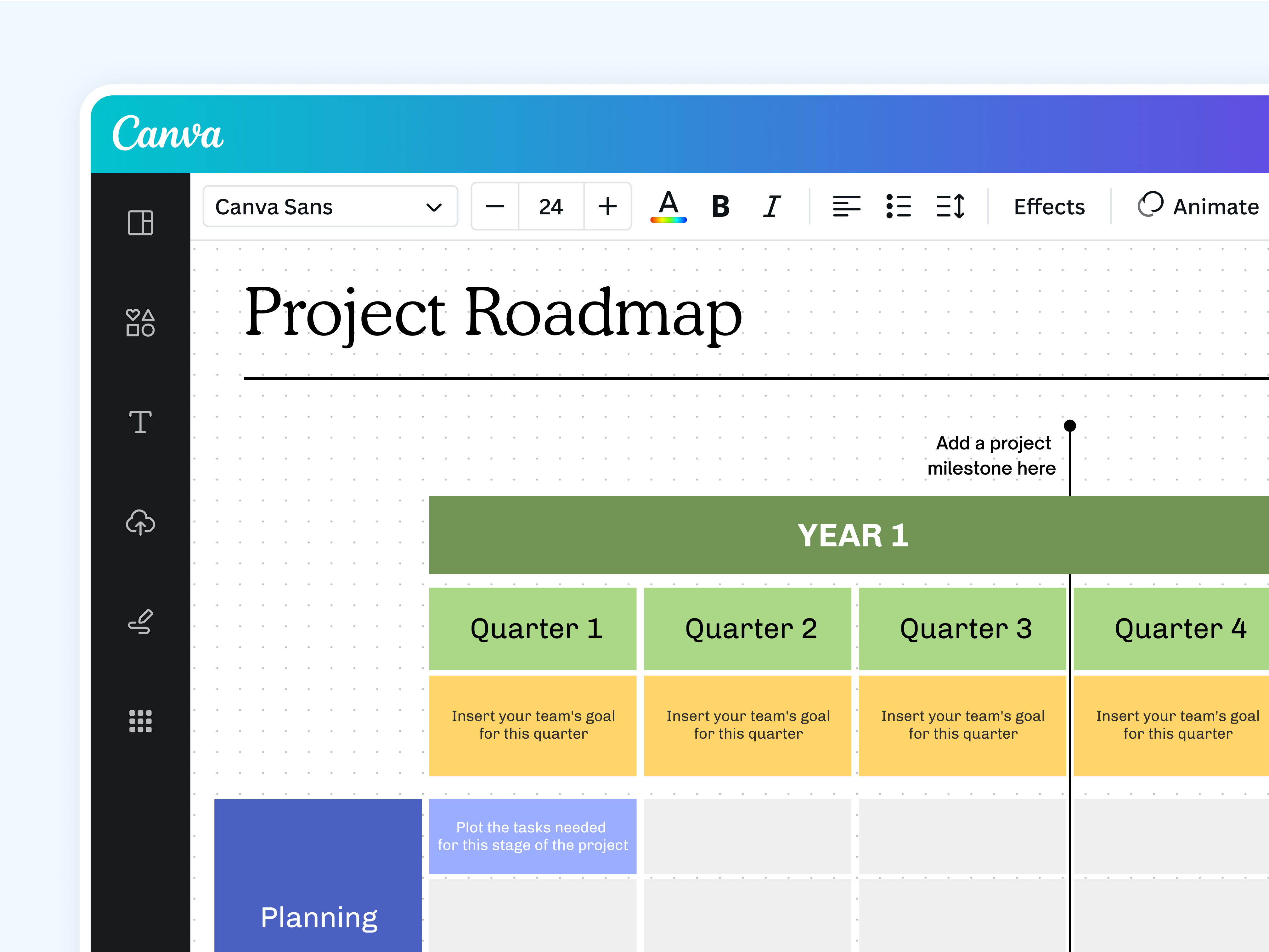
Plan your team’s goals for the year with a project roadmap made on Canva.
Product roadmap
Best for: launching new products
Product roadmaps contain pertinent information about a product’s lifecycle, from its conception and development, to launch, and maintenance. The roadmap can cover the entire lifecycle or focus on aspects of it. The format also depends on the project planner, but generally speaking, creating a product roadmap means including goals (i.e., which products to launch/manage), timelines (target dates and timelines), and deliverables (task assignments, outputs, etc.)
Feature-based roadmap
Best for: rolling out feature updates
This is a subcategory of the product roadmap that specifically focuses on individual features and functionalities. This type of roadmap shows a more detailed breakdown of the components of a product, with the final goal being to update, fix, replace, or even remove these features.
Business roadmap
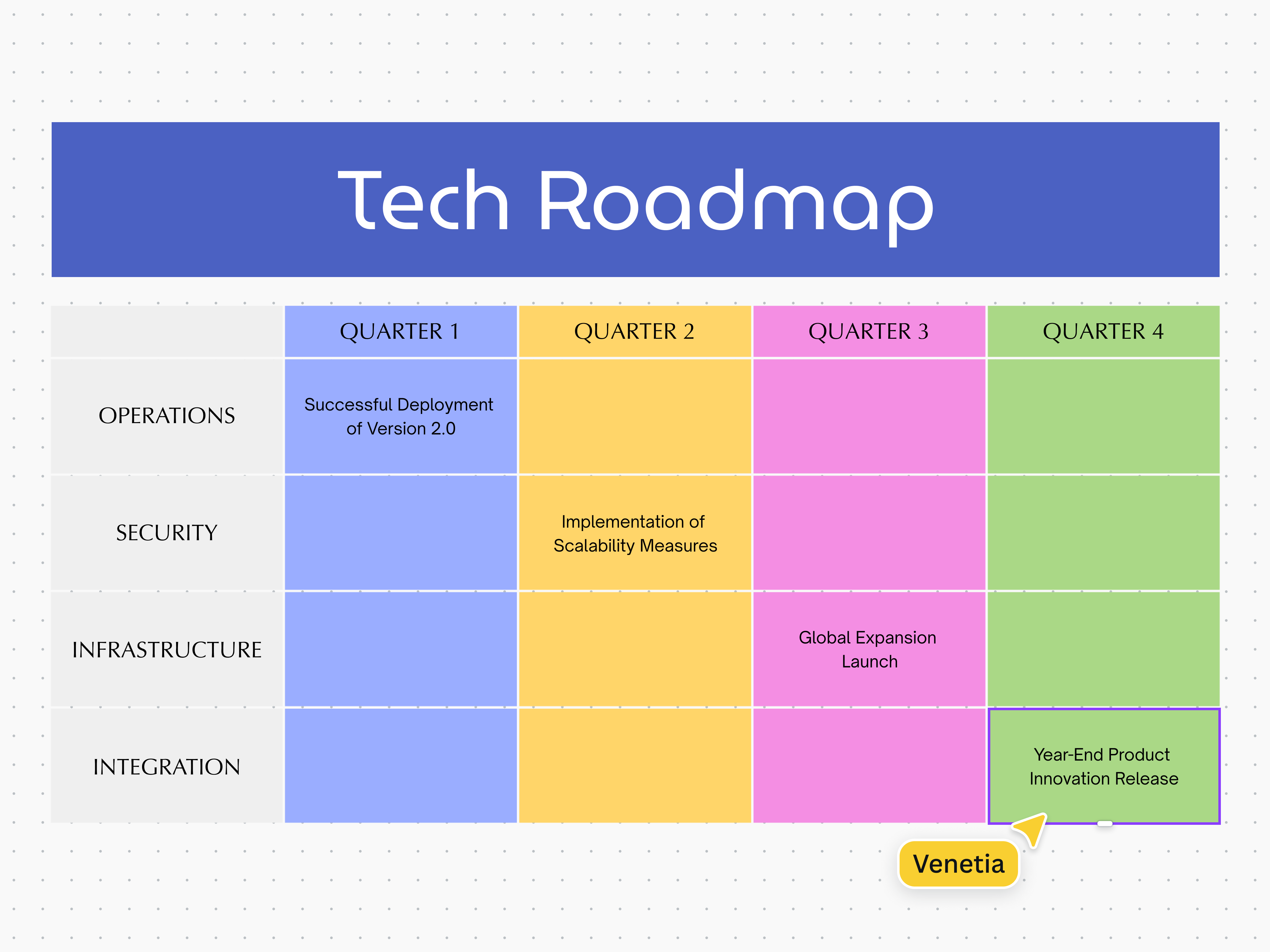
Example of a roadmap for an organization’s technology strategy.
Best for: identifying actions to be taken
Business roadmaps break down a company’s timelines into various stages, each with its distinct set of actions and target outputs. They serve as an at-a-glance reference to what the business intends to accomplish within a given period and the specific steps it needs to take to get there. Business roadmaps are commonly unveiled during year-end all-staff calls to guide the staff for the upcoming year’s objectives. They are also often shown during stakeholder and investor meetings to get their buy-in.
Strategy roadmap
Best for: setting high-level targets
Strategy roadmaps bridge the gap between your goals and plans of action. It shows what needs to be done and the rationale behind them. It is not a list of actions to be taken (i.e., business roadmaps) or a breakdown of timelines (i.e., Gantt charts). Instead, it focuses on the challenges and opportunities and delineates the outcomes desired, ergo, “what” needs to be done and “why.”
In effect, strategy roadmaps precede all other roadmaps, as action plans(opens in a new tab or window), timelines, and products will ultimately depend on the company’s strategy for achieving these.
Goal roadmap
Best for: personal goal-setting
Of course, businesses and project managers are not the only ones with a goal. For motivated individuals set on achieving personal milestones, using goal roadmaps will help you visualize your objectives clearly and stay on track toward reaching them. These can be customized to your liking, and even be designed as a poster which you can print and display as motivation.
How to make a roadmap?
To make a roadmap that actually works, it’s important to treat it as a living document. Instead of a one-and-done thing, think of roadmaps as a constant companion throughout your project. They can grow and change with you. While consistency is key to achieving goals, flexibility and adaptability are just as important.

The first step to creating a roadmap is to assess your current situation. Pinpoint any direct or indirect challenges you have or expect. These can include both problems that you are aiming to solve through the project (e.g., poor product sales = better marketing promotions), as well as roadblocks to the project itself (e.g., budget constraints, timeline considerations, etc.)
When it comes to meeting goals, slow and steady wins the race. While it’s nice to aim high and have big dreams, there are times when starting small — then scaling up later — is the way to go. Being prudent with your objectives is especially important when working with a lot of limitations.
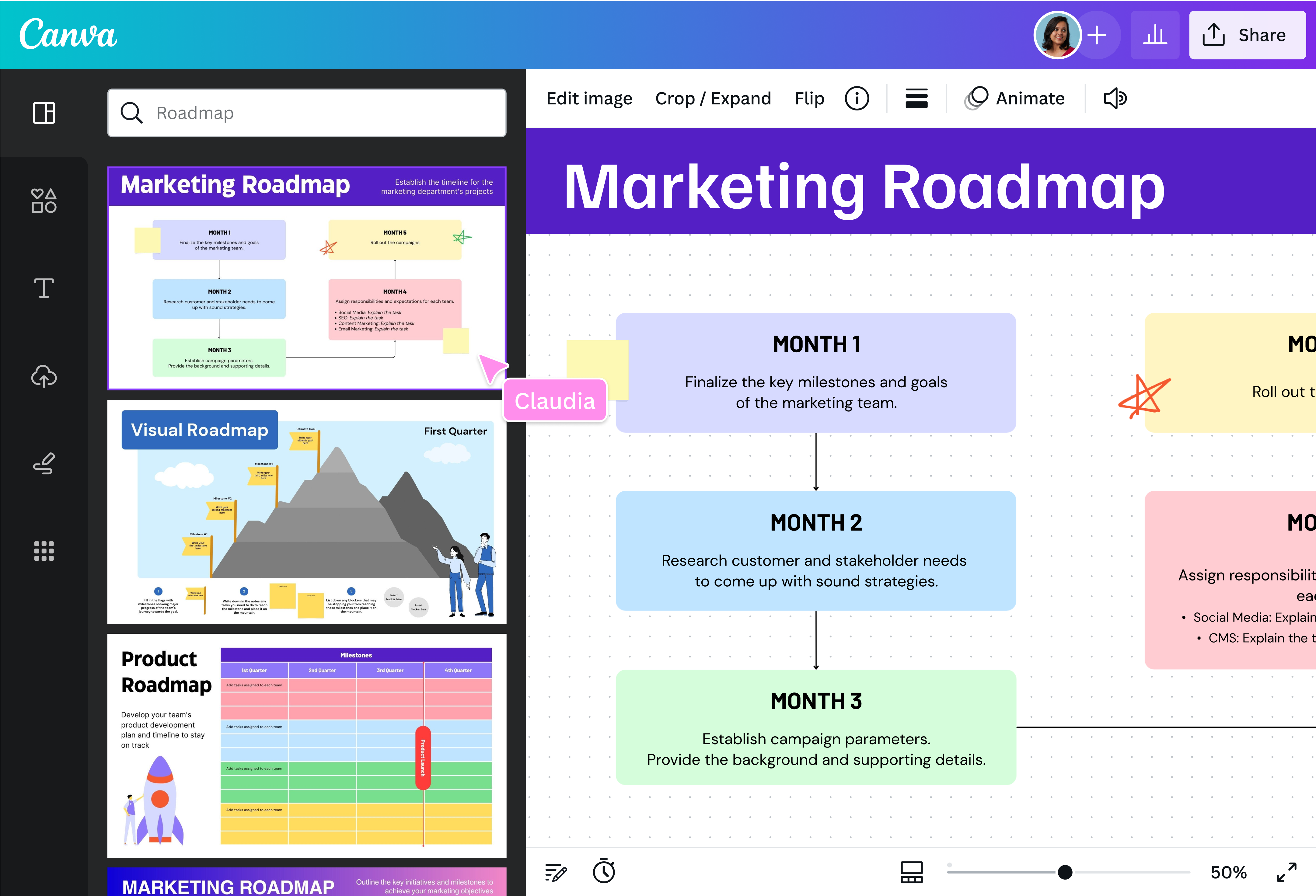
Different plans call for different roadmaps. Fortunately, you don’t need to create one from scratch thanks to Canva’s ready-made whiteboard templates. No matter what type of roadmap you need — whether you’re building a product roadmap, feature-based roadmap, business roadmap, strategy roadmap, or goal roadmap — there’s bound to be a template that perfectly matches your preferences.
Simply search for your preferred type of roadmap and take your pick of style, theme, and other categories. All of Canva’s roadmap builder templates are entirely customizable so you can make any adjustments, whether it’s a minor tweak in appearance to match your branding or a major restructuring to accommodate your goals.
After drafting your plans, doing your research, and picking your template, it’s time to populate your roadmap. Plot the information onto the template and adjust the layout accordingly. You can workshop this part with other team members and stakeholders to create a roadmap that works for everyone.
With a Canva account, your progress automatically saves online ensuring you never lose work. Keep working on your roadmap as many times as you need and freely make revisions down the line.
Once you and your team are happy with your plans, the next step is to turn them over to stakeholders and decision-makers for their final approval. Because this part may involve multiple revisions, designing your roadmap on Canva is the way to go. You can share it with stakeholders and allow them to leave their comments. From there, your team can make your revisions directly on the design, with the option to lock certain parts to avoid making unintentional changes to them.
Work doesn’t end once you have a finalized roadmap. To reiterate, roadmaps are a living document. They need to be revisited regularly and updated, when necessary, to account for new, unplanned developments.
Get inspired with roadmap templates
Creating a roadmap is more than just writing arbitrary goals. It takes careful planning, multiple reviews, and even iterative revisions as your project goes on and you come across new developments that call for a change of plans. Start on the right foot by choosing one of our roadmap examples below.


All you need in a roadmap maker
Success is about working smarter, not harder. That’s why you want a roadmap planner that can do all the heavy lifting for you so you can focus on what matters: making plans. Canva Whiteboards has a suite of user-friendly roadmap, retrospective(opens in a new tab or window), or process map(opens in a new tab or window) tools that let you map your road to success, all on an unlimited space.

Unlimited space for unlimited ideas
With a free infinite canvas and unlimited number of whiteboards, fully develop your ideas and still have room

Your ideas visualized
Build stunning tables and graphs with automatic flowcharts, or sketch them to life with Draw.

All your work, in one place
From plan to execution, it’s all here. Take notes, brainstorm, collaborate, and more on the same whiteboard.

Workshop ideas to perfection
With your team, develop ideas through comments and stickies, and keep sync sessions on track with a timer.

Share your work effortlessly
Share a link to your doc and control your team's access. Present directly from the editor with Presenter view.

Expand your Presentation to a Whiteboard
With just a single click, expand your presentation slides into infinite, collaborative whiteboards.
Roadmaps best practices
The best roadmap will effectively visualize your strategic intent while fostering team communication and collaboration. While building and maintaining a roadmap can be a challenging task, you can maximize its benefits by following these best practices.
Avoid confusion by using terminologies and formats that everyone knows. This means minimizing jargon and acronyms, and adding a legend and/or definition of terms if necessary. Use global standards to accommodate local differences, such as using the word for months instead of numbers (i.e., “1 February 2003” versus “01-02-03”).
Set timelines appropriate to the information on the roadmap. High-level documents like business and strategy roadmaps are better broken down in longer terms like years, quarters, or months. Conversely, detailed plans like product and feature-based roadmaps will benefit from narrower timeframes like days or weeks.
Information should be categorized and displayed intuitively, and formatting should be consistent throughout the document. For instance, if your roadmap follows a timeline format, items should be arranged chronologically from the first target milestone or earliest date to the last objective or latest date.
Depending on the project, adding progress trackers to your roadmaps will help you monitor your goals. These trackers can be a simple marker to indicate if an item is “pending,” “assigned,” “in progress,” or “completed.” They can also be a graph showing the percentage of completion, with each accomplished item having a designated value.
Because roadmaps are generally high-level, they tend to use fewer texts than other planning tools like Gantt charts. Using symbols and legends in place of texts helps you communicate effectively but succinctly. For example, dependencies can be connected with arrow lines. High-priority tasks can be marked with a star. And so on, and so forth.

Control who gets to access and edit your roadmap on Canva Whiteboards.
Circulate your roadmap to everyone involved in the project, from the team members carrying out the tasks to the decision-makers supervising the initiative. However, take care to provide editing access only to relevant users like select team members or item owners to prevent lost data, file damage, or security risks.
One way to group together related information is through color. For instance, you can assign a color for each team involved in the project, making it easy to see what tasks they are handling. You can also color code tasks based on their corresponding milestones so you can make the connection wherever they may be on the roadmap.
Roadmaps FAQs
In a nutshell, roadmaps are a visual planning tool that shows your goals at a glance. They contain your objectives, strategies and plans of action, timeframes, and relevant people involved such as item owners or stakeholders.
There are different kinds of roadmaps depending on your project. Each one features different information for achieving your goals, and can either be high-level or granular.
Anyone can make roadmaps and plot their goals, but they are especially useful for business owners, project planners and managers, team leaders, and stakeholders. Fortunately, with a roadmap creator like Canva’s, users don’t need to have a strong background in design to create high-quality, effective roadmaps.
Canva’s roadmap software is a fantastic place for create a roadmap online and on-the-go. The platform is free and equipped with a myriad of ready-made, customizable design templates, as well as practical and easy-to-use editing tools.
Build a roadmap that’s perfect for your needs by picking from hundreds of pre-built templates in a variety of styles, themes, and purposes. You can work at your own pace confidently thanks to a nifty auto-save feature that keeps your progress safe. Or, collaborate with teammates on the same working file for faster, more seamless coworking.
Was this page helpful?
Chart a course for success with roadmaps