Drones are no longer niche gadgets. They are used for real estate photography, inspections, recreation, and even delivery. But what happens when a drone hovers over your backyard or peers near your window?
The key question: When is a drone trespassing?
The answer depends on federal law, state and local rules, property rights, and intent. Let’s break it down.
Table of Contents
What Is Drone Trespass?
Drone trespass occurs when a drone enters the “immediate airspace” above private property without consent and interferes with the owner’s use or privacy.
The Causby Case – Who Owns The Sky Above Your Yard?
In United States v. Causby (1946), the Supreme Court ruled that property rights extend to the “immediate reaches” of airspace necessary for the owner’s enjoyment of land. While no exact height limit was defined, courts often reference up to ~83 feet as the zone where trespass may apply.
Translation: If a drone is hovering low enough to interfere with your privacy, property use, or safety, it may count as trespassing.
Federal Rules Vs. State & Local Laws
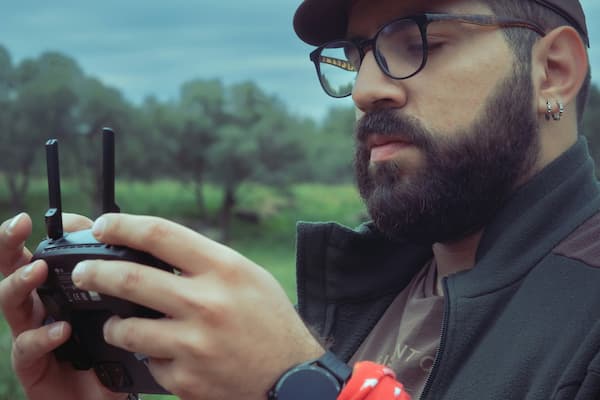
FAA Authority Over Airspace
The Federal Aviation Administration (FAA) controls all navigable airspace. Key federal rules:
- Drones must fly below 400 feet.
- Must remain in the pilot’s line of sight.
- Must not fly near airports or restricted areas.
- Recreational flyers must pass the TRUST test; commercial pilots need FAA Part 107 certification.
Federal law does not directly regulate privacy—that’s left to states.
Where State & Local Laws Step In
States and cities can regulate:
- Privacy violations (e.g., peeping, surveillance).
- Trespass and nuisance claims (repeated low flights).
- Noise ordinances and public park restrictions.
Important: States cannot override FAA authority, but they can criminalize drone harassment, peeping, and privacy invasion.
When Drone Flights Become Trespass Or Nuisance
- Trespass: Flying a drone low over someone’s yard without consent = trespass.’
- Nuisance: Even if not trespass, repeated noise, hovering, or disturbance of peace may be treated as nuisance.
- Privacy Invasion: Recording videos or images through windows, pools, or private areas counts as invasion of privacy, even in “public airspace.”
What Homeowners Can Do About Drone Trespass
Step 1: Document The Incident
- Take photos/video of the drone.
- Note time, date, and flight duration.
- Record the direction it came from.
Step 2: Check Local Laws
Search your state’s drone trespass or privacy law—many vary widely.
Step 3: Report The Flight
- FAA: File a drone incident report.
- Local Police: Report harassment, trespass, or surveillance.
Step 4: Don’t Shoot It Down
Destroying a drone can violate federal aircraft protection laws. You risk fines and charges. Instead, use legal remedies like complaints, restraining orders, or civil claims.
Comparison: Federal, State, And Local Drone Rules
| Authority | What They Regulate | Examples |
|---|---|---|
| FAA (Federal) | Safety, altitude, airspace, pilot licensing | Part 107, 400 ft ceiling, no-fly zones |
| State | Trespass, privacy, surveillance | Texas bans aerial surveillance, Virginia 50-ft rule |
| Local | Parks, events, nuisance | Some cities ban drones in parks or at night |
FAQs About Drone Trespassing

1. Can I Shoot Down A Drone Over My House?
No. Drones are considered aircraft. Shooting one down can result in federal charges and liability for damages.
2. How Low Does A Drone Have To Be To Trespass?
There’s no set height, but courts reference the Causby case (~83 feet). If a drone interferes with your privacy or enjoyment of property, it may count as trespass.
3. Can I Fly My Drone Over Someone’s House?
Yes, if you remain in public airspace and comply with FAA rules. But if you record without consent or fly low repeatedly, you risk privacy or trespass claims.
4. What Should I Do If A Drone Harasses Me?
Document it, report to local police, and file a complaint with the FAA. Some states classify drone harassment as a criminal offense.
5. Do Small Drones Or Toy Drones Need Permission?
All drones are subject to FAA rules. However, microdrones flown indoors do not require FAA permission.
Conclusion
So, when is a drone trespassing? The answer lies at the intersection of airspace law, property rights, and privacy protections.
While the FAA sets the rules for safe drone operation in public airspace, states and localities define what counts as trespass, nuisance, or harassment. In practice, a drone becomes trespassing when it flies low enough to interfere with your property use or privacy, or when it violates local privacy and surveillance laws.
For homeowners, the best course of action is to document, report, and rely on legal remedies—never take matters into your own hands. For drone pilots, understanding both FAA Part 107 rules and state trespass laws ensures you fly responsibly and avoid legal issues.
Ultimately, safe and respectful drone use depends on balancing public airspace rights with private property protections.