Log inSign up
NASA Earth
NASA
24.9K posts
Image
user avatar
NASA Earth
NASA
@NASAEarth
NASA’s favorite (habitable) planet. 🌎💚 Studying Earth from ground to orbit.
Earth
science.nasa.gov/earth/
Joined March 2009
86
Following
3.7M
Followers

New to X?

Sign up now to get your own personalized timeline!

Create account

By signing up, you agree to the Terms of Service and Privacy Policy, including Cookie Use.

Terms·Privacy·Cookies·Accessibility·Ads Info·© 2026 X Corp.
Don't miss what's happening
People on X are the first to know.
Log inSign up
  • NASA Earth reposted
    user avatar
    NASA
    @NASA
    Jul 3
    Happy 250th, America! 🇺🇸 Red (Mars), white (Moon), and blue (Earth) brought to you by the solar system.
    A crisp photo of Mars against black space. The Red Planet appears rust-colored with dark texturing along its middle and a light patch on its lower right side. Credit: USGS Astrogeology Science Center
    A newly-released photo of our Moon taken by the crew of Artemis II. The top portion is shadowed by black space. This angle captures a mostly uniform, light gray portion of the lunar surface, with darker patches in the lower third. Craters of various sizes are visible all over the Moon’s surface—most easily visible at the edge of the upper shadow. Credit: NASA
    A newly-released photo of Earth's horizon taken during the Artemis II mission from the window of the Orion spacecraft. This view shows the hazy, blue atmosphere on top of faded, textured clouds. The Moon appears as a tiny, white dot in the distance. Credit: NASA
    1.5M
  • user avatar
    NASA Earth
    NASA
    @NASAEarth
    Jul 2
    What’s going on here? 🤔 The poles are the only places ICESat-2 can’t gather data. Instead, the satellite’s orbit is designed so that it can better study the edges of the polar ice sheets and sea ice, where much of the change is happening.
    Image
    00:00
    34K
  • user avatar
    NASA Earth
    NASA
    @NASAEarth
    Jul 1
    Goooal! ⚽ During the #FIFAWorldCup, NASA air quality data is helping @CDCgov and its partners better understand the air that soccer players, fans, and nearby communities are breathing during the 2026 games.
    Photograph of a soccer ball sculpture. In the background is part of a World Cup venue that is decorated with flags from various countries. Credit: NASA/Luna Posadas Nava
    25K
    user avatar
    NASA Earth
    NASA
    @NASAEarth
    Jul 1
    The work builds on 20+ years of collaboration between NASA and the CDC. The partnership illustrates how NASA shares information freely and openly to the public, as well as agencies and industries around the nation.
    Image
    NASA Data Helps CDC Track Air Quality During World Cup 2026 - NASA Science
    From science.nasa.gov
    8.2K
  • user avatar
    NASA Earth
    NASA
    @NASAEarth
    Jun 30
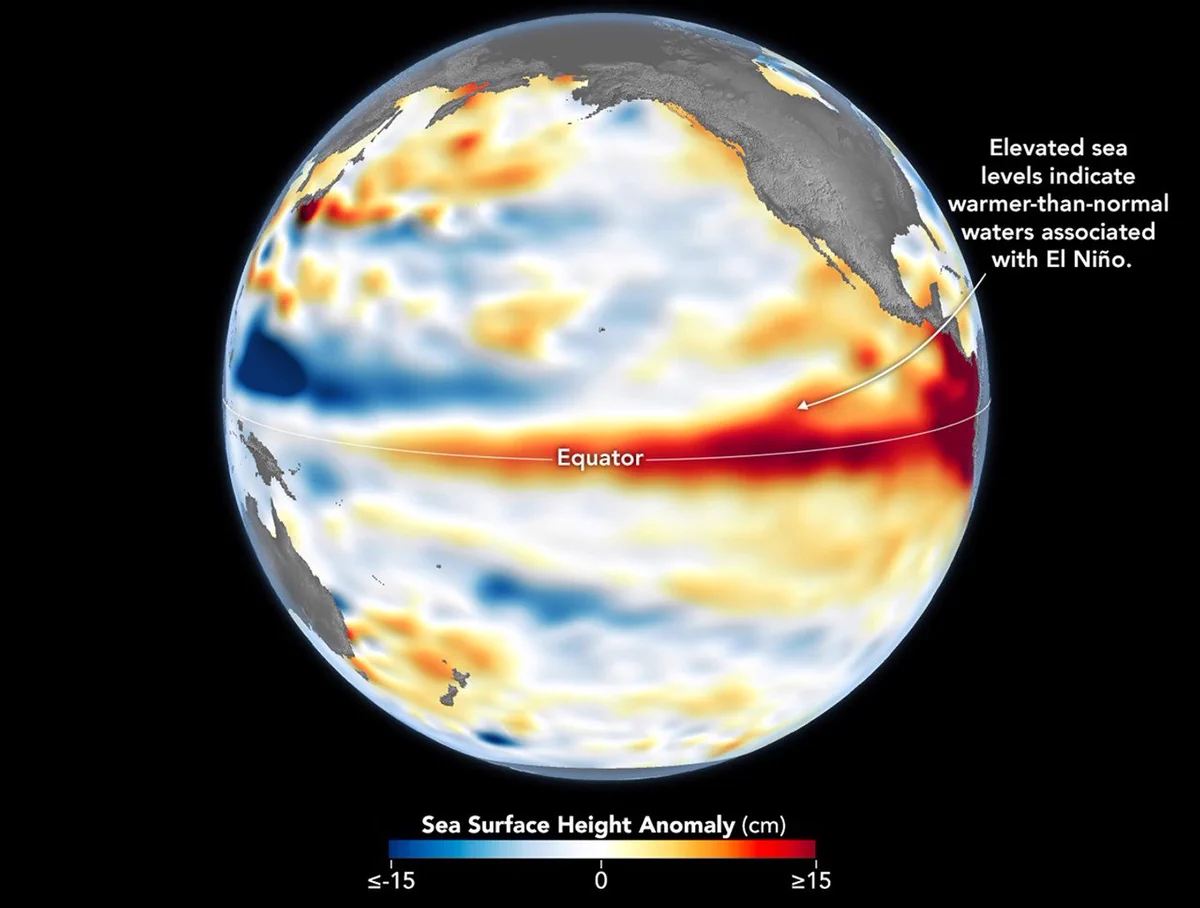
    Recently @NOAA announced the return of El Niño, as ocean temperatures in the tropical Pacific remained above average for several months. NASA scientists are seeing a complementary sign of El Niño: rising sea levels as warmer ocean water expands.
    A global map centered on the Pacific Ocean shows a band of red, higher-than-normal water levels across the central and eastern equatorial Pacific and a broad patch off the coast of South America. Credit: NASA
    40K
    user avatar
    NASA Earth
    NASA
    @NASAEarth
    Jun 30
    Observations of sea surface height from the Sentinel-6 Michael Freilich satellite in June indicate that the 2026 event was continuing to strengthen. More:
    Image
    El Niño Is Underway - NASA Science
    From science.nasa.gov
    7.8K
  • NASA Earth reposted
    user avatar
    NASA Science
    NASA
    @NASAScience_
    Jun 29
    Recently, two powerful earthquakes struck Venezuela. NASA satellites captured imagery and data that are supporting response efforts. This NISAR map shows how the quakes shifted the land surface. Explore more: go.nasa.gov/4v9HTcx
    Map of NISAR data showing changes in land surface movement after the Venezuela earthquakes. Red and orange areas indicate westward movement and blue and green areas indicate eastward movement. Yellow areas experienced little or no movement. The darkest red areas are near the coast to the west of Caracas.
    48K
  • NASA Earth reposted
    user avatar
    NASA Solar System
    NASA
    @NASASolarSystem
    Jun 29
    Tonight's full Moon has an atmosphere too — just extraordinarily thin. With about a quadrillion times fewer molecules in a given space than Earth's, it’s so sparse that space rocks strike the surface directly instead of burning up! go.nasa.gov/4f5xx8D 📸 NASA/Bill Dunford
    A close-up of a dandelion seed head is silhouetted against a dark blue sky, with the bright, full Moon shining directly behind it, illuminating the delicate seeds. Credit: NASA/Bill Dunford
    44K
  • NASA Earth reposted
    user avatar
    NASA Ames
    NASA
    @NASAAmes
    Jun 29
    Something sweet is on the rise! 🍓🌕 The Strawberry Moon will light up the night sky tonight, reaching peak illumination in late afternoon. The best time to see it will be shortly after sunset.
    A full moon hangs against the blackness of space as a gradient of blue glows from Earth’s atmosphere. Wispy clouds in hues of white and orange appear like small mountains in the bottom left corner and middle right. Credit: NASA
    65K
  • user avatar
    NASA Earth
    NASA
    @NASAEarth
    Jun 25
    When you wish upon a star (dune)… ⭐️ These windswept sand formations, known as star or pyramid dunes, are a distinctive feature of the Sahara and have sharp multidirectional ridges. They form when the wind transports and deposits fine sand, forming mounds of sediment.
    An astronaut photo from the International Space Station shows Morocco’s Erg Chebbi dune field in the Sahara Desert. Large, tan star dunes with sharp ridges stretch across the center of the image, with smaller dunes, roads visible near the top and agricultural fields visible in the bottom right corner. Credit: NASA
    38K
    user avatar
    NASA Earth
    NASA
    @NASAEarth
    Jun 25
    A @Space_Station astronaut captured this photo while orbiting over northern Africa on November 10, 2024. More:
    Image
    Sandy Sculptures in Morocco’s Erg Chebbi - NASA Science
    From science.nasa.gov
    7.8K
  • NASA Earth reposted
    user avatar
    NASA Science
    NASA
    @NASAScience_
    Jun 23
    A NASA-sponsored team developed an open-source tool that uses machine learning to speed up identification of potential flash floods, delivering near real-time insights to help communities respond faster. Explore how this data-driven tech tracks extreme weather and produces
    A satellite image shows a large, tightly wound cyclone over the northeastern Pacific Ocean. The storm features a distinct spiral shape with a well‑defined center and broad bands of clouds fanning outward. The western coastline of the United States and Canada, including Washington, Oregon, and British Columbia, is visible to the right, partly covered by cloud cover from the storm system.
    21K
  • user avatar
    NASA Earth
    NASA
    @NASAEarth
    Jun 23
    Breakups are hard 💔 Unless it’s stuff breaking up in Earth’s atmosphere. Then it’s just cool! A @Space_Station astronaut captured an object breaking up in the atmosphere on April 27. It could have been part of a rocket, satellite, other human-made space debris, or a meteor.
    A three panel image. First, an astronaut photograph showing an object as it breaks up in Earth’s atmosphere. Against the blackness of space, the object appears like a bright white dot of light with a small tail to its right. Second, an astronaut photograph of the object breaking up, taken about half a minute after the first photo. The object looks like a bright white plus sign with a long tail. The tail is whiter closer to the object and orange at its opposite end. Third, an astronaut photograph of the object breaking up, taken about a minute after the first photo. The object is a long streak of white and orange. There are multiple smaller streaks indicating different pieces of the object. Credit: NASA
    47K
    user avatar
    NASA Earth
    NASA
    @NASAEarth
    Jun 23
    Learn more:
    science.nasa.gov
    Great Balls of Fire - NASA Science
    An astronaut on the International Space Station was surprised to photograph a shower of light streaking through the darkness while looking out of the Cupola.
    8.3K
  • user avatar
    NASA Earth
    NASA
    @NASAEarth
    Jun 22
    Seems like everyone’s watching Fiji right now… 👀🏝️ Even @NASA satellites! NASA has a fleet of more than 20 satellites that study our home planet and capture images — including this one of the islands of Fiji, which are home to a certain iconic villa.
    NASA satellite image of Fiji. The islands are green, surrounded by blue water and lined with turquoise indicating shallow areas and coral reefs. The image was captured by the Aqua satellite on July 21, 2011. Credit: NASA
    40K
  • user avatar
    NASA Earth
    NASA
    @NASAEarth
    Jun 22
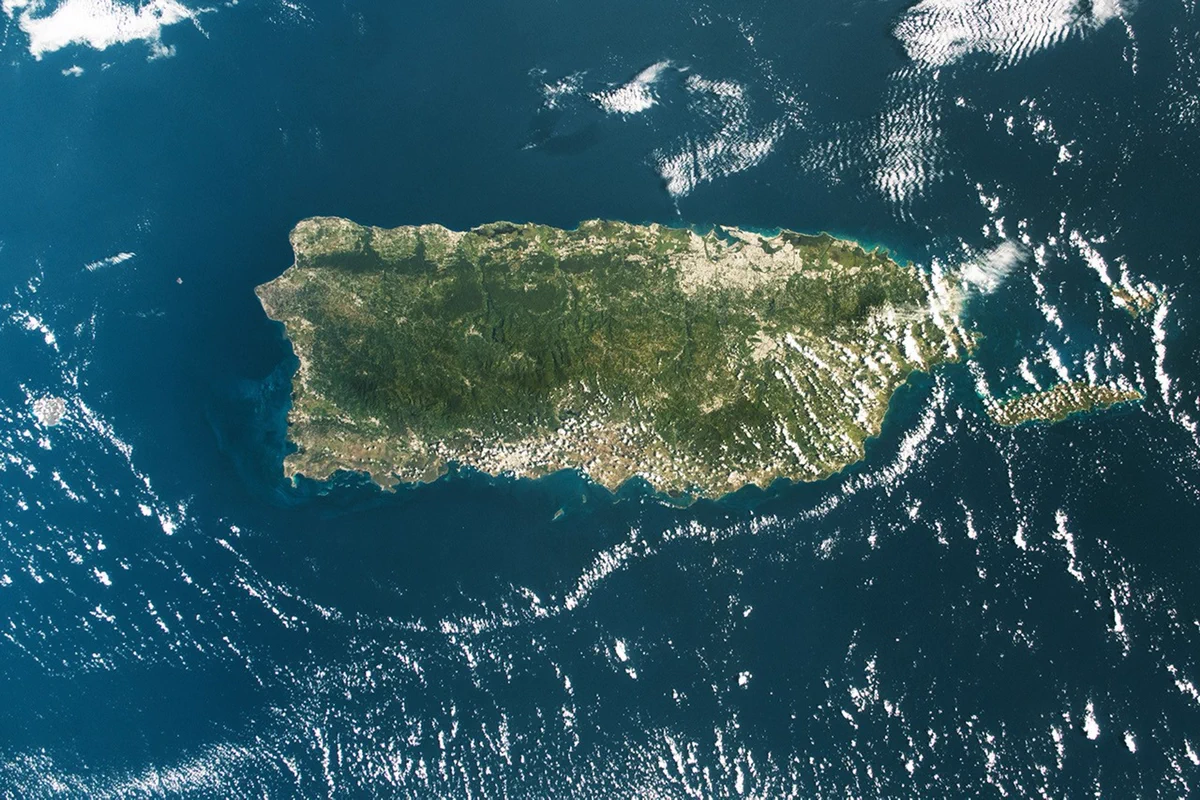
    Dengue, which is spread by mosquitoes, is a serious health threat in Puerto Rico and a growing concern in parts of the U.S. 🦟 Scientists are using @NASA data to track the environmental conditions linked to dengue and improve forecasts of dengue risk in Puerto Rico.
    ISS astronaut photograph of Puerto Rico as seen from space. Most of the island is vivid green, with darker mountainous areas through the center and a noticeably browner, drier stretch along the southern coast. The island is surrounded by bright blue water and a few white clouds hang offshore.
    57K
    user avatar
    NASA Earth
    NASA
    @NASAEarth
    Jun 22
    Read the full story:
    Image
    NASA Looks to Advance Dengue Preparedness in Puerto Rico - NASA Science
    From science.nasa.gov
    8.5K
  • user avatar
    NASA Earth
    NASA
    @NASAEarth
    Jun 21
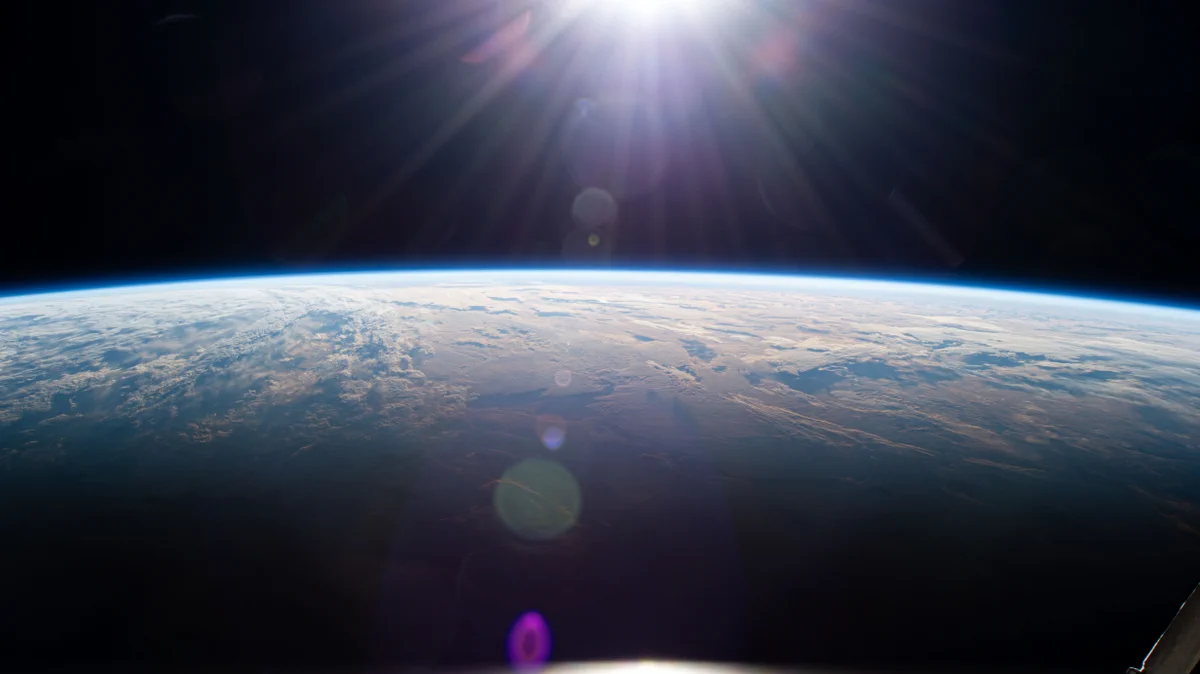
    Happy summer solstice ☀️ Today marks the start of astronomical summer in the Northern Hemisphere and the longest stretch of daylight. It’s the day the Northern hemisphere is most tilted toward the Sun. go.nasa.gov/4eRPura
    A photograph taken from the International Space Station showing a sunrise illuminating Earth’s horizon over the Indian Ocean. Credit: NASA
    99K