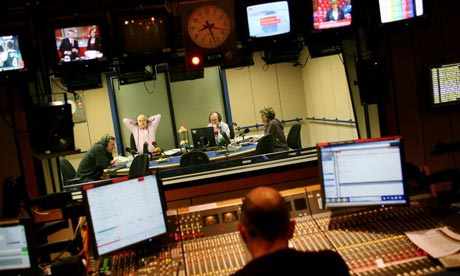
I had a great opportunity today to discuss global drug policy on the BBC World Service (broadcast internationally) with Dr Robert Dupont, the first director of the US National Institute on Drug Abuse (NIDA) and the second US Drug Tsar from 1973 to 1977 under former presidents Richard Nixon and Gerald Ford. It was a refreshing change to have a decent amount of time to talk through some of the issues around drug policy reform in a little more detail - the segment on the Newshour show was 25 minutes, presented by Mary Ann Sieghart
You can listen to the discussion online here (for the next 7 days), beginning around the 26 minute point.
I had a brief chat with Robert afterwards (he was phoning from the US). He congratulated me on doing a 'great job' (on the show) and was very interested in beginning a dialogue, giving me his email. I've promised to send him a copy of the new Transform publication 'After the War on Drugs: Blueprint for Regulation'; it'll be interesting to hear what he thinks.
Saturday, November 21, 2009
Transform debates Nixon Drug Tsar on BBC World Service


Sunday, November 15, 2009
Transform discuss new book on BBC's Today Programme
On Saturday Steve Rolles appeared on BBC Radio 4's flagship current affairs show, the Today programme, to discuss drugs policy reform, specifically Transform's new book 'After the War on Drugs: Blueprint for Regulation' (launched last week). Interviewed by John Humphrys, Steve was joined by Tom Wainright from the Economist. You can listen to the audio on the BBC Today website here.
Other media coverage of 'After the War on Drugs: Blueprint for Regulation'
- CNN Connect the World (Global) 17.11.09
Interview with Steve Rolles(video)
CNN Connect the world blog (200 comments)
- ABC News (Australia) 16.11.09
Ex-Minister Backs Illegal Drugs Regulation
- Late Night Live with Philip Adams (ABC Australia) 22 min audio. 16.11.09
After the War on Drugs (interview with Steve Rolles and Deborah Small)
- Associated Press 13.11.09 (US) - Picked up by around 20 local and regional news outlets
Advocates Against War on Drugs working on options
- The Economist 13.11.09
Drugs - virtually legal
- The Daily Record 13.11.09 (Scotland) News piece
Legalise drugs and Save Scotland £2biillion a year
- The Daily Record 13.11.09 (Scotland) Favourable editorial
Time is Right for Drugs Debate
- BBC news 12.11.09
Sell drugs in shops - think tank - Sue Blackmore on the Guardian CiF 12.11.09
The jaw-jaw after the War on Drugs - Reason magazine 12.11.09
A Don't Ask, Don't Tell Policy for Opium Dens
- Johann Hari in the Independent 11.11.09
Accept the facts - and end this futile war on drugs - Johann Hari on The Huffington post 11.11.09 (same as Independent article above)
Face the Facts and end the War on Drugs - Sunday People 08.11.09
Not as Nutty as you think
- Sunday Times o8.11.09
Lord McCluskey calls for drugs to be legalised - Sky News 03.11.09
Sacking may boost drug legalisation drive - Reuters - The Great Debate 03.10.09
Fresh thinking in the war on drugs
pic: the Guardian
Thursday, September 04, 2008
BBC Radio 4's Today programme tackles drug legalisation/regulation
This is very well worth a listen (the Today programme segment here); less for the debate, (which sadly gets very little air time) than for Mark Easton's excellent editorial (now written up and expanded on Easton's blog, which has a lively comments section), pointing up some key moments in the last few years of UK drug policy scrutiny, including David Cameron's support a for a debate on legalisation at the UN.
Easton suggests that the issue of legalisation is moving from the maverick fringes toward the centre of the political agenda (a point that makes sense in the light of what we are calling policy climate change). Easton also suggests that the UK Drug Policy Commission's analysis is pointing toward the legalisation /regulation debate in its recent review on the failure of enforcement to reduce availability, particularly noting a quote from Mike Hough and Tiggey May in the final paragraph of the report that is more than a nod towards the inevitability such a debate: “markets continue to prove highly resilient in the face of enforcement efforts, then over time, the pressure to re-examine the current legislative structure for controlling drugs will be overwhelming”.
What follows is a brief debate between Jack Cole of Law Enforcement Against Prohibition and Ian Oliver, former Chief Constable and now outspoken critic of the drug law reform position.
It was a shame the segment was so brief as neither of the protagonists really got to flex their rhetorical muscles.
Transform blog on recent Ian Oliver comment piece in the Independent (addressing the points he makes on the Today program that Cole did not have the time to respond to)
Thursday, April 03, 2008
ACMD cannabis report update.....
So...on the announcement itself, well it comes as no surprise as regular readers will know. The details leaked to the BBC were scant and Downing street has hurriedly denied that this is the whole story. It probably isn't.
I fully expect the ACMD report to make a series of other policy recommendations along with their inevitably thorough analysis. They will emphasise the risks, focussing on mental health issues. They will certainly repeat their calls for a big public education push - no doubt highlighting the particular dangers raised by the increasing prevalence of stronger cannabis - probably with specifics about how it should be targeted at the most vulnerable groups. This, they will argue, is likely to be a more effective response than increasing penalties. They will re-emphasise that the classification system is about ranking relative harms (and not sending out messages that suit politicians at election time).
They will probably call for research on various areas where the data is a bit thin and understanding either poor or emerging. They may dabble with some ideas like fixed penalties for possession offenses, but I doubt it. I also imagine that ACMD chair, as a last flourish before he retires, will make sure there are some fairly clear statements about how the review and the cannabis debate has been driven by tabloid and party political agendas (Nothing could be clearer than today's utterly ludicrous statement from drug warrior jack-in-the-box David Davis who says that Brown should not even have consulted them) .
What Brown will now do is moot, but he is no idiot and will have been well aware that the committee was likely to come to the conclusion it has, probably when he called the review in the first place (barely two years after the previous one - at which the c decision had been almost unanimous), and certainly before he made his comments earlier in the week at his monthly press conference. He now faces an entirely self made dilemma, as Philip Jhonston at the Telegraph has identified. He either overrules the committee and forfeits any last vestige of scientific 'evidence based' credibility his drug policy may still be clinging to, or he accepts their conclusions and leaves him self open to populist reactionary clowns like David Davis scoring points against him in the right leaning tabloids. I'm not remotely sympathetic as he has created this problem entirely for himself with his blinkered pre-election moral posturing. One thing is clear - this is all about politics now.
I suspect, but with only moderate certainty (and political idiocy never fails to suprise me), that Brown will use the ACMD report as an 'out' (I note the Guardian suggest otherwise). Maintain C, but launch a raft of measures, show he is 'doing something' and emphasize his view that cannabis use is illegal and unacceptable:
- a big education push (which will be politically driven rather than evidence based and therefore almost certainly pointless and rubbish)
- some ill thought out knee-jerk enforcement measures, probably focusing on evil 'cannabis factories', maybe some new police powers (to keep them happy).
- lashings of self righteous rhetoric about protecting the kids, evil, scourges, and so on.
And people who want to smoke will continue to do so. Cannabis will remain more or less freely available and the young people of this country will be even less interested in what authority figures have to say about it.
background:
The ACMD cannabis decision: stay in class C
Gordon Brown on drugs: enemy of pragmatism friend of the mafia
Brown on Cannabis - it gets worse
Transform briefings
submission to the ACMD review
Article on the classification system in Drugs and Alcohol Today
Transform media coverage
Unsurprisingly perhaps, given all the work we have done on this unendingly tedious classification saga, when the BBC's Danny Shaw got his scoop on the ACMD decision Transform were fairly near the top of the media pundit invites list. So its been quite a busy day and this being the Transform media blog, here's a list of Transform's media appearances:
- The Today Program, BBC Radio 4 (listen again to the 4 minute section here - real media format) - also featuring in news snippet at 8am
- BBC breakfast television (live sofa interview after a news item - then used in snippets throughout the day on news 24)
- BBC News 24 - studio interview
- BBC1 evening news (6 and 10 o'clock) prerecorded interview
- BBC Radio Scotland live interview
- Press Association multimedia interview
- Independent Radio News interview (syndicated around the country)
- various other local BBC radio
- BBC news website quote
- Guardian website quote
- Talk Sport radio
Friday, February 08, 2008
1997 BBC Horizon on psychedelics in medicine
If you're bored of endless drug policy debate here's a distracting and fascinating curio from the BBC archives that has cropped up on Google Video; the legendary Horizon edition on the use of psychedelic drugs in medicine:
courtesy of the MindHacks blog:
"It came at an interesting time in psychedelic drug research - when the authorities were still touchy (they'd only raided Shulgin's licensed lab three years earlier) but were just starting to allow some stirrings of research since they'd shut it down almost completely in the 1960s.
The programme looks at the history of psychedelic drug research when it was still easily possible, focusing on Osmond and Hoffer's early work on using LSD in treating addiction and facilitating psychotherapy.
It's also got loads of great historical footage from the early research but also talks to the new generation of researchers looking at compounds such as ayahuasca and ibogaine, who are now the senior figures in this growing area.
Unfortunately, the video is a bit grainy in places but it's quite watchable and it's got a great soundtrack."
Thursday, January 31, 2008
Smoking stuff bad for lungs shock
When the endlessly tedious cannabis classification debate makes one of its biannual return visits to the political landscape the media can't seem to help themselves but scout around for 'cannabis bad for you' stories. This is not to say cannabis isn't bad for you, obviously it can be, as can all drugs, but it does tend to create the impression of a flood of new research proving just how awful cannabis is (when actually it's just a flood of media coverage), just at the moment when the Government are supposed to be reviewing just how awful cannabis is and making policy decisions accordingly. Given the Government's predilection for knee jerk responses to media panics, this isn't an especially useful phenomenon for fans of rational evidence-based policy.
With the UK in the throws of the latest cyclical bout of reefer madness, lazy journalists have been busily typing 'cannabis' into their pubmed search engines and seeing what turns up that can possibly be turned into a 'cannabis really bad for you' headline. These usually take the form of either cannabis drives you mad, or cannabis is 5 time more carcinogenic than tobacco, with more recent variations about the 'new' super-potent 'skunk cannabis' that is *insert number between 10 and 50* times more potent than the old stuff from the 60s. There's various discussions about this elsewhere on the blog (search for 'cannabis' in the little box at the top of the page)
The BBC have jumped on the bandwagon with a report on their health website today titled 'warning over cannabis lung harm' highlighting two new studies that, unsuprsingly perhaps, link smoking cannabis with lung harm. As it goes the report is better than many, not least because they were good enough to include a quote from me attempting to put some of the more shock-horror conclusions into context. The piece is also distinguished by featuring the worlds worst ever cannabis picture, surely staged with some Wood Lane grass cuttings and an old bird's nest?

More seriously, I was pleased to successfully slip in the issue of smoking harm reduction. Its something that almost never gets mentioned in the cannabis lung damage discussions; of course smoking cannabis is bad for your lungs, so don't smoke it. If you are going to consume cannabis you can dramatically reduce lung damage using a vaporiser or eliminate the risk entirely by eating it in a some form of cooked preparation.
I can count the number of times this obvious bit of harm reduction advice has featured in a 'cannabis smoking bad for lungs shock' story on one hand. Actually one finger, but its a start.
further reading:
This blog offers some useful critique of the New Zealand study covered in the BBC report
Thursday, October 18, 2007
BBC's 'Moral Maze' tackles drug law reform
Following on from Chief Inspector Brunstrom's report last week the BBC's long running series the Moral Maze tackeled the moral issues around illicit drug use and specifically the laws that criminalise it.
You can listen to the broadcast (45 minutes) here (requires media player)
From the Moral Maze Webpage: The Chief Constable of North Wales, Richard Brunstrom is notable for his enthusiastic prosecution of speeding motorists. This week he's turned his attention to the problem of drugs. You might expect a police officer with his credentials to be calling for tougher action; after all it's estimated in Britain that drugs and the crime related to their use, cost £16 billion pounds a year. But no. Mr Brunstrom wants drugs to be legalised. The war on drugs has been lost, he says and it's time to come up with a more radical solution.
When you look at the figures he might have a point. Despite all the money spent on prohibition, the worldwide narcotics business is worth $177 billion dollars a year. Only the oil industry beats it. But, illegal narcotics kill hundreds of people in Britain every year and inflict a life of misery on many thousands more.
In the face of all the human suffering that drug-taking causes, is it immoral to just admit defeat? Melanie Phillips, Ian Hargreaves, Claire Fox and Professor Jules Pretty cross-examine the experts.
Developing and implementing more effective policy responses to problematic drug use doesn't seem like defeat to me, more like progress. It only appears so when it is couched in the context of misplaced 'drug war' rhetoric, but there you go.
The program is a good one as far as media drug debates go because of the high caliber of the participants and the fact that enough time is given to explore some of the issues in more depth than much sound-bite media allows.
In response to Brunstrom's arguments Mel P does her familiar righteous indignation, bolstered with her own curious take on facts. She claims, wrongly, that countries with harsher enforcement have lower drug problems (there is no clear correlation) , and also somehing about how three quarters of children mudered in the US being 'because of cocaine'. Brunstrom can only respond to Phillips unique personal understanding of factual reality by noting she is wrong and moving on.
Phillips gets so worked up by Jamie Whyte (arguing a libertarian position) that Micheal Burke has to intervene. Whyte dares to suggest that some drug use may actually be beneficial (on a cost benefit analysis to the user) thereby challenging one of the central pillars of the moral objection to legalisation; that all drug use is intrinsically unacceptable. Whyte also suggests that there is a moral equivalence between consensual adult risk taking behaviours that involve illegal drugs and consensual risk taking adult behaviours that involve dangerous sports, like mountaineering, or indeed legal drugs, like alcohol. It's a controversial position to put forward, and whilst it riles Phillips and others, it's interesting that none of the panelists make a worthy counter-argument.
Old Transform sparring partner, and occasional blog poster David Raynes also makes an appearance but doesn't contribute a great deal as his position is essentially the same as that of Melanie Phillips. He clearly had one point he wanted to make about the writings John Stewart Mill and fails to engage usefully when challenged beyond that.
A bereaved mother also appears but whilst relating her own personal tragedy (her son died of an overdose) she is unable to grasp the point made to her by Claire Fox (who supports the Brunstrom view) that moral positions and cultural norms that are firmly opposed to drug use could be developed outside of a prohibitionist framework.
All interesting stuff and a welcome contribution to the debate. If you want to weigh in with your own views there is a BBC online discussion forum here. Currently the views expressed are almost all pro-reform. Come on prohibitionists - where are you? Its hard to have a debate without someone to argue against.
Tuesday, July 24, 2007
Transform on BBC Radio 4's 'Law in Action'
BBC Radio 4's Law In Action broadcast a special programme devoted to the drug laws on Tuesday 24 July.
Danny Kushlick, Transform Director, appeared on the studio panel. The Drugs Minister, Vernon Coaker, declined to take part. Is this perhaps because defending the status quo under close scrutiny would have been impossible?
Below is the BBC blurb to accompany the programme.
Drug Laws
It's an unpalatable fact that the UK has the highest level of dependent drug use, and among the highest level of recreational drug use in Europe.
Our drug problem worsened steadily during the 70's, 80's and 90's and yet the drug laws which are largely governed by The Misuse of Drugs Act, is now 36 years old.
When the Act came into force in 1971, there were a just few thousand heroin users in the UK. It's now estimated that there are more than 280,000 in England and 50,000 in Scotland.
Tomorrow, (July 25th), the Home Office publishes its long awaited consultation on its drug strategy, and on today's programme we examine whether our current laws and criminal justice system are working effectively?
Joining Clive to discuss that are:
Danny Kushlick is the Director of the Drugs Charity, Transform, a think tank committed to reform of the current laws and policy on drugs; Diane Mark is chair of the bench at Wimbledon Magistrates Court and Paul Hayes is head of the National Treatment Agency, a body created by the Government in 2001 to ensure that there is more, better and fairer treatment available to all who need it.
Other contributors to the programme:
Professor Colin Blakemore, Chief Executive of the Medical Research Council, "Paul," a former drug addict and offender, Greg Foxsmith, a criminal lawyer working in London, Deputy-Chief Constable of Nottinghamshire Police, Howard Roberts (and also representing the Association of Chief Police officers on drugs issues),
The Drugs Minister, Vernon Coaker, declined to take part.
Friday, June 01, 2007
Censored comments from BBC online drug debates
There is a simple but rather clever website called News Sniffer that monitors the BBC online 'have your say' discussions, logging all the comments that are subsequently removed (it also monitors news feeds from the Guardian, BBC and independent websites and shows how stories are frequently reshaped and edited over time).
It's interesting to look through some of the recent discussions on drug policy issues and see what was not considered, for whatever reason, fit for public consumption. Many of the remarks contain offensive comments (so at this point I should say: *warning: possible offensive comments*), or are just nasty, but others seem largely reasonable, or just stupid (not actively offensive) and the reasons for their removal remain somewhat mysterious. It may be because site users request removal using the 'alert a moderator' button - but this still requires BBC staff to make a judgement on a removal. I'm not suggesting there's anything sinister or big-brother like going on here, but its an interesting peek behind the curtain at how our biggest media outlet subtly shapes the debate.
Below I've linked a few of the recent BBC discussions so you can see the comments that made the cut, and then provided links to the News Sniffer listings of those comments that got the chop:
Should heroin be given on the the NHS?
BBC online link - removed comments
Should addicts get vouchers for staying clean ?
BBC online link - removed comments
Do drug laws need a major overhaul?
BBC online link - removed comments
Do you care about Cameron's past?
BBC online link - removed comments
Can alcopop tax tackle binge drinking?
BBC online link - removed comments
Are drugs a problem in your area?
BBC online link - removed comments
Should cannabis be legal for medicinal use?
BBC online link - removed comments


