Showing posts with label classification. Show all posts

Thursday, March 25, 2010

Pre-election prohibition fast-track for mephedrone


In Prime Minister's Questions yesterday Gordon Brown came up with this response to a question calling for a ban on mephedrone:
The Prime Minister: I am very concerned about what my hon. Friend has told me, and I send my sincere condolences to Jordan’s family and to their friends. We are committed to preventing young people from starting to take drugs. The advice is clear that, just because a substance is legal, that does not make it safe.

A valid point - tobacco, alcohol, paracetamol, nutmeg, prozac etc.
He continued:
We are concerned specifically about the harms of mephedrone, and the Advisory Council on the Misuse of Drugs [ACMD] is considering that and similar compounds as an absolute priority. We will receive its advice on 29 March, and subject to that advice we will take immediate action. We are determined to act to prevent this evil from hurting the young people of our country.

'Evil'? If mephedrone is 'evil' because it can hurt people, then alcohol and tobacco (which kill respectively, 100 and 300 a day in the UK), must truly be the work of Satan. This is hyberbolic twaddle straight out of the pre-election manual: 'How to garner votes in marginal constituencies by appealing to populist fears and nationalistic prejudices'.
As for ACMD, when exactly did the Government start getting so impatient for their expert advice? Certainly not when they called for the downgrading of Ecstasy from Class A to B. Or when they said cannabis should be left as Class C.
Truth be told it is already pretty clear where the ACMD are going on this.
But what would Brown do if they actually did call for enough time just to gather the evidence properly, rather than support a populist knee-jerk reaction?
Or they called for a detailed review, now or even at a later date, of any unintended consequences of absolute prohibition (including those identified by the head of the UNODC) e.g. creating a massive criminal black market, diverting money from health to criminal justice, displacing users to more harmful substances, marginalising and criminalising large numbers of otherwise law abiding users? Or causing an increase in the use of hazardous cutting agents, or the drug becoming of highly variable strength leading to increased overdose risk, or an increase in acquisitive crime if prices rise dramatically? Many of which, at least anecdotally, appear to be happening in the Channel Islands where a ban already exists.
Or, heaven forfend, what if the ACMD even called for the creation of a new holding category? Whether Class D, with tightly regulated legal sales including the provision of detailed health and use advice as suggested by the ACMD's last Chair David Nutt. Or Category X as suggested by the UK Drug Policy Commission, while all the possible options were properly modeled, to make sure we took the best route to minimize harms to individuals and society?
David Nutt's latest from the Evening Standard is well worth a look, and bearing in mind his treatment from the Government, the most likely outcome for ACMD of seeking a genuinely evidence-based review, would be finding themselves all sacked...
Update 26 March:
This is how the Daily Mail ran Nutt's views after the Standard rewrote their own story.

Thursday, March 18, 2010

Mephedrone and the ACMD: lessons from BZP and New Zealand's 'Class D' experiment?

Witnessing the media frenzy around mephedrone yesterday I was struck by the similarities with the situation that emerged around the last legal stimulant to achieve any real youth market penetration, namely BZP. BZP (Benzylpiperazine) was reviewd by the ACMD and, following their recommendation, brought within the Misuse of drugs Act just before last Christmas, but had been effectively removed from the 'legal high' market after the MRHA clarified that it was covered by the Medicines Act in 2007. There was never the level of media frenzy over BZP that we are now witnessing with mephedrone, probably because it was neither as popular nor (from the relatively little we know) as risky, and specifically was not directly linked to any deaths. Some journalists did their best to whisk up some hysteria (check out this joker in the Guardian for example), but it never really got any full blown drug-panic momentum.

But at the time the BZP issue was emerging (around 2006), Transform, aware that the drug would soon be under consideration, produced a briefing and submitted it to the ACMD. Central to that briefing was a consideration of New Zealand's policy on BZP, where a unique experiment was underway in which a new piece of legislation had been added to the conventional ABC system, in the form of a new 'restricted list' or  'Class D' as it came to be known, within which drugs would be legal for sale under certain conditions. This was, to our knowledge the first time that a non-medical stimulant drug widely used on the party scene, had been legally regulated for commercial sale anywhere in the world.

Since the briefing was written the situation in New Zealand has changed, and there are also obvious differences between the situation with Mephedrone and BZP. None the less, it was interesting to see David Nutt (who was sitting on the ACMD when we submitted our BZP briefing) suggesting the New Zealand Class D model in the Guardian CiF today. With all this in mind we thought it was worth revisiting the discussion and recommendations from the 2006 BZP briefing, as they seem pertinent to the current debate around mephedrone (not least since the ban on BZP arguably created the space in the market into which mephedrone emerged).

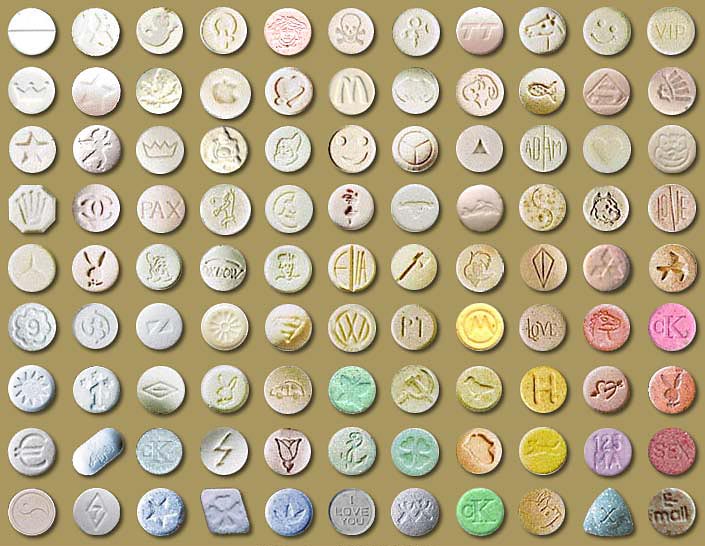
Image
BZP as sold in 2006 

To note - the briefing was produced in October 2006, and some of the information is out of date (more up to date reviews of BZP have emerged). Also, whilst a Class D might be useful as a short term measure it  is not a long term solution and comes with its own problems (potentially further muddying public understanding of drug risks for example). If you want to know what Transform are advocating see here (it isn't prohibition, it isn't a Class D, and it certainly isn't powerful stimulants being sold without any regulation online as plant food).

The full 2006 BZP briefing, with references, is available here, the discussion and recommendations section is copied below:


Discussion:
Piperazines are psychoactive drugs and clearly not without risks. However, the assessments that have been done suggest that the risks are relatively low (see safety appendix), arguably on a par with or less than khat, another legal stimulant (in this case plant based) recently considered by the ACMD  - for which classification under the MDA was not recommended.

Whilst the demographic profile of khat use (largely limited to traditional use amongst the male Somali community) is very different to that of piperazines (mostly used in the party / club / dance music scene) some of the same conclusions apply.

Costs of prohibiting piperazines would include:
  • Potential for the creation of an illegal market for drugs that have an established market and level of demand
  • Profits being diverted from legitimate, taxed and legally liable producers/retailers into the hands criminal gangs and unregulated dealers
  • Increased risks/harm to users from drugs of unknown strength and purity, sold without any health and safety information
  • Removal of potential harm reduction gains achieved by diverting recreational users away from more dangerous illegal drugs such as amphetamines (including methamphetamine) and MDMA (ecstasy) and its analogues.
  • Criminalisation of users, mostly young people
  • An increase in enforcement costs to police, customs, courts, prisons and probation services
Are there potential benefits to prohibiting piperazines?
Benefits of such a move would seem to be primarily political (i.e. demonstrating ‘tough on drugs' credentials).

A deterrent effect from such a prohibition is possible, but doubtful given that there is already an established demand for these drugs, and those deterred would likely substitute back to other illegal equivalents. Such a deterrent effect is poorly supported by evidence. The Science and Technology Select Committee recently concluded that:
“We have found no solid evidence to support the existence of a deterrent effect, despite the fact that it appears to underpin the Government's policy on classification. In view of the importance of drugs policy and the amount spent on enforcing the penalties associated with the classification system, it is highly unsatisfactory that there is so little knowledge about the system's effectiveness.”
The Government presented no evidence in their response to contradict this position. Piperazines (primarily BZP) have been prohibited in a number of countries including the US and it would be useful to examine what effects this had on patterns of use, and knock on effects on the use of other drugs. Transform is not aware that any such research has been undertaken.

There would be no prospect of reduced crime and social disorder, since there is none currently associated with the use of piperazines. According to the New Zealand EACD:
“ there is no reported criminal behavior associated with the use of BZP & TFMPP, as they are moderately priced and have a lower dependence potential than illicit amphetamine” (page 6)
Can we leave the market to self regulate?
The third alternative is to leave the market as it is. This is clearly not a long term tenable situation, even if producers of UK products (from New Zealand) and UK retailers put in place a voluntary code of practice. Although current UK retailers seem to be acting more responsibly than in the past (with, for example, magic mushrooms), there is no guarantee this will be the case for all retailers, and experience with unregulated ‘legal high' markets in the past does not inspire confidence. The New Zealand EACD report states that:
“Because there are many new substances that could appear on the market in this way, the challenge for public health practitioners and regulators is how to respond to these new substances in a way that promotes the public health while protecting individual rights. They are generally of lower potency and price than of illicit amphetamines and methamphetamine, and they are commercially packaged, labeled with the major ingredients and their strengths. The distributors would argue that this is a responsible approach to a demonstrated demand for the effects given by these substances.
When first distributed, this was an approach that allowed users to exit the illicit market with its inherent risks and the often poor quality drugs. Substitution of illicit with Piperazine is occurring, mostly amongst users who are afraid of the damage to their lives that a conviction would bring and who also wish to normalise the transaction required to purchase their choice of recreational substance. However, being unregulated at this time, they are being promoted within the free market, which has the generation of profit as the driving force. This can as easily lead to market saturation as can the imperatives driving the black market. Unlike either novel foods or new medicines, these products are being marketed without adequate scientific safety assessments because there is no need for the distributor to seek regulatory pre-market approval from a regulatory agency.” (p.8)
What would be the benefits of introducing appropriate regulation of the market and licensing of producers and vendors?
The idea of having a ‘restricted list' separate from, or a ‘Class D' in addition to the main drugs legislation (i.e. the ABC classification system under the MDA 1971) has many advantages over the status quo:

  • It would create an enforceable legal structure allowing effective state intervention and control of production, supply (availability), promotion and use. This is not possible under the minimally regulated existing market, any existing regulatory options (medicines Act, food supplement regulations), or under the unregulated criminal market that classification under the MDA would inevitably create.
  • It allows for full risk assessment of each drug as the basis for tailored penalties/restrictions rather than as a part of the blunt and malfunctioning instrument that is the ABC classification system.
  • This form of legislation is significantly more flexible than current arrangements under the Misuse of Drugs Act and would allow for restrictions to be changed rapidly in light of new research, emerging trends or changing conditions.
  • It removes virtually all the risks inherent in criminal markets; separating consumers from the wider criminal market (which in the case of Dutch cannabis policy is suggested to have kept down levels of use of more dangerous drugs) and offering harm reduction benefits from the availability of drugs of known content, strength and purity, and supplied with health and safety information
  • Harm reduction through diversion away from use of more dangerous drugs.
  • Harm reduction in terms of reducing the risk of young people being branded with the stigma of a criminal record.
The wider debate over classification and prohibition / regulation
Inevitably perhaps, proposals for a ‘restricted list' and or ‘Class D' will be seen by some as a ‘back door to legalisation' of cannabis and perhaps other drugs, a sentiment aired during the policy debate in New Zealand. The NZ legislation passed, however, following an intelligent public and parliamentary debate and engagement with all the relevant parties.

Transform's position on the current prohibition of drugs is well documented. We believe the enforcement led approach has been spectacularly counterproductive – failing to deliver any of its stated policy goals, maximising harms associated with dug use, creating a crisis in the criminal justice system and fuelling crime at all scales, at home and in producer and transit countries. We believe that drug policy should be led by evidence of effectiveness, established harm reduction principles and public health science. This inevitably leads to the conclusion that regulated markets (with different regulatory models depending on the drug) offer better outcomes than absolute prohibitions, on all key policy indicators; crime, social nuisance, public health, welfare of young people and value for money expenditure.

We are not alone in this view of prohibition:

“Prohibition doesn't work, as the US found out many years ago.”
John Reid MP Labour (now Home Secretary in charge of drugs policy):
Jeremy Vine programme, BBC Radio 2, 11.11.04

…"we can prohibit, regulate or leave it to the market. Prohibition does not work - it drives the activity underground…”
“Only ideological extremists favour a free-for-all where only the laws of the market hold sway. So the third option is regulation - and regulation with as much emphasis on the quality of the debate as the policy outcome. 'Better regulation' has to mean government engaging people in the decisions that affect their lives and doing so in new and better ways”.

Tessa Jowell MP Labour: 'Grown up politics for an adult world' The Guardian 21.11.04

The Piperazine issue offers a real opportunity to do the right thing, not necessarily the politically expedient one. These are drugs that have yet to attract the attention of a media hungry for drug scare stories (although the first murmurings are beginning to be heard in Ireland), so currently there is little political capital to be made from a high profile crackdown. There is some breathing room in which to address this issue before it gets out of hand. Intelligently handled this need not be a political minefield, and sold as a pragmatic public health intervention to better control a potentially risky substance and keep criminals away from the trade, regulatory options need not be perceived as ‘soft' either.

Important lessons can be learnt from the recent UK experience with fresh magic mushrooms. Whilst there has been well founded criticism that class A is not the appropriate classification for magic mushrooms (or psychedelics more generally), the situation with magic mushrooms was considerably different from that which we are facing with piperazines. Fresh magic mushrooms were legal because of anomaly in the law, rather than because they were a new ‘legal high'. Furthermore they were potentially creating a new market and demand for psychedelics that did not already exist, whereas piperazines are entering, and potentially displacing, existing demand for illegal stimulants (amphetamines and ecstasy) on the party scene. The ban on fresh mushroom sales has been effective at closing down the retailers and returning the market to its previous position, with lower levels of use and production returning to informal harvesting and small scale illegal sales of naturally growing UK mushrooms, that are rarely prosecuted. If there has been a knock on effect in terms of users moving to other drugs (legal or otherwise) this is impossible to quantify, however likely. This ‘success' (at least from the Home Office's point of view) is far less likely to occur following a similar move with piperazines, as has been discussed above, and as was concluded by the NZ Expert Advisory Council.

Similarly lessons can be learnt form the different approach taken with khat, which was rather more pragmatically left unclassified following a thoughtful and thorough investigation and report from the ACMD (unlike magic mushrooms, where policy alternatives received only the most cursory of consideration).

Piperazines probably lie in a similar risk spectrum to these drugs and if we have a choice between prohibition under the Misuse of Drugs Act (magic mushrooms, ketamine, GHB), and leaving things as they are (khat), surely the option of regulatory models, which have demonstrable advantages over both, must now be seriously considered. This is likely to remain a live issue as new ‘legal' drugs continue to emerge into the recreational market but are not covered by the UN drug conventions (Kratom, Fly-agaric mushrooms, peyote cactus, salvia divinorum and nitrous-oxide all potentially warranting consideration).

The ongoing debate around the ABC drug classification system has been brought into sharp relief by the recent Science and Technology Select Committee report, which concluded there was a poor scientific basis in support of its efficacy as either a public health tool or criminal justice deterrent. Even though the Home Office has now reneged on its promise to have a thorough review of the classification system (despite the fact that this idea was welcomed by everyone in the drugs field including the ACMD, and specifically requested the Science and Technology Select Committee) it is hoped that possibilities for the classification system to include a ‘Class D' - offering the possibility of licensed sales of some lower risk drugs - will feature prominently in this ongoing discourse.

The recent ACMD report ‘Pathways to Problems' has recommended that alcohol and tobacco be specifically brought within the remit of the ACMD. Such a move will raise many difficult questions about the historical legal anomalies between legally regulated and totally prohibited drugs. There may well exist possibilities for including alcohol and tobacco in a new ‘restricted' category (which, in effect, they already inhabit, albeit under separate legislation), and also for moving other misclassified (e.g. some psychedelics) or unclassified drugs (e.g. khat) into the new regulatory system. Transform would welcome a debate on these ideas within the ACMD, given that they have now very publicly opened the door for such a discussion.

Transform welcomes the recent shift in approach to the drugs issue, away from heavy handed enforcement towards public health and harm reduction as the guiding principles, and the development of effective regulatory models for some of the less harmful drugs currently in a legal grey area is inevitably going to be an important part of this process. Piperazines, a fairly marginal issue from Transform's perspective, could offer a useful opportunity to experiment with regulation whilst the stakes remain low, rather than leaving the market to self regulate, or opting for another expensive and counterproductive crackdown.

Recommendations

  • Initiate an official consultation as part of a formal engagement between the relevant Government agencies (including the Home Office, the Department of Health and the Treasury and key stakeholders including drug services, police and enforcement, NGOs, user groups, producers and retailers) to consider the three key choices for going forward regarding policy and legislation on recreational piperazines (status quo, regulation, prohibition). The possibility for a ‘Class D' or ‘restricted list' for lower risk drugs along the lines of the New Zealand model should specifically be included in the consultation.
  • That the ACMD produce a report that considers the information available on piperazines, clarifies the legal status and knowledge on of the various substances in question, and makes recommendations on ways forward, in line with similar recent reports on cannabis, khat, methamphetamines etc.
  • The ACMD should be specifically required to consider the models brought into New Zealand law, and make direct contact with colleagues on the New Zealand EACD, to discuss their findings and recommendations.
  • In the short to medium Transform recommends the establishing in of a new ‘Class D' within the MDA to enable the licensed sale of certain drugs under the direction of the ACMD.

Wednesday, March 17, 2010

Mephedrone and Methadone - keep calm and review the evidence

There is a two pronged drug panic now in full swing, with the media calling for 'someting to be done' about mephedrone and methadone (Always get the journalist to spell it before you start rabbiting on about the wrong drug...)

Mephedrone 

I was up at 5.30am this morning in order to prepare for 5Live news at 6.00am to respond to the media furore regarding the deaths of two young people who had allegedly taken mephedrone. By 7.00 am I'd done eight interviews for local radio stations, warning of the dangers of rushing to make it illegal.

As ever the call is being driven by hysterical media hype (for example Telegraph Daily Mail The Sun and Guardian) about deaths of young people, none of which have unequivocally been linked exclusively to the use of mephedrone.

Leah Betts anyone?


Transform's call is three-fold:

  1. Calm down. A knee jerk response to classify may in fact increase harms, rather than reduce them. Mephedrone is not a threat to humanity or even a significant threat to the lives of users (we would have seen far more deaths if that were the case, given the high levels of use). Reduce the threat level to the correct proportions and begin to explore options. Recognise that the media massively over report illegal drug deaths, as opposed to all drug deaths, such as alcohol and tobacco, whose dangers are well known and demonstrably kill many more than mephedrone has (in relative or absolute terms).


    Image 
  2. All drugs have dangers associated with their use. Put as much harm reduction information out there as we possibly can (knowledge of mephedrone is limited - here is a a decent guide to current knowledge).

  3. Recognise that criminalising drugs causes harms that may significantly outweigh any benefits. Conduct an independent and comprehensive impact assessment to explore all the options: do nothing, criminalise production, supply and posession, legally regulate its production and supply. Until that work is done, we cannot say which is the best option.

However, anecdotal evidence from Guernsey sugggests that the ban on importation there has pushed the price up from £10/gram to £60-80/gram and consequently acquisitive crime is now being committed by heavy users to fund their use/habit. Organised crime has taken over distribution (no guns on Guernsey, so samurai swords are the order of the day for fighting turf wars). This cannot possibly have made things better for the good citizens of Guernsey, and we would hope that (despite the differences between Guernsey and the UK) the Advisory Council take this evidence into account before recommending classification.

Methadone 

I also had a chat with The Times yesterday to try and give some balance to their anti-methadone line. It could have been worse (Leader Here and Feature Here)

What has been forgotten in the drive to turn the rhetoric of 'getting people off drugs' into reality, is  some of the basics.

  1. The vast vast majority of problematic users are not ready to stop using. The question then is how do you we manage that fact and reduce the harm that they cause themselves and the wider community.

  2. Methadone is not just for 'getting people off drugs', even if it can help with that goal for some. It is primarily used to reduce the amount of injecting of street heroin. Its purpose is to improve individual and public health by reducing both offending (acquisitive crime or prostitution to support a habit) and prevalence of high risk injecting behaviours, and thereby reduce transmission of blood borne viruses.
Methadone does not stop people becoming drug free. Anyone on methadone who wants to stop should be supported to do so. But whilst the majority of heroin users remain using, we would be foolish to throw away the medicine that has helped the UK keep its HIV rates amongst injectors relatively low, and reduced the collateral damage of making heroin illegal for non-medical use in the first place.

Transform is working with partner organisations to counter this pernicious move to undermine opiate substitute prescribing in the UK.

Monday, February 15, 2010

Another contemptuous Home Office rejection of a request for better evidence in UK drug policy

In April 2009 Transform published a groundbreaking report, titled 'A Comparison of the Cost-effectiveness of the Prohibition and Regulation of Drugs'

We sent a copy to the Secretary of State in July 2009 with the letter below. Our tardiness was to put to shame however, by the time it took the Home Secretary to respond - we received his response today, 15th Feb 2010 - eight months later. According to the Home Office the delay was partly due to awaiting Gordon Brown's response to our call for an Impact assessment. Clearly this delay wasn't because of the effort that went into the content of the response, which is as ever, contemptuous.

Our letter and the response from the Secretary of State are shown below.

The civil service manual for answering correspondence is:

1 agree with what you can,
2 ignore the rest and
3 restate government policy whilst you're at it.

The response from Alan Johnson shows the manual being followed to the letter.

Here's our blog on the saga of the withholding of the Home Office 2007 (Christine Godfrey) value for money study mentioned in Alan Johnson's response. That report took almost three years to emerge after our initial request...

The letter to the Home Secretary and his response speak for themselves. To enlarge the view just click on the page you want to see.

Those moved to do so might want to contact their MP or prospective parliamentary candidate to suggest that they support our call for an Impact Assessment of the Misuse of Drugs Act.

Image
Image


Image
Image

Thursday, December 24, 2009

Christmas comes early for gangsters as three more drugs are criminalised

Three drugs were prohibited yesterday; a synthetic cannabinoid often sold as ‘spice’, the synthetic stimulant benzylpiperazine or BZP, and the synthetic sedative gammabutyrolactone or GBL which also happens to be an industrial solvent. All have been brought within the Misuse of Drugs Act 1971, GBL and BZP becoming class C drugs (subject to penalties of up to 2 years prison for possession or 14 years in prison for supply) whilst ‘Spice’ becomes a Class B (subject to up to 5 years in prison for possession or 14 years for supply).

Image

legal yesterday, up to 5 years in prison for possession today

There’s a lot one could say about this move, but first it should be made clear that these drugs are clearly not without risks and there is no reason to argue with the harm assessments of them presented by the ACMD to the Government that informed the decisions (although the B decision for spice is distorted by the recent cannabis politics more than relative harm rankings). Legal status does not imply safety and never has, the 'legal highs' alcohol and tobacco highlighting this point very clearly.

However, what can be disputed is whether the move will have any positive impacts. In reality there are three likely outcomes – all of which reflect the fact that changes in legislation do not impact on overall demand for the intoxication/experiences these drugs provide:

  1. Users of these formerly ‘legal highs’ will revert to the ‘illegal highs‘ that spice etc provided an alternative or substitute for. So we can reasonably expect a rise in cannabis use (instead of spice) as well as stimulants, including ecstasy, cocaine and amphetamines (instead of BZP and GBL). Whether this substitution has a positive or negative impact on risks and overall health harms is not clear, but the young people involved will certainly face increased risk both from interacting with an illegal market controlled by criminals, and from the law itself: the real risk of a criminal record or spell in prison. Criminal suppliers will be the obvious beneficiaries.

  2. Some users of these formerly ‘legal highs’, assuming they are preferred to the illegal alternatives, will continue to use them but now obtain them by via illegal sources that will inevitably emerge to meet any remaining demand if the profit opportunity presents itself. It is hard to gauge to what degree this will occur (probably not at all with spice/cannabis but reasonably likely to some extent with BZP/GBL), and it is worth noting that the use of ketamine has increased since 2006 when it was prohibited and its status changed from ‘legal high’ to ‘controlled drug’. Again criminal suppliers are the obvious beneficiaries, not young people, who in this case are indisputably worse off.

  3. A void will be created in the market that will be potentially filled by new drugs brought to market by the same back street chemists and largely unregulated business interests responsible for bringing us GBL, BZP, Spice etc. Of course it is the absence of legal regulated supply of cannabis, ecstasy etc. that created the market opportunity for these (formerly) 'legal highs' to emerge in the first place, and this latest ban will just repeat the dynamic. The inevitable next generation of ‘legal highs’ (including mephedrone for example) may or may not be less risky than their predecessors and we will certainly know even less about their risks - the young people consuming them without any useful risk information eventually providing the risk data for the ACMD to make their next assessment (assuming it is ever quorate again).
The experience with GBL illustrates this last point well, having only emerged following the prohibition of GHB in 2003. GBL and GBH are effectively the same drug (GBL rapidly turning into GBH in the body within minutes of consumption) the difference being that GBL is an industrial solvent (also widely available as a cleaning product) and almost certainly more risky (as well as being widely available - so hard to see how it can practically be restricted, although this is a separate issue).

Looking at the bigger picture then it is clear that prohibition created the problem with these ‘legal highs’ in the first place, and prohibiting them now is highly unlikely to deliver public health benefits (demand being met through other channels or substitute drugs) but will potentially create increased risks and overall social and health harms. The primary beneficiaries are the criminal suppliers who will see their markets expand as supply shifts from legal to illicit sources, and the Home Secretary and Government who get a few 'get tough' headlines from their 'crackdown'.

It is notable that at no point was legally regulating the market in these or any other drugs rationally explored at Government level. The Impact Assessments that went along with the consultations for GBL and BZP only looked at prohibiting them under the MDA or leaving them in the admittedly unsatisfactory unregulated market niche they occupied until yesterday. Neither is a good option – but the third and obviously sensible choice of strict legal regulation was never even considered. This was for transparently political rather than rational or pragmatic reasons.

This failing is particularly striking in the case of BZP as New Zealand had previously established a legal regulatory model (a ‘Class D’ appended to their A-B-C classification system) for the legally regulated supply of BZP. Transform had alerted the ACMD and Home Office to this system in 2006 when the BZP issue first rose to prominence – and whilst the ACMD apparently held meetings with their New Zealand counterparts no suggestion was made for it to be implemented (although former ACMD chair David Nutt has subsequently suggested a exploration of such a system for legal regulation of cannabis availability would be sensible). We expect politicized drug war myopia from the Home Office, but The ACMD – nominally a non-political and independent scientific entity - have no such excuse and must take some responsibility for the negative policy outcomes of their classification recommendations with these drugs. Good science in harm evaluations becomes largely meaningless when it translates into criminal justice policy and a hierarchy of prison sentences, the impacts of which go entirely un-evaluated.

Transform have proposed clear and detailed models for regulating different types of drugs
that we hope will feature in future discussions, as a first step they must be an essential element of Impact Assessments when such decisions are being made.

Tuesday, November 03, 2009

Double Standards from the Evening Standard on cannabis classification?

There was a welcome outbreak of common sense in Yesterday's Evening Standard, a paper more often prone to reactionary drug war posturing, in its leader editorial on the David Nutt furore:


Spin and drugs

The row over the firing of drug expert David Nutt was almost inevitable. Professor Nutt, chairman of the Advisory Council on the Misuse of Drugs, was dismissed at the weekend; Home Secretary Alan Johnson accuses him of running a campaign against official policy.

But Professor Nutt made his comments about the Government's policy on cannabis under extreme provocation.

The ACMD was set up in 1971 as an integral part of the Misuse of Drugs Act year: its purpose is to advise ministers on the latest scientific thinking on drugs, and the intention of the Act was for that advice to inform policy.

So it was that cannabis was downgraded from a class B to a less dangerous class C drug in 2004, on the ACMD's advice.

In 2008, however, the Government reclassified cannabis as class B, despite the ACMD's objections - not because of the science but largely thanks to a media hue and cry over the alleged dangers posed by strong "skunk" cannabis.

If that is to be the basis of policy, it is hard to see what the point of the ACMD is any more.

The bigger worry is what this suggests about ministers' attitudes to science and to spin.

Gordon Brown likes to portray himself as less obsessed with spin and headlines than his predecessor.

That was always implausible but when such cynical objectives override science, and a policy that affects many people's lives, that is truly depressing.


A decent commentary, but couldn't help from prompting me to cast my mind back to the 'media hue and cry over the alleged dangers posed by strong "skunk" cannabis', and the particular papers that were the main culprits behind it. Ahem:


Image


Follow the latest developments and coverage on the David Nutt/ACMD story in the miniblog (right)

or on

Image


pic from Oct 15th 2007

Monday, November 02, 2009

David Nutt is sacked from the ACMD

There's a lot of important issues raised by the ACMD chair's sacking, and the subsequent reaction. Transform have been actively engaging in the debate in a range of broadcast media, including 5 live radio, and BBC and Channel 4 news. We will have more to say on all this as the story develops over the next few days but in the mean time follow the media coverage in the Miniblog (on the right) or on Twitter.

Tuesday, October 20, 2009

Transform give oral evidence to the Home Affairs Select Committee cocaine inquiry

Transform gave oral evidence to the Home Affairs Select Committee inquiry into the cocaine trade this morning - which is available to view online, in full here.*

Image

The session, which was 45 minutes long involved Transform's research director Steve Rolles , alongside Neil McKeganey from Glasgow University, being questioned by the committee on various aspects of cocaine production, supply and use.

Transform's contributions were essentially in line with the written submission from earlier on the year available here.

Immediately following on from the Rolles/McKeganey session, was a second set of witnesses, Mitch Winehouse (Amy Winehouse's dad and drugs worker Sarah Graham. A third set of witnesses followed immediately afterwards - Evan Harris MP, John Mann MP and Lord Mancroft. All interesting but the final session particularly worth checking out.

There's plenty to discuss about the session and the inquiry more generally - but it should perhaps wait until the inquiry report is published in the new year and we know what they actually have to say.

Media coverage

predictably, most focused on the Amy Winehouse angle, but Transform's contributions did get some coverage:

Guardian
Metro


*annoyingly requires either windows media viewer or installation of the Microsoft Silverlight viewer


Tuesday, February 10, 2009

Ecstasy: truth is the foremost casualty in the war on drugs


On Wednesday 11th Feb the Advisory Council on the Misuse of Drugs (ACMD) will announce the outcome of its review of the classification of ecstasy, and in all likelihood will recommend it be downgraded from Class A to Class B.

A Transform spokesperson said:

“Parliament is reveling in moral grandstanding and populist posturing by eschewing the science on ecstasy. Truth is always the first casualty in any war, including the war on drugs. Given that the Government overruled the ACMD on cannabis classification, and has made it clear that whatever the evidence ecstasy’s classification won’t change, this entire exercise was doomed before it began.

“Drug prohibition is unique in the public health field in using criminal sanctions to reduce social and health harms. It is also uniquely ineffective. There is no evidence that punitive law and its enforcement has more than a marginal impact on levels of drug use or misuse.

“The Advisory Council's job is to reduce the health and social harms associated with the misuse of drugs, so it is a real concern that it is still using a system of classification that was derided comprehensively by the Science and Technology Select Committee less than two years ago. The ACMD’s time would have been far better spent conducting a fundamental review of the evidence underlying the classification system and distinguishing drug harms from harms caused by criminalisation. “

“From Transform’s perspective any reduction in unjust criminal penalties for consenting drug users would have been a positive step. But we remain deeply concerned that regardless of alphabetic classification, ecstasy will remain illegal, its users will still be subject to serious criminal sanctions, and the control of its production and supply will remain in the hands of unregulated criminal profiteers supplying pills and powders of unknown strength made with unknown ingredients.”

“Telling the truth about the harms associated with drug use compared to those caused by prohibition will remain taboo whilst the overarching commitment is to scare the public into supporting an unwinnable war on drugs.”

ENDS

Notes for Editors:
  • Transform staff will be available for comment at the ACMD’s presentation of its ecstasy review at 11.30am Weds 11th February; The Council Room, One Great George Street, London, SW1P 3AA

Transform’s submission to the ACMD ecstasy review

Transform critique of the classification system in Drugs and Alcohol today

Science and Technology Select Committee report on the classification system

2006 Lancet paper on drug harm ranking


See also:

Ecstasy reclassification meltdown: it begins again 21.05.08


Thursday, January 29, 2009

Should caffeine be a made a class B drug?

The week before last witnessed the first decent media drug panic we’ve had in a while, although unusually this one was not about cannabis, ecstasy, or cocaine. It followed the publication of a paper (from Durham University’s department of psychology) titled ‘Caffeine, stress, and proneness to psychosis-like experiences: A preliminary investigation’ in a fairly obscure Journal called Personality and Individual Difference. The papers key finding was that heavy caffeine users were slightly more prone to hallucinations, but not to feeling persecuted.

Somewhat strangely the story received massive cross-media coverage, in almost all the UK daily’s, news agencies and major media outlets across the world. A google-news search finds 285 media hits ranging from Fox news (Lots ... and Lots of Coffee Linked to Hallucinations), and the Times of India (coffee can lead to hallucinations), to The Australian (Drink coffee, see dead people) and even Reuters with the ridiculous invent-a-quote headline 'Coffeeholics wake the dead'. But as so often with drug panics the actual research findings are rather underwhelming when compared to many of the shock headlines of the stories covering them.

Image

Some dead people spotted outside Starbucks yesterday*

As deconstructed in the Guardian’s unfailingly brilliant Bad Science Column by Ben Goldacre (and the excellent NHS 'behind the headlines' page), the paper's findings, in actuality, showed a statistically significant but very weak correlation between high caffeine intake and proneness to hallucinate (different from actually hallucinating). Moreover The findings were based on weak observational data from a self selecting sample of students (who did an online questionnaire of often strange and ambiguously worded questions), confounding variables were not considered, and much of the media coverage quoted the finding that 7 cups of coffee a day is associated with a three times higher prevalence of hallucinations, a fact that emerged from the Durham University press release but is not supported by the actual research findings. There was also nothing in the paper about coffee making you see ghosts or dead people – a headline that evidently emerged by a process of Chinese whispers between the published paper (which mentions sensing people who were not there), the departmental press release, news agency coverage, and lazy headline writers.

So here, in the finest tradition of drug stories in the media, was a piece of not especially good research being very badly reported; a rather dull and ambiguous research finding sexed up by the headline writers to either fill up space on a quiet news day or shift units, depending on how you want to see it. You may well ask; So What? Nothing new here really.

But this rather sorry and un-illuminating tale does raise some more interesting issues when viewed alongside the longer running but not completely dissimilar cannabis panic. They are alike in key respects – journalistic hype, poor science reporting, the theme of young people in peril, drugs and mental health (specifically psychosis) and so on. But there are also some dramatic differences. The fact that the caffeine story revolved around the discovery that high levels of consumption could lead to psychotic-like symptoms notably failed to provoke any comment from any of the legions of politicians and opinion writers who pounced on every new research paper that mentioned ‘cannabis’ and ‘psychosis’ in the same sentence, before pontificating ad-nauseum about ‘sending out the wrong message’, ‘a mental health time bomb’, 'lethal skunk' (perhaps responsible for all the dead people seen by the coffee drinkers?) and all the rest.

Where was the Home Secretary telling us how the coffee young people are drinking today, the Starbucks' triple shot mega-chinos, are nothing like the innocent cups of Maxwell House that their parents used to drink in the 60s? Where was Melanie Phillips rallying against the moral depravity of Government-sanctioned caffeine-crazed child-zombies prowling our streets? Where was the Independent on Sunday reversing its support for caramel lattes because of the ten-fold increase in ghost sightings? Caffeine panic just doesn’t seem to fire up our legions of drug warriors. There’s no political mileage in it and of course, most of them spend much of the day drinking it. Even more than alcohol, its one drug that it’s OK to consume. A nice, safe drug. Our drug. Not really a drug at all.

Further highlighting this peculiar conceptual dis-juncture that exists in the minds of the media, public and politicians alike, between illegal and legal drugs, some of the media coverage was unintentionally hilarious; like the interview on the Radio 1 website with a woman, who after drinking several bottles of diet cola, says that: "I can act weird and I talk weird, as if you are high on drugs". And notable in the media coverage was the almost complete absence of the word 'psychosis', even though it was in the title of the research paper being reported on, and psychotic symptoms were the paper's primary subject, and indeed primary findings. Did the uncomfortable echoes of the cannabis/psychosis media narrative lead to the word being unconsciously deleted from the coverage?.

We shouldn’t forget that the key stated motivation for the recent reclassification of cannabis from C back to B was the potent new strains of ‘skunk’ cannabis and its effects on mental health , specifically the danger of inducing psychosis (the widely misunderstood and rarely explained word, endlessly repeated in the media). Compared to the caffeine story there was certainly a wide array of political forces marshaling behind the skunk/psychosis panic; the tabloids and opposition politicians trying to score points by hyping the panic to make the Government look irresponsible, and a new Prime Minister wanting to assert his moral credentials with a few judicious policy U-turns on third-rail type issues. There is more and arguably better research too, both on increasing potency and mental health risks of cannabis, but in the froth of hype, panic, moral grandstanding and political posturing, any grasp on reality or objective science and harm assessments was lost (chronicled on this blog in almost gruesome detail over the last couple of years).

Another lesson then, from this latest caffeine mini-panic, is that the media clearly doesn’t even need the sorts of partisan politics and culture-wars tedium that swilled around the cannabis debate to fall back on bad science reporting of drug stories. They will evidently do that completely unprompted. Understanding of and reporting on statistics in the media is almost universally poor. Combine this fact with the need to produce sexy drug-shock type headlines (usually produced by generalist, crime or home affairs reporters with no science or stats background) and you have a recipe for a seemingly endless tide of poor drug coverage. It may give bloggers something to sound off about, but in policy terms the impacts of this phenomenon are almost all bad.

By way of epilogue consider some of the recent coverage of caffeine in the Daily Mail, the long time standard bearer for hysterical bad-science drug reporting. A Mail story from the 26th of January is headlined: ‘Coffee may raise child cancer risk: New evidence that caffeine could damage babies'' DNA'. With this effort the Mail threatens to become a self-parodying laughing stock, so luminous is its idiocy. Behold; they have managed to conjure a drug shock headline of classic DNA-melting drug-baby vintage, reporting on scary ‘new evidence’ from research that is not only unpublished, but has yet to even begin.

Is this the beginning of a Daily Mail push for caffeine to be classified as a Class B drug? Are they groping around for something new to be outraged about now the cannabis 'problem' has been solved with an additional three years on prison sentences? Probably not, but I almost hope it is – it would expose the contradictions and hypocrisy in the media's drugs reporting.

See also:
the caffeine wikipedia page
NHS caffeine advice


*photo thanks to
ioerror


Sunday, December 07, 2008

The mystery of the missing Impact Assessment

On Tuesday of last week I got a call from The Times asking me to comment on a story showing that the Home Office anticipate that cannabis reclassification (back to B) would have significant negative consequences including hundreds of extra incarecerations, a disproportional impact on the black population, and tens of millions in extra CJS expenditure - some diverted from heroin and crack provision in the drug strategy. All this and more appears in an impact assessment they undertook; for the detail see Derek Williams's comprehensive post on the UKCIA blog.

What struck me was that, whatever the source of the information, it ought to have been in the public domain, at the very least informing the debate in the House of Lords specifically on cannabis classification the week before.

The story didn't run in The Times, but a few days later I got my email alert reminding me of Parliamentary Questions (PQs) to Alan Campbell MP, Home Office drugs minister. It turned out that Paul Flynn MP had received a reply to his PQ asking "what assessment the Home Secretary has made of the effects of the reclassifying of cannabis on the number of people receiving a custodial sentence for offences relating to the drug each year". He had been given a holding answer on 20 October, the whereabouts of the Impact Assessment not given to him until 26 November, (the day after the Lords Debate).

Yet the Impact Assessment had actually gone online on 13 October, when the draft Order to reclassify cannabis to a Class B drug under the Misuse of Drugs Act 1971 was laid. However, no one in the drug policy field nor those at the forefront of the debate in Parliament, knew that it was publicly available - the Home Office had made no attempt to alert interested parties to its existence.

Now, the question is, whether this is SNAFU or deliberate hiding of evidence? Either way, it's a coincidence and a little odd.

I wonder how pleased the Lords will be to find out that this key document existed, (highlighting the anticipated and significant negative consequences of the move), but that they needed PQ's and bloggers to make them aware of it, all some time after the crucial debate on the issues it concerns itself with.

Tuesday, September 09, 2008

Transform submission to the ACMD ecstasy classification review

Transform have submitted a briefing to the ACMD review of the classification of ecstasy. The complete document is available here (pdf), the appended article from Drugs and Alcohol Today is available here (pdf), and the introduction, summary and conclusions are copied below. Some related issues are also discussed in an earlier blog: 'Ecstasy reclassification meltdown; it begins again'.


Introduction and summary

Transform’s response to the ACMD’s review of ecstasy operates at two levels. At one level, in the short term at least, we welcome the review as a long overdue response to the many calls(1) for the seemingly anomalous classification of ecstasy to be reviewed. From Transform’s perspective any reduction in unjust criminal penalties for consenting adult drug users is a positive step. At a more profound level, however, we remain deeply concerned that regardless of alphabetic classification, ecstasy will remain illegal, its users will still be subject to serious criminal sanctions, and the control of its production and supply will remain in the hands of unregulated criminal profiteers.

Over the past ten years Transform has argued that the absolute prohibition of drugs in the face of sustained demand inevitably leads to the creation of illicit markets that not only maximise the dangers of drugs for their users but also create a raft of secondary harms to society relating to the organized criminal networks and unregulated dealers who control the trade. There is no evidence that punitive law and its enforcement has anything other than, at best, a marginal impact on levels of drug use or misuse(2) despite the fact that the deterrent effect of the laws’ enforcement is nominally at the heart of the entire prohibitionist model. The model is unique in the public health field in deploying criminal sanctions to reduce social and health harms. It is also uniquely ineffective.

Ecstasy provides an instructive example, its use exploding in the late 80’s from almost zero in 1985 to around 2 million pills being consumed every weekend by the end of the decade, peaking in the 90’s and then falling gradually since the turn of the millennium. During this entire period ecstasy use was Class A and enforcement has not changed significantly. The recent decline in ecstasy use appears to be due to shifting youth culture, with the rise in cocaine use (also Class A for the entire period) evidently filling the void. How ecstasy is classified has been largely irrelevant but, Transform argues, the fact that it is classified within the MDA at all has had profound and dangerous implications. It is hard to imagine any scenario under which harms could be maximised further, and as such any recommendation for ecstasy’s classification maintains its absolute prohibition within the MDA and effectively perpetuates prohibition’s role in maximizing the harms associated with its production, supply and use.

This briefing explores the problems evaluating the harms of illicit ecstasy use, as well as the opportunity such a review presents to compare harms associated with illicit and licit use. It also considers the extraordinary political environment in which policy responses to ecstasy have emerged, and the Government’s unashamed anti-science posturing on the issue.

It concludes that any review of the harm of ecstasy, or indeed any illegal drug, is essentially pointless if no distinction is made between harms caused by the drug and those created and or exacerbated by its illegality. Transform has been calling for the ACMD to work at disaggregating policy harms from drug harms for some years now, maintaining that the ACMD’s continued explicit support for the criminalisation of drug production, supply and use (and failure to explore alternative regulatory options) makes them part of the problem instead of being part of the solution. Given the dramatic failure of the existing system and its appalling negative consequences (in both public health and criminal justice arenas) it is absolutely imperative that the ABC classification system itself, and the legislative framework of the MDA 1971 in which it sits, is the subject of the Advisory Council’s expert scrutiny.


Conclusions and recommendations

  • In the short term, if the current review finds, as widely expected, that ecstasy is inappropriately classified in Class A then, in the context of the existing system, a recommendation for reclassification to B or C should be made.

  • The ACMD’s report should also take the opportunity to make a clear recommendation for adequate resources to be put into targeted education about MDMA/ecstasy risks/harms and how they can be minimised/avoided.

  • It is vital that the review report takes the opportunity to make a clear distinction between harms relating to MDMA toxicity specifically, and harms relating to use of ‘ecstasy’ when it is produced, supplied and consumed illicitly.

  • Highlighting this important distinction between drug harms and harms created or exacerbated by policy will inevitably prompt a discussion of whether legally regulated production and availability of MDMA (obviously combined with the removal of all criminal sanctions for consenting adult users) would deliver better criminal justice and public health outcomes. The ACMD, as an independent voice of expertise should not shy away from such a discussion, however hysteria-inducing it may be in certain sections of Whitehall or the tabloid media. Indeed it is absolutely appropriate that the ACMD consider such matters in line with their remit to consider “restricting the availability of such drugs or supervising arrangements for their supply”, and the ACMD’s recent recommendation that "the current arrangements to control the supply of illegal drugs should be reviewed to determine whether any cost-effective and politically acceptable measures can be taken to reduce their availability to young people"(3).

  • The ecstasy review, however, is a distraction from the fundamental flaws with the classification system outlined above (and in more detail in the appended paper). It is unconscionable for the ACMD to simply proceed with a systematic review of classification of all drugs covered under the MDA (which, at the current rate will take many years to complete) when there is simply no evidence that an ABC system for determining a hierarchy of criminal penalties produces positive public health outcomes, and a substantial amount to demonstrate it is actively counterproductive and harmful.

  • It is of paramount importance that the ACMD assert the primacy of a scientific approach not only in terms of producing first class reviews of individual drug harms but also in terms of evaluating the policy impacts of ACMD recommendations, their implementation, and the system within which they operate. This is specifically in reference to the evidential and ethical basis for an ABC drug harm ranking system rooted within punitive criminal justice legislation.

  • Transform, therefore, hope that the appointment of a new ACMD chair will provide a fresh opportunity for the ACMD to instigate the long overdue root and branch review of the entire classification system; its aims and objectives, its outcomes on key indicators, and the legislative and institutional structures within which it operates.

  • Such a review was promised by the Home Secretary in the House of Commons in 2006(4), but despite a review consultation paper being fully drafted and ready for dissemination, the review was abruptly cancelled when a new Home Secretary was appointed. Such a review was supported by the Science and Technology Select Committee, the ACMD itself and, to the best of our knowledge, everyone in the drugs field. The absurd reason given by the Home Office for this review being cancelled was that ‘The Government believes that the classification system discharges its function fully and effectively and has stood the test of time’(5).

  • The ACMD cannot stand idly by whilst the Government so blatantly prioritises its own political posturing over rational policy evaluation and review, and dismisses a scientific approach on the basis of entirely un-evidenced ‘beliefs’. That such political games interfere with reclassification recommendations is beside the point (there is no evidence classification changes have any impact anyway). The more significant danger is that a policy infrastructure that has been such a manifest failure for over three decades remains unchallenged, perpetuating systemic failure and in a very real sense, costing lives.

  • The ACMD should demand of the Government that the classification review process be re-instigated with some urgency, and failing this undertake or commission such a review themselves.

1. Including, notably the Police Foundation Inquiry 2000 and the Home Affairs Select Committee 2002

2. For further discussion on the deterrent effect see; ‘Classification and Deterrence; where’s the evidence?

3 Pathways to Problems, ACMD 2006

4. www.publications.parliament.uk/pa/cm200607/cmselect/cmsctech/65/6112201.htm

5. www.publications.parliament.uk/pa/cm200506/cmselect/cmsctech/1031/103102.htm


Wednesday, May 21, 2008

Ecstasy reclassification meltdown; it begins again

Thought the reclassification ridiculousness was over? WRONG. It's only just starting. The miserable cannabis reclassification saga (as chronicled on this blog over the last couple of years) may be done and dusted for the time being but the next installment is about to begin with the imminent ACMD review of ecstasy's classification status. And if it was possible to find a drug that works tabloids and politicians into more of a irrational lather than cannabis, then that drug is ecstasy.

Image

buckle up folks, its about to begin again. And it'll be even worse this time.


The first trickle has begun with the media reporting the fact that Sir Micheal Rawlins has resigned (more accurately stepped down at the end of his tenure) as chair of the ACMD, to be replaced by Professor David Nutt, the coverage leading with the hook that Nutt wants to reclassify ecstasy downwards to class B.

The Telegraph for example, reports that 'The Home Office Considers Reclassification of Ecstasy' . For a start it is the nominally independent ACMD, not the Home Office per se, that has decided to review the drug's classification. We can be certain that the Home Office would be delighted if the committee would leave the whole question well alone; they are painfully aware the review will once again highlight the absurdities and injustices of the classification system and the crumbling edifice of the Misuse of Drugs Act in which it sits. Secondly, the 'news' of this 'admission' is actually neither. The ACMD have been very open and clear since 2006, yes that's over two years, that the ecstasy review would be undertaken. Indeed it has already begun, with a review of the literature already commissioned and underway. All made fully public. The Telegraph are either guilty of lazy journalism or, surely not, whipping up some non-news into a sexy headline.

Almost the exact same story ran in the Sun (which informed us that ' BRITAIN’S new drug Czar wants to DOWNGRADE mind-bending ecstasy and LSD, it was revealed last night.') , and minus a few gory details but using much of the same (presumably agency supplied) text, on Politics.co.uk . Nutt, it should be made clear is not the new Drugs Czar - that absurdly titled post (it was actually on the job application form) was created and inhabited by Keith Hellawell in 1998, until he was rather ungraciously shunted into retirement and the post quietly dropped into to the stupid-populist-ideas-bin in 2002.

Anyway, the ACMD ecstasy review will report later this year and will almost certainly call for ecstasy to be reclassified as a class B drug. Just as happened with the cannabis saga, opponents of the move, or the Government, or both, will say repeatedly and entirely incorrectly that this is 'sending out the message' that 'ecstasy is harmless/safe'. Now, as has been explored in detail by Transform for a number of years, the classification system is riddled with conceptual and intellectual holes rendering it almost completely devoid of public health or criminal justice utility. None the less it is at least nominally based on ranking drug harms and Nutt and his brainy academic colleagues have recently, if rather belatedly (a mere 35 years late) made it clear how they think this ranking should work. Moving ecstasy to B will no more be saying 'it is safe' than moving cannabis to C did. It will merely indicate, correctly as far as it goes, that the risks (addictiveness, toxicity, mortality, social harms etc) are relatively less than other drugs in A, such as cocaine and heroin, just as the cannabis move to C described it as less harmful than class B drugs such as amphetamines. Nutt has also suggested that LSD be moved to B, and moving ecstasy and LSD out of the 'most risky' category has been supported by the Police Foundation report back in 2000 and the Home Affairs Select Committee drugs inquiry back in 2002. Its far from hot news this.

We can fully expect to see all the same confused, emotive and partisan nonsense from the cannabis debate regurgitated once again as ecstasy classification rears its head over the toilet bowl. The ghost of the Leah Betts tragedy will no doubt return to haunt and misinform us, lazy journalists will trawl scientific papers for ecstasy-shock statistics to cherry pick and mis-report, meaningless monkey brain-scans and unclever headlines about 'The agony and the ecstasy' will make a unwelcome return to our newspapers, and the David Davis sending-out-the-wrong-message-ometer will light up like a Christmas tree.

Now before I conclude by pointing and laughing at the anti-science political posturing of drugs minister Vernon Coaker (that has a particular bearing on this story) I would like to say a couple of words to the ACMD on the off chance that any of them are reading this; Reviewing the safety of ecstasy is a very tricky business. Not only is the literature painfully thin (I wrote my undergraduate thesis on the subject in 1992 and was able to read everything ever published) but the drug's effects on individuals, or on populations, is nigh on impossible to ascertain for a number of reasons:

  • Ecstasy is rarely used in isolation - poly-drug use with alcohol, cannabis, cocaine, ketamine and / or amphetamines is very much the norm amongst ecstasy users and teasing out which negative effects can be pinned on ecstasy alone is highly problematic. The ABC classification system is woefully inadequate for describing or tackling such complex interactions of variables and behaviours.

  • Ecstasy death statistics are an epidemiological minefield. What is recorded on death certificates does not imply direct causality with ecstasy use as raw death stats suggest. As the Leah Betts case demonstrated, related behaviours can cause or contribute to deaths, as can poly-drug use or other individual predispositions. 60% of recorded 'ecstasy deaths' are of people 'known to drug services'. Think about the significance of that.

  • What is taken as 'ecstasy' is not always MDMA, indeed testing suggests it rarely is. I have done pill-testing at parties (using the maquis reagent) when none of the pills tested contained any ecstasy at all. Are you examining the risks of MDMA or the 'pills' containing a range of different unknown substances that are now sold as ecstasy? (I have discussed this briefly with Prof Nutt and I'm glad to say he acknowledges the difficulties)

  • The nature of the ecstasy pills, and patterns of use has changed dramatically in the last 20 years - they have become far cheaper and (generally) weaker (consequently used in much greater volume) as well as less often containing MDMA - is the research you are looking at still relevant to today's patterns of use? (probably not)

  • There is also a split in the market between cheap ecstasy 'pills' and more upmarket crystal MDMA powder (I predict this to be the new ecstasy version of super-potent 'lethal skunkabis' around which the imminent media ecstasy panic will, er, crystallize). Again, patterns of use are very different and generalised conclusions about harms are not useful for making policy decisions.
  • As the above points suggest, drug harms are directly impacted by legal status. Pills and powders of unknown strength, purity and often containing unknown drugs are (unless they contain no drugs at all, which is not uncommon) intrinsically more risky than pharmaceutical grade drugs from legally regulated sources with dose, purity and safety information on the packaging. Comparing the safety of pharmaceutical ecstasy (and there is some literature on this) with the safety of illicit use and related behaviors would not only be scientifically sensible but also very illuminating for policy considerations. This point highlights the significant missed opportunity from the 2007 Nutt et al Lancet study on drug harm rankings, discussed in more detail here.
Also, please remember that translating rankings of rather vague population wide harms of a certain drug into criminal penalties for individuals is neither scientific nor ethical and there is no evidence that such and approach, even if the rankings made more sense, delivers any useful policy outcomes. The classification system is long overdue a major review and overhaul, that goes a long way beyond an occasional alphabetical re-jig. The ACMD supported the call of the Science and Technology Select Committee classification inquiry for such a review in 2006, as promised by a previous Home Secretary to the House of Commons in January of the same year. In line with the responsibilities of the committee, the appointment of the new chair provides an apposite moment to repeat this call.

And while you wrestle with all the above remember that whatever the review determines regards ecstasy, the cannabis classification debacle demonstrates with absolute clarity that the government do not give a stuff about science and rational policy making when it does not fit their political prerogatives or pre-ordained 'beliefs'. For those in any doubt let us revisit the follow up oral evidence session to the publication of the Science and Technology Select Committee’s devastating 2006 critique of the classification system, when the the committee re-interviewed then ACMD chair Sir Micheal Rawlins, soon to be chair Prof Nutt (who both acquit themselves very well) and drugs minister Vernon Coaker MP (less well).

By any stretch it is a truly remarkable interrogation, with the Minister not having a leg to stand on when he is repeatedly challenged on the lack of evidence base for the classification system's effectiveness, or the justification for certain howling anomalies within the system. He falls back on evasion, changing the subject or the excuse of decisions being ‘political judgements’ , or worse, merely that it is his ‘belief’ that the system works. There is not even the pretence that the system is evidence based. So here you go folks, just so you know what you're up against.

First is a section about the reclassification of ecstasy:

Q109 Mr Newmark: If the ACMD discovered new evidence when it undertook the review, would you consider reclassifying ecstasy?

Mr Coaker: We would consider their evidence. As I say, we have no plans to reclassify ecstasy. The ACMD is independent of government, we obviously respect what they say, and they will bring their report forward, but the Government has no plans and no intention of reclassifying ecstasy.

Q110 Dr Harris: You say that you do not propose to move ecstasy and it will remain a Class A drug. Is that an evidence-based policy?

Mr Coaker: That is a judgment the Government makes on the basis of what we believe to be something that is in the interests of the public at large to keep ecstasy as a Class A drug.

Q111 Dr Harris: Is it an evidence-based view?

Mr Coaker: It is a judgment that we make based on all the evidence we have had no recommendation from anybody to reclassify ecstasy from an A to a B. We think it is a drug which is harmful. There is no safe dose of it. We were talking about alcohol earlier on and one of the problems you have with alcohol is there probably is a safe dose. Like many here, I have a drink now and again, but there is no safe dose of ecstasy, we think it would send out totally the wrong messages and, as I say, we have no intention of reclassifying ecstasy.

Q112 Mr Newmark: Because it kills unpredictably?

Mr Coaker: As I say, there is no safe dose. This is the point, just half a minute—

Q113 Dr Harris: There is no safe dose of tobacco.

Mr Coaker: It just does make the point very well, the exchange that we have just had between two members of the Committee, quite rightly, about the difficulties that there are in this area and the different views and opinions that people have. I think what we all wrestle with is using evidence and using science and also trying to think about it from a non-scientific point of view in the social judgments and the individual judgments and the community judgments that we make. We wrestle with that and, as I say, as a Government we have no intention of doing anything with respect to ecstasy because we do not believe there is a safe dose, it is harmful, it kills unpredictably, as Brooks has said, and we just think that it is a very important way to use the classification system.

Q114 Dr Harris: If the ACMD reviewed the evidence and that review made recommendations to you, are you saying now it is not worth them doing it because your decision on this will not be evidence based, it will just be a reassertion of your "no intention to reclassify ecstasy"? Even if they said there will be fewer deaths, for whatever reason, if it is reclassified, are you saying that you will never consider an evidence-based decision on this drug?

Mr Coaker: I am not saying that at all. What I am saying is the ACMD, of course, can conduct research and look at whatever they wish to with respect to drugs and make recommendations to the Government. What I am saying quite clearly is that we have no intention of reclassifying ecstasy.

Q115 Dr Harris: I am keen to pursue this one. I understand you have no intention and I assume that is current because I do not think you could bind your successors if the evidence changed. Is it your view that all drugs for which there is no safe dose should be in Class A or is there something special about ecstasy which means it is one of the drugs for which you say there is no safe dose which means it must be in A?

Mr Coaker: In talking about ecstasy, it kills unpredictably, we do not believe that there is a safe dose; we will not reclassify ecstasy.

Q116 Dr Harris: Does that apply to all drugs that meet those criteria?

Mr Coaker: What we try to do where we have evidence and where people come to us with recommendations is make individual judgments, as we will do whenever people come to us. All I am saying with respect to ecstasy is that we have no plans and no intention of doing so.

Q117 Dr Harris: So do you think you are wasting your time, Professor Rawlins, if you end up doing a review in this area?

Professor Sir Michael Rawlins: No, I think we will give advice on whatever we feel is appropriate but perhaps in a way more importantly we will also be able to, I hope, give better advice on harm reduction, which is actually rather important, and on what further research is needed in order to understand the dangers of it.

Q118 Dr Harris: Will the fact that the Minister has said quite categorically that he is not going to change the classification have any bearing on whether you follow through and do a report?

Professor Sir Michael Rawlins: None at all because we are going to do it*.

*please take note, James Kirkup, Political Correspondent at the Daily Telegraph


Image


Now here is a second section from slightly earlier in the session. Creationism gets a mention in reference to the Minister's scientific discourse; it seems an appropriate analogy:

Q45 Chairman: Vernon, in response to us, you said that the Government "fundamentally believes that illegality is an important factor when people are considering engaging in risk-taking behaviour . . . It believes that the illegality of certain drugs, and by association their classification, will impact on drug-use choices". Where is the evidence for that?

Mr Coaker: That is the belief and the judgment that the Government have.

Q46 Chairman: I did not ask you that. People believe in creationism and they are entitled to do that, though I do not agree with that, but I am asking you, where is the evidence?

Mr Coaker: To be fair to the response that we tried to make in response to the Committee where the Committee has challenged us, we have ourselves said that we need to do more research into the deterrent effect, that we need to establish a better evidence and research base for that, so we have accepted the point of the need to actually do something about it, but we do believe, and strongly believe, that the classification of drugs in the current system, A, B and C, with respect to Class A does act as a deterrent system. That is a judgment we make, it is a belief that we have and we have accepted that there is more to do with respect to that.

Q47 Adam Afriyie: If when you carry out and conduct this research the evidence shows that you are completely mistaken in that view, will change your view?

Mr Coaker: I cannot prejudge what any research is going to tell us. Clearly you make judgments about the research that you receive and that is obviously the point.

Q48 Chairman: Vernon, you have not commissioned any research and nor have the ACMD.

Mr Coaker: No, but what we have said in response to where the Committee challenged us and said, "Where is your evidence base for that?", as we have done with a number of other things, we said that we understand that point, we accept that point and we need to look at establishing a better evidence base for that, but it does not alter the fact or change the fact that the Government believes that the tripartite system, the classification system, does send out a strong message and does impact on, and affect, behaviour.


Coaker's speaking in political tongues couldn't help but remind me of this:

Image