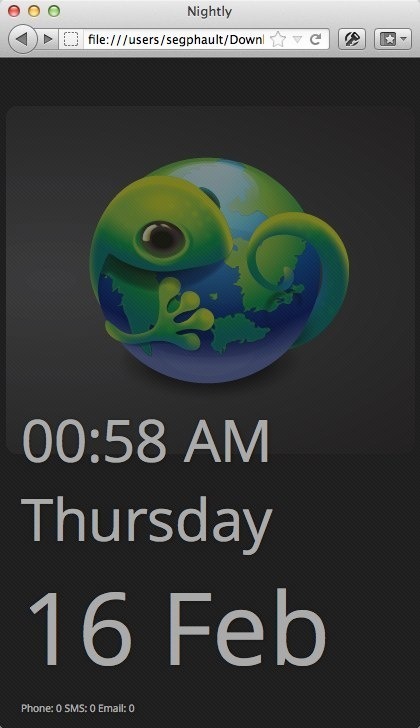
Mozilla launched a new project last year called Boot2Gecko (B2G) with the aim of developing a mobile operating system. The platform’s user interface and application stack will be built entirely with standards-based Web technologies and will run on top of Gecko, the HTML rendering engine used in the Firefox Web browser. The B2G project has advanced at a rapid pace this year and the platform is beginning to take shape.
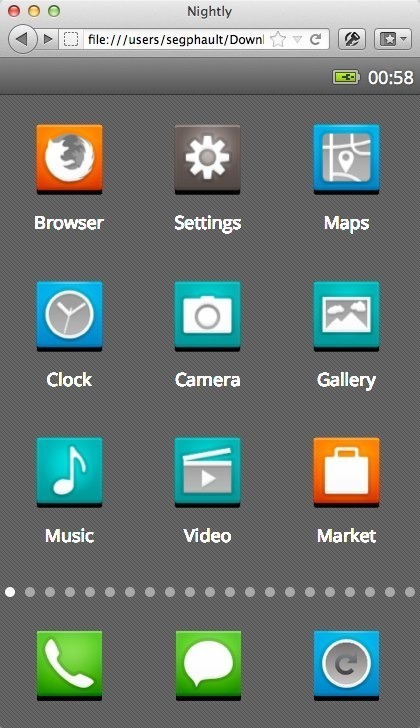
The B2G team at Mozilla is preparing to give a demo of the platform’s user experience at the upcoming Mobile World Congress (MWC) event. Mozilla’s Brendan Eich told us via Twitter that the B2G project has already attracted partners, including one that is developing its own custom home screen. This suggests that multiple parties, possibly hardware vendors, are interested in adopting the platform.
According to a roadmap recently published by Mozilla, the B2G project could potentially reach the product stage by the second quarter of 2012. That’s a highly ambitious target, but the project’s impressive rate of development suggests that it can be done. The pervasive use of HTML and JavaScript to build the user interface and application stack is no doubt speeding the project along. Web technologies are very conducive to rapid development.
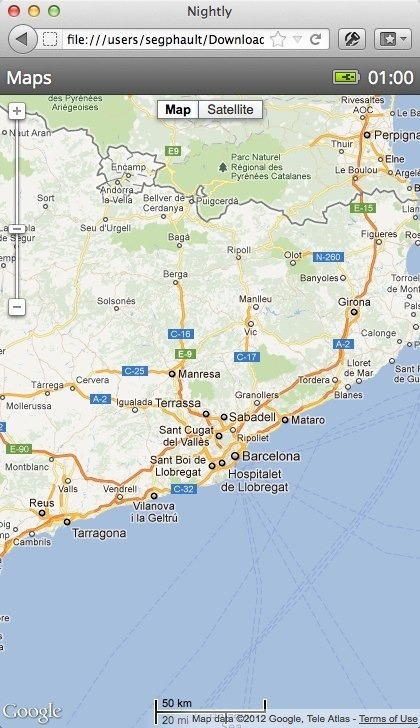
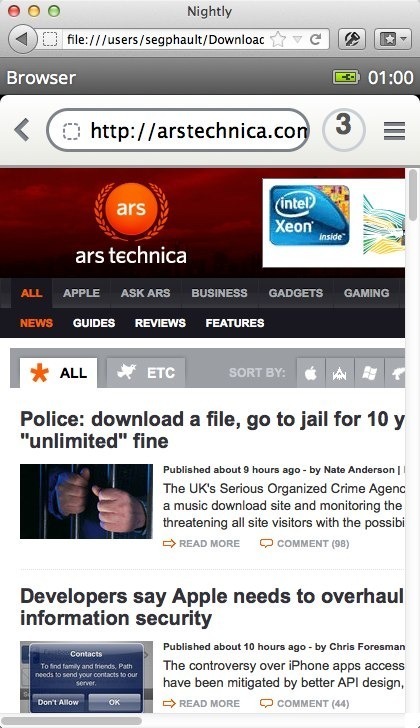
The B2G platform consists of three main layers. The bottom layer, which is called Gonk, includes the Linux kernel, the hardware abstraction layer, the telephony stack, and other low-level system components. The middle layer is the Gecko rendering engine, which has been improved with new APIs that expose device capabilities. The top layer is Gaia, the B2G user interface, which is built entirely with HTML and JavaScript.
The Linux kernel that is used in Gonk is said to be “reasonably close” to upstream Linux. According to Mozilla’s documentation, Gonk uses some of the underlying bits of the Android open source project, including some minor kernel customizations, in order to make it easier for hardware vendors to get B2G running on Android hardware. B2G is not based on Android, however, and will not run Android applications. It’s currently possible to replace the Android environment on a Samsung Galaxy S II with a B2G build.

 Loading comments...