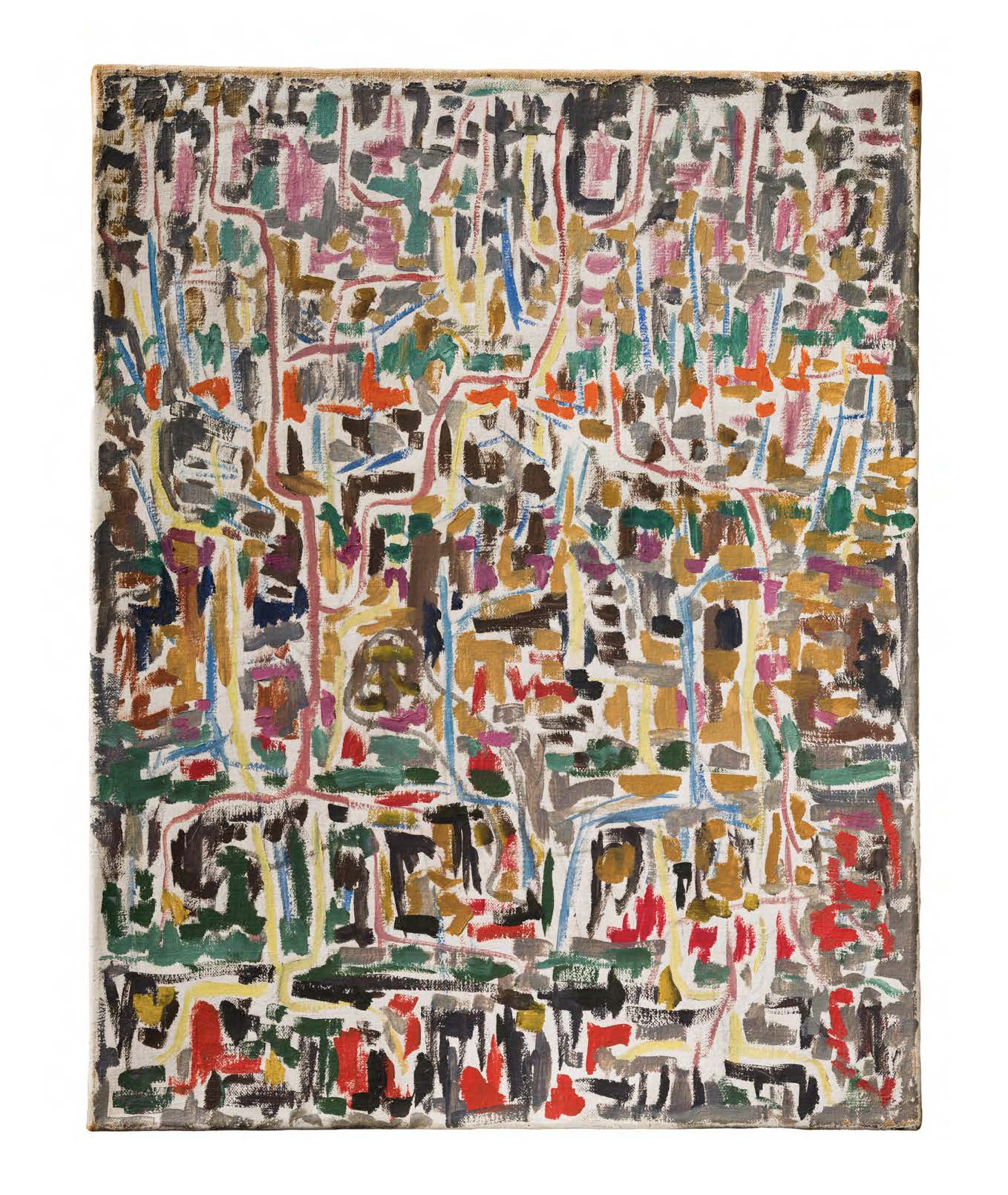
Three decades of canvases by the Italian Brutalist architect Leonardo Ricci go on view across two London venues, with a documentary screening at Unit 7 London.
Leonardo Ricci, the Italian architect known internationally for his contribution to organic-expressionist and Brutalist architecture, is the subject of a Frieze Masters Spotlight presentation this October, with a parallel exhibition at Unit 7 London. Both venues show a rare group of his paintings, made between the mid-1940s and the 1970s, which the gallery describes as a largely overlooked chapter of post-war Italian art.
Ricci (1918 to 1994) was born in Rome and studied architecture in Florence under Giovanni Michelucci, graduating in 1942. After the Second World War, Florence became an important centre for Arte Informale, with a distinctive abstraction built on gesture, materiality and organic expression. Ricci was a singular figure in that milieu. He carried an architect’s ideas of space, structure and form into richly textured compositions, some figurative and some not.
Paris supplied the philosophy. During extended stays between 1948 and 1950, Ricci encountered the existentialist thought of Albert Camus and Jean-Paul Sartre, and it remained fundamental to his work. Painting became an act of existential expression, a means of overcoming solitude and establishing a relationship between the self and the world.
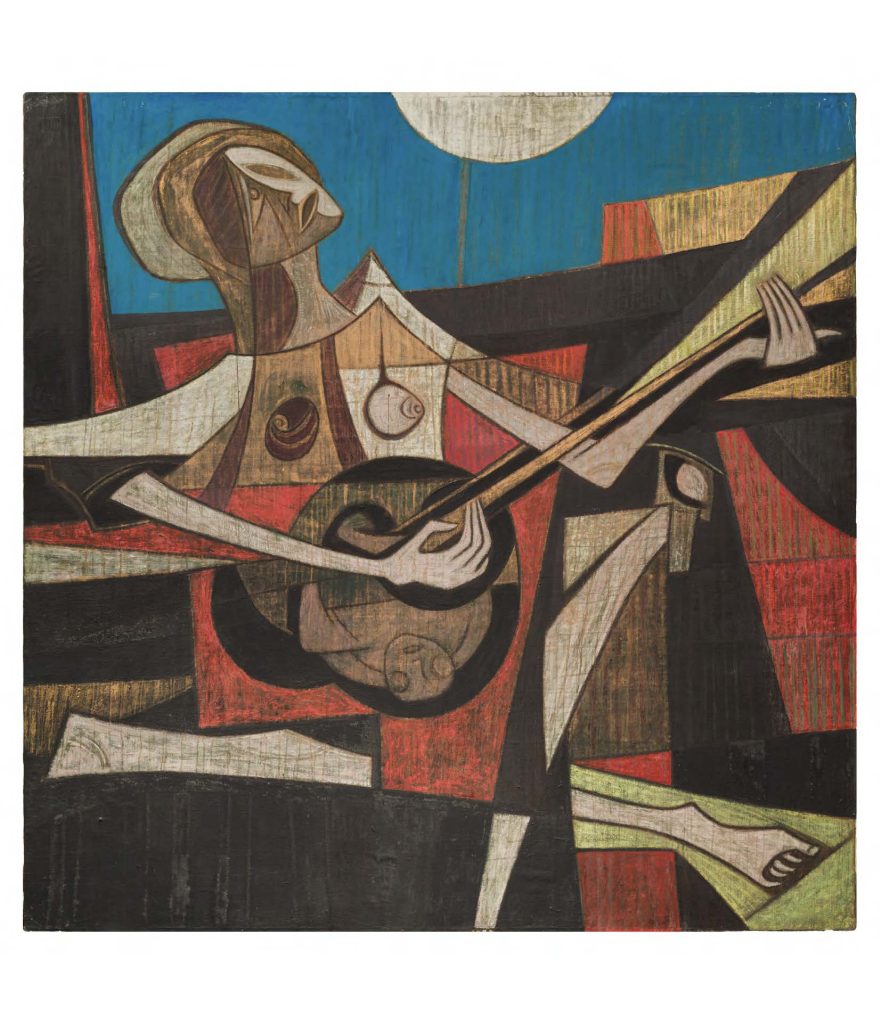
Oil on canvas, 200 × 200 cm
Courtesy of Prahlad bubbar
His international reputation grew in the same years. He took part in the Salon de Mai in Paris in 1950 and 1951, alongside artists including Giacometti, Matisse and Picasso. Between 1950 and 1953 his work was published by Cahiers d’Art and shown in solo exhibitions at Galerie Pierre in Paris, the Landau Gallery in Los Angeles and Bompiani Gallery in Florence. In 1960 an exhibition of his paintings was organised in New York with the support of the art historian Lionello Venturi.
Venturi described Ricci’s pursuit as a synthesis between Rationalism and Organicism, a balance of structure and intuition, construction and gesture. The paintings share the concerns of the buildings: material truth, lived space, and forms capable of expressing the complexities of human existence. Built up in dense layers of pigment and texture, they look less painted than excavated, and their surfaces carry the same sensitivity to matter, process and transformation found in his architecture.
The gallery’s case is that Ricci, also a writer and thinker, treated painting, architecture and urbanism as one creative vision. On that reading the canvases are an essential part of one of the most original interdisciplinary careers of twentieth-century Italy, and never a secondary practice.
A documentary on Ricci, produced by the gallery, will be screened at the preview of the exhibition at Unit 7 London.
© 2026 Prahlad Bubbar
Art Plugged is a contemporary platform inspired by a relationship with the broader arts communities. We provide our audience with curated insight into the world of art, from exhibitions to artist interviews and more.