John E. Sununu

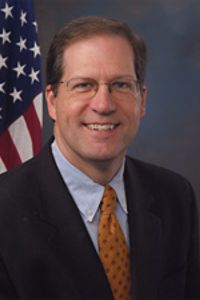

John Sununu (Republican Party) is running for election to the U.S. Senate to represent New Hampshire. He is on the ballot in the general election on November 3, 2026. He advanced from the Republican primary on September 8, 2026.
Sununu (Republican Party) was a member of the U.S. Senate from New Hampshire. He assumed office on January 3, 2003. He left office on January 3, 2009.
Biography
John Sununu was born in Boston, Massachusetts, in 1964. Sununu received a B.S. and M.S. in mechanical engineering from the Massachusetts Institute of Technology and an M.B.A. from Harvard Graduate School of Business. His career experience included running operations at an electronics company and working in engineering, consulting, and manufacturing. After leaving Congress in 2009, Sununu served as a faculty member at St. Anselm College and as a director at Boston Scientific.[1][2][3]
Sununu is the son of former New Hampshire Gov. John H. Sununu (R) and the brother of former New Hampshire Gov. Chris Sununu (R).[4]
2026 battleground election
Ballotpedia identified the November 3, 2026, general election as a battleground election. The summary below is from our coverage of this election, found here.
Chris Pappas (D), John Sununu (R), and Edmond Laplante (Constitution Party) are running in the general election for U.S. Senate in New Hampshire on November 3, 2026. Incumbent Sen. Jeanne Shaheen (D), who first assumed office in 2009, did not seek re-election.
This U.S. Senate race is among several that will help determine which party controls the chamber.[5][4][6] Heading into the election, Republicans hold a 53-45 majority. Democratic presidential candidates have won New Hampshire in each election from 2004 to 2024. Since 2020, New Hampshire has been a Republican trifecta, meaning Republicans control the governorship and both legislative chambers. New Hampshire's most recent Republican senator was Kelly Ayotte (R), the governor at the time of the 2026 election, who served in the U.S. Senate from 2011 to 2017.
The Washington Post's Ben Binday writes, "In many years, Sununu’s advantages might be enough to win in a state known for political independence and electing politicians from both parties. Yet interviews with dozens of voters ... found an electorate where Trump is so unpopular ... that voters appeared more inclined to cast their ballots based on the Senate candidates’ party affiliations in an election they view as a referendum on Trump’s presidency."[4] According to reporting from AP, "Steve Marchand, a Democratic consultant and former New Hampshire gubernatorial candidate, said Sununu has benefited from national money that got redirected from other states that are no longer seen as top targets, while Democrats were slower to invest."[7]
As of October 6, 2026, Sabato's Crystal Ball and The Cook Political Report rated the general election Lean Democratic. DDHQ/The Hill rated it Likely Democratic and Inside Elections rated it a Toss-up. Click here for more information on race forecasts.
Pappas has represented New Hampshire's 1st Congressional District since 2019. He also served on District 4 of the New Hampshire Executive Council from 2013 to 2019, as treasurer of Hillsborough County from 2007 to 2011, and as a representative of Hillsborough County in the New Hampshire House of Representatives from 2002 to 2006.[8][9][10] Pappas' campaign website says, "Chris stood up to Democratic leadership when he called for a ban on stock trading by members of Congress and forced a vote on the House floor. He took on Big Pharma to lower drug prices and cap the cost of insulin at $35. He is taking on corporate polluters who are contaminating our drinking water and is standing up to predatory companies taking advantage of our veterans."[11]
Sununu represented New Hampshire in the U.S. Senate from 2003 to 2009. He also represented New Hampshire's 1st Congressional District from 1997 to 2003.[12] Sununu's father, John H. Sununu (R), and brother, Chris Sununu (R), served as governors of New Hampshire.[4] Sununu's campaign website says, "He’ll oppose all middle-class tax hikes and work to make life more affordable for New Hampshire families by focusing like a laser on reducing inflation and lowering the cost of housing, healthcare, and energy. ... [He’ll] push term limits, make Congress pay for the full cost of their healthcare, and cut Congress’ pay if they vote to shut down the government."[13][14]
The outcome of this race will affect the partisan balance of the U.S. Senate in the 120th Congress. Thirty-three of the 100 U.S. Senate seats are up for election, and another two seats are up for special election. Democrats hold 13 of the seats up for election, and Republicans hold 22.
Currently, Republicans have a 53-45 majority in the chamber.[15] To read more about the U.S. Senate elections taking place this year, click here.
This is one of 11 open U.S. Senate races this year in which an incumbent is not running for re-election. Across the country, four Democrats and seven Republicans are not running for re-election — more than any year since 2012. In 2024, eight incumbents — four Democrats, two Republicans, and two independents — did not seek re-election.
Elections
2026
See also: United States Senate election in New Hampshire, 2026
United States Senate election in New Hampshire, 2026 (September 8 Republican primary)
United States Senate election in New Hampshire, 2026 (September 8 Democratic primary)
General election
General election for U.S. Senate New Hampshire
Chris Pappas, John Sununu, and Edmond Laplante are running in the general election for U.S. Senate New Hampshire on November 3, 2026.
Candidate | ||
 | Chris Pappas (D) | |
 | John Sununu (R) | |
 | Edmond Laplante (Constitution Party)  | |
| ||||
| = candidate completed the Ballotpedia Candidate Connection survey. | ||||
| If you are a candidate and would like to tell readers and voters more about why they should vote for you, complete the Ballotpedia Candidate Connection Survey. | ||||
Do you want a spreadsheet of this type of data? Contact our sales team. | ||||
Withdrawn or disqualified candidates
- Tim Harris (Independent)
- Matt Giovonizzi (Independent)
Democratic primary election
Democratic primary for U.S. Senate New Hampshire
Chris Pappas defeated Karishma Manzur, David Jarvis, John Vail, and Maxwell Saal in the Democratic primary for U.S. Senate New Hampshire on September 8, 2026.
Candidate | % | Votes | ||
| ✔ | | Chris Pappas | 64.6 | 60,119 |
 | Karishma Manzur | 33.2 | 30,942 | |
 | David Jarvis | 0.7 | 668 | |
| John Vail | 0.6 | 574 | ||
 | Maxwell Saal | 0.6 | 531 | |
| Other/Write-in votes | 0.3 | 277 | ||

| Total votes: 93,111 | |||
| = candidate completed the Ballotpedia Candidate Connection survey. | ||||
| If you are a candidate and would like to tell readers and voters more about why they should vote for you, complete the Ballotpedia Candidate Connection Survey. | ||||
Do you want a spreadsheet of this type of data? Contact our sales team. | ||||
Withdrawn or disqualified candidates
- Jeanne Shaheen (D)
Republican primary election
Republican primary for U.S. Senate New Hampshire
The following candidates ran in the Republican primary for U.S. Senate New Hampshire on September 8, 2026.
Candidate | % | Votes | ||
| ✔ | | John Sununu | 68.4 | 42,354 |
 | Scott Brown | 26.4 | 16,356 | |
 | Sky Danley | 1.1 | 687 | |
 | Sabrina Smith | 0.9 | 552 | |
 | Mary Maxwell | 0.7 | 444 | |
 | Andy Martin | 0.7 | 433 | |
 | Tom Alciere | 0.5 | 322 | |
| Richard McMenamon II | 0.4 | 237 | ||
| Other/Write-in votes | 0.8 | 497 | ||
| Total votes: 61,882 | |||
| = candidate completed the Ballotpedia Candidate Connection survey. | ||||
| If you are a candidate and would like to tell readers and voters more about why they should vote for you, complete the Ballotpedia Candidate Connection Survey. | ||||
Do you want a spreadsheet of this type of data? Contact our sales team. | ||||
Withdrawn or disqualified candidates
- Dennis Lamare (R)
- Tejasinha Sivalingam (R)
- Dan Innis (R)
- Charlie Hough (R)
Polls
- See also: Ballotpedia's approach to covering polls
Polls are conducted with a variety of methodologies and have margins of error or credibility intervals.[16] The Pew Research Center wrote, "A margin of error of plus or minus 3 percentage points at the 95% confidence level means that if we fielded the same survey 100 times, we would expect the result to be within 3 percentage points of the true population value 95 of those times."[17] For tips on reading polls from FiveThirtyEight, click here. For tips from Pew, click here.
Below we provide results for polls from a wide variety of sources, including media outlets, social media, campaigns, and aggregation websites, when available. We only report polls for which we can find a margin of error or credibility interval. Know of something we're missing? Click here to let us know.
| Poll | Dates | Brown | Giovonizzi (Independent) | Harris (Independent) | Laplante (Constitution Party) | Pappas (D) | Sununu (R) | Unsure | Not sure | Someone else | Don't know/Refused | Don't know/Undecided | Another candidate | Other/Don't know/Not sure | Other | Undecided | Sample size | Margin of error | Sponsor |
|---|---|---|---|---|---|---|---|---|---|---|---|---|---|---|---|---|---|---|---|
– | -- | -- | -- | -- | 50 | 43 | 2 | -- | -- | -- | -- | -- | -- | 5 | -- | 1,672 LV | ± 2.4% | ||
– | -- | -- | -- | -- | 50 | 45 | -- | 5 | -- | -- | -- | -- | -- | -- | -- | 600 LV | ± 4.0% | ||
– | -- | -- | -- | 4 | 50 | 43 | -- | 3 | -- | -- | -- | -- | -- | -- | -- | 600 LV | ± 4.0% | ||
– | -- | -- | -- | -- | 51 | 43 | -- | -- | 1 | -- | -- | -- | -- | -- | 4 | 1520 LV | ± 3.9% | ||
– | -- | -- | -- | -- | 51 | 44 | -- | 5 | -- | -- | -- | -- | -- | -- | -- | 1042 LV | ± 3.0% | AARP | |
– | -- | -- | -- | 1 | 47 | 41 | -- | -- | -- | -- | -- | -- | -- | -- | 11 | 1082 LV | ± 2.9% | ||
– | -- | -- | -- | -- | 50 | 45 | -- | -- | -- | 4 | -- | -- | -- | -- | -- | 613 LV | ± 4.9% | ||
– | -- | -- | -- | 2 | 50 | 42 | -- | -- | -- | -- | 4 | 1 | -- | -- | -- | 1418 LV | ± 2.6% | ||
– | -- | 1 | 1 | 1 | 48 | 40 | -- | -- | -- | -- | -- | -- | -- | -- | 9 | 1200 LV | ± 2.8% | ||
– | -- | -- | -- | -- | 46 | 46 | -- | -- | -- | -- | -- | -- | -- | -- | 9 | 958 LV | ± 3.1% | ||
– | 38 | -- | -- | -- | 52 | -- | -- | -- | -- | -- | -- | -- | -- | 3 | 7 | 1,295 LV | ± 2.7% | ||
– | -- | -- | -- | -- | 49 | 42 | -- | -- | -- | -- | -- | -- | -- | 4 | 6 | 1,295 LV | ± 2.7% | ||
– | 39 | -- | -- | -- | 48 | -- | -- | -- | -- | -- | -- | -- | -- | 6 | 7 | 1,100 LV | ± 2.9% | ||
– | -- | -- | -- | -- | 45 | 44 | -- | -- | -- | -- | -- | -- | -- | 5 | 6 | 1,100 LV | ± 2.9% | ||
Saint Anselm College (includes Pappas and Brown) NoteHypothetical matchup between Chris Pappas (D) and Scott Brown (R). | – | 38 | -- | -- | -- | 47 | -- | -- | -- | -- | -- | -- | -- | -- | -- | 15 | 1,491 RV | ± 2.5% | N/A |
Saint Anselm College (includes Pappas and Sununu) NoteHypothetical matchup between Chris Pappas (D) and John Sununu (R). | – | -- | -- | -- | -- | 46 | 43 | -- | -- | -- | -- | -- | -- | -- | -- | 11 | 1,491 RV | ± 2.5% | N/A |
Granite State Poll (includes Pappas and Brown) NoteTwo-way race between Pappas and Brown | – | 42 | -- | -- | -- | 52 | -- | -- | -- | -- | -- | -- | -- | 6 | -- | -- | 2,053 LV | ± 2.2% | University of New Hampshire |
Granite State Poll (includes Pappas and Sununu) NoteTwo-way race between Pappas and Sununu | – | -- | -- | -- | -- | 50 | 45 | -- | -- | -- | -- | -- | -- | 6 | -- | -- | 2,053 LV | ± 2.2% | University of New Hampshire |
– | 28 | -- | -- | -- | 46 | -- | -- | -- | -- | -- | -- | -- | -- | -- | 26 | 603 | ± 5.1% | NH Journal | |
– | -- | -- | -- | -- | 42 | 36 | -- | -- | -- | -- | -- | -- | -- | -- | 22 | 603 | ± 5.1% | NH Journal | |
Guidant Polling and Strategy (includes Brown) NoteHypothetical matchup between Chris Pappas (D) and Scott Brown (R). | – | 38 | -- | -- | -- | 49 | -- | -- | -- | -- | -- | -- | -- | -- | -- | 13 | 600 LV | ± 4.0% | N/A |
Guidant Polling and Strategy (includes Sununu) NoteHypothetical matchup between Chris Pappas (D) and John Sununu (R). | – | -- | -- | -- | -- | 47 | 44 | -- | -- | -- | -- | -- | -- | -- | -- | 9 | 600 LV | ± 4.0% | N/A |
– | 36 | -- | -- | -- | -- | -- | -- | -- | -- | -- | -- | -- | -- | -- | 20 | 2,112 RV | ± 2.1% | ||
– | -- | -- | -- | -- | 44 | 41 | -- | -- | -- | -- | -- | -- | -- | -- | 16 | 2,112 RV | ± 2.1% | ||
| Note: LV is likely voters, RV is registered voters, and EV is eligible voters. | |||||||||||||||||||
Candidate spending
| Name | Party | Receipts* | Disbursements** | Cash on hand | Date |
|---|---|---|---|---|---|
| Chris Pappas | Democratic Party | $23,703,648 | $22,126,867 | $1,984,366 | As of October 14, 2026 |
| John Sununu | Republican Party | $5,681,528 | $3,936,991 | $1,711,396 | As of October 14, 2026 |
| Edmond Laplante | Constitution Party | $0 | $0 | $0 | Data not available*** |
|
Source: Federal Elections Commission, "Campaign finance data," 2026. This product uses the openFEC API but is not endorsed or certified by the Federal Election Commission (FEC).
* According to the FEC, "Receipts are anything of value (money, goods, services or property) received by a political committee." |
|||||
Satellite spending
Satellite spending describes political spending not controlled by candidates or their campaigns; that is, any political expenditures made by groups or individuals that are not directly affiliated with a candidate. This includes spending by political party committees, super PACs, trade associations, and 501(c)(4) nonprofit groups.[18][19]
The tables below contain data from the Federal Election Commission (FEC). They include totals from monthly, quarterly, and semi-annual reports, as well as 24- and 48-hour reports.
Details about satellite spending of significant amounts and/or reported by media are included below those links. To notify us of additional satellite spending, email us.
The table below summarizes spending by satellite groups in support of or opposition to each candidate in this race. Satellite spending is spending by outside groups, independent of candidates’ campaigns. It does not include spending by the candidates’ own campaigns.
| Candidate | Spending For | Spending Against | Total |
|---|---|---|---|
| John Sununu | $2,887,189 | $130,636 | $3,017,825 |
| Chris Pappas | $1,188 | $1,293,060 | $1,294,249 |
| Total | $2,888,377 | $1,423,696 | $4,312,073 |
| Source: Federal Election Commission (FEC). This product uses the openFEC API but is not endorsed or certified by the FEC. | |||
The table below details the total spending by satellite groups and whether it was made in support or opposition of a specific candidate. It breaks down the totals above by organization, with individual rows ordered by amount, largest first.
| Organization | Support/Oppose | Candidate | Amount |
|---|---|---|---|
| AMERICANS FOR PROSPERITY ACTION, INC. (AFP ACTION) DBA CVA ACTION AND DBA LIBRE ACTION | Support | John Sununu | $2,881,619 |
| AMERICANS FOR PROSPERITY ACTION, INC. (AFP ACTION) DBA CVA ACTION AND DBA LIBRE ACTION | Oppose | Chris Pappas | $1,228,090 |
| STRONG AS GRANITE PAC | Oppose | John Sununu | $130,636 |
| AMERICAN POLITICAL ACTION COMMITTEE | Oppose | Chris Pappas | $50,972 |
| SLF PAC | Oppose | Chris Pappas | $11,166 |
| TURNING POINT PAC INC. | Support | John Sununu | $5,570 |
| CITIZENS AGAINST AIPAC CORRUPTION | Oppose | Chris Pappas | $2,833 |
| DMFI PAC | Support | Chris Pappas | $938 |
| GIVEGREEN UNITED ACTION | Support | Chris Pappas | $251 |
| Overall total | $4,312,073 | ||
| Source: Federal Election Commission (FEC). This product uses the openFEC API but is not endorsed or certified by the FEC. | |||
Race ratings
- See also: Race rating definitions and methods
Ballotpedia provides race ratings from four outlets: The Cook Political Report, Inside Elections, Sabato's Crystal Ball, and DDHQ/The Hill. Each race rating indicates if one party is perceived to have an advantage in the race and, if so, the degree of advantage:
- Safe and Solid ratings indicate that one party has a clear edge and the race is not competitive.
- Likely ratings indicate that one party has a clear edge, but an upset is possible.
- Lean ratings indicate that one party has a small edge, but the race is competitive.[20]
- Toss-up ratings indicate that neither party has an advantage.
Race ratings are informed by a number of factors, including polling, candidate quality, and election result history in the race's district or state.[21][22][23]
Last four weeks
Ballotpedia reviews external race ratings every week throughout the election season and posts weekly updates even if the media outlets have not revised their ratings during that week. The table below shows the most recent four weeks of ratings until the election date, if available.
| Reviewing Body | October 20, 2026 | October 13, 2026 | October 6, 2026 | September 29, 2026 |
|---|---|---|---|---|
| Cook Political Report | Lean Democratic | Lean Democratic | Toss-up | Toss-up |
| Decision Desk | Likely Democratic | Likely Democratic | Likely Democratic | Likely Democratic |
| Inside Elections | Tilt Democratic | Toss-up | Toss-up | Toss-up |
| Sabato's Crystal Ball | Likely Democratic | Lean Democratic | Lean Democratic | Lean Democratic |
Change over time
The following table shows each date on which one or more rating outlets changed their rating.
| Date | Inside Elections | Cook Political Report | Sabato's Crystal Ball | Decision Desk |
|---|---|---|---|---|
| Most recent rating | Tilt Democratic | Lean Democratic | Likely Democratic | Likely Democratic |
| Changes throughout the cycle | ||||
| October 20, 2026 | Tilt Democratic | Lean Democratic | Likely Democratic | Likely Democratic |
| October 13, 2026 | Toss-up | Lean Democratic | Lean Democratic | Likely Democratic |
| September 22, 2026 | Toss-up | Toss-up | Lean Democratic | Likely Democratic |
| September 8, 2026 | Toss-up | Lean Democratic | Lean Democratic | Likely Democratic |
| July 21, 2026 | Tilt Democratic | Lean Democratic | Lean Democratic | Likely Democratic |
| October 28, 2025 | Tilt Democratic | Lean Democratic | Lean Democratic | Pending |
| July 29, 2025 | Lean Democratic | Lean Democratic | Lean Democratic | Pending |
| April 1, 2025 | Battleground Democratic | Lean Democratic | Lean Democratic | Pending |
| February 18, 2025 | Battleground Democratic | Lean Democratic | Likely Democratic | Pending |
| February 11, 2025 | Battleground Democratic | Lean Democratic | Pending | Pending |
| January 21, 2025 | Battleground Democratic | Pending | Pending | Pending |
Endorsements
- See also: Our approach to covering endorsements
John Sununu received the following endorsements and voter guide recommendations. To send us additional endorsements, click here.
Campaign themes
2026
Ballotpedia survey responses
See also: Ballotpedia's Candidate Connection
John Sununu has not yet completed Ballotpedia's 2026 Candidate Connection survey. Send a message to John Sununu asking him to fill out the survey. If you are John Sununu, click here to fill out Ballotpedia's 2026 Candidate Connection survey.
Who fills out Ballotpedia's Candidate Connection survey?
Any candidate running for elected office, at any level, can complete Ballotpedia's Candidate Survey. Completing the survey will update the candidate's Ballotpedia profile, letting voters know who they are and what they stand for. More than 24,000 candidates have taken Ballotpedia's candidate survey since we launched it in 2015. Learn more about the survey here.
You can ask John Sununu to fill out this survey by using the buttons below or emailing Info@SununuSenator.com.


Media interview
Sununu stated the following in an interview with The Dartmouth:
You left the Senate nearly two decades ago and are now seeking to return in one of the more competitive races in the country. Why is this the right moment to come back, and why do you believe New Hampshire voters should send you back now?
Politics isn't just about holding an office. It's about being an effective voice for the people you represent. Right now, New Hampshire needs someone who understands the state and who is focused on the right things: the economy, jobs, affordability, housing, energy and healthcare. Congress is dysfunctional. I think anybody looking at Washington right now sees a system that is not focused on the right priorities. New Hampshire, maybe more than most states because we're small, needs an effective voice in Washington. I've shown before that I can be that voice.
President Trump endorsed you despite years of mutual criticism, including your past support for his rivals and your 2024 Union Leader op-ed calling him "a loser." What changed?
He recognized what people in New Hampshire recognized when they first endorsed me at the beginning of this campaign: Our former Republican governors, state Sen. Sharon Carson and Republican executive councilors endorsed me because they know New Hampshire needs an effective voice in Washington — someone who can rise above the dysfunction and focus on the issues that matter to this state.
What does your relationship with the president look like right now?
More importantly, my relationship is with the administration. We don't currently have anyone in our delegation who can effectively advocate for New Hampshire with this administration because there has been so much time spent simply butting heads.
Scott Brown has argued that he is the more "America First" candidate and suggested that your support reflects institutional Republican politics more than grassroots support. How do you respond?
I'm New Hampshire. I said in my campaign announcement that I'll have one job: standing up for New Hampshire every single day. I'm not focused on another office or currying favor with anyone outside this state.
Polls to date show you leading Brown by a significant margin in the September primary. As you prepare for a likely general election matchup against Chris Pappas, what do you see as the central contrast between the two of you?
Chris Pappas has consistently taken positions that I think are out of sync with where many people in New Hampshire are. He voted for energy taxes as families struggled with heating costs. He opposes voter ID. He supports allowing boys to compete in girls' sports. The other distinction is effectiveness. When I was in Congress, I wrote and passed legislation protecting the White Mountain National Forest, supporting families of law enforcement officers killed in the line of duty and banning internet taxes. I got things done under both Republican and Democratic leadership because those issues mattered to New Hampshire.
What is the single most important thing the federal government could do right now that could materially improve life for New Hampshire families?
There's no single answer because these issues are all different, even though they were all impacted by inflation. On health care, affordability comes from competition, expanding health savings accounts and increasing price transparency. On housing, we should waive tariffs on building materials, reduce regulations affecting workforce housing and pursue permitting reform. On energy, we need more production, more transmission infrastructure and more pipeline capacity.
Iran and the broader Middle East have moved back to the center of national politics. How should the U.S. balance deterrence, alliances and avoiding a broader regional war?
Anytime American military force is used, it should be tied to very specific national security objectives. In Iran, that means preventing Iran from obtaining a nuclear weapon, degrading its ballistic missile capability and preventing support for terrorism throughout the region. I think those objectives have largely been achieved through recent military action. The goal now should be to establish a permanent ceasefire and restore access through the Strait of Hormuz.
At what point should Congress formally authorize military involvement abroad?
Congress can declare war anytime it wants under the Constitution. I think the War Powers Act is appropriately structured because it allows the administration to respond to imminent threats while preserving Congress' authority afterward. President Obama used military force in Libya without congressional approval for months. President Clinton did the same in Kosovo. I think the actions involving Iran have been consistent with that precedent.
You come from one of the most prominent political families in New Hampshire history. What do you think gets lost about you personally amid the Sununu name and political history?
My grandfather grew up in the Middle East. My grandmother was born and raised in El Salvador. My father was born in Cuba. My family came to New Hampshire in 1970. It's not as though we've been a political dynasty in New Hampshire for 200 years. What it really shows is that if you work hard, focus on the right things and commit yourself to representing people the right way, New Hampshire voters respond. I've been very happy outside politics for more than 15 years, but when you see an opportunity to use your experience to make a difference, that's what public service is about.
If this campaign succeeds, what do you want it to have stood for politically and personally?
If, at the end of the day, people look at my campaign and my service and say, "There's someone who understood how unique and special New Hampshire is and always put that first," I'll be satisfied.
Is there anything not on your resume that you think New Hampshire voters should know about you?
I've skied Tuckerman Ravine a half-dozen times. I've been to the South Pole. And I've got three grown children who are happy, employed and untethered from their parents, and nothing makes a parent more proud than that.
— John Sununu in The Dartmouth interview (May 11, 2026)
Campaign ads
View more ads here:
Campaign finance summary
 Note: The finance data shown here comes from the disclosures required of candidates and parties. Depending on the election or state, this may represent only a portion of all the funds spent on their behalf. Satellite spending groups may or may not have expended funds related to the candidate or politician on whose page you are reading this disclaimer. Campaign finance data from elections may be incomplete. For elections to federal offices, complete data can be found at the FEC website. Click here for more on federal campaign finance law and here for more on state campaign finance law.
Delegate rules
In New Hampshire, presidential candidates were required to submit lists of preferred delegates prior to the state primary election on February 9, 2016. After the primary, if a candidate was allocated any delegates, he or she was allowed to select an official delegate slate from the list they submitted prior to the primary. New Hampshire delegates were bound on all ballots. Delegates were to be released and unbound if a candidate "withdraws" from the race.
New Hampshire primary results
| New Hampshire Republican Primary, 2016 | ||||
|---|---|---|---|---|
| Candidate | Vote % | Votes | Delegates | |
 Donald Trump |
35.6% | 100,735 | 11 | |
| John Kasich | 15.9% | 44,932 | 4 | |
| Ted Cruz | 11.7% | 33,244 | 3 | |
| Jeb Bush | 11.1% | 31,341 | 3 | |
| Marco Rubio | 10.6% | 30,071 | 1 | |
| Chris Christie | 7.4% | 21,089 | 0 | |
| Carly Fiorina | 4.2% | 11,774 | 0 | |
| Ben Carson | 2.3% | 6,527 | 0 | |
| Rand Paul* | 0.7% | 1,930 | 0 | |
| Total Write-ins | 0.5% | 1,398 | 0 | |
| Jim Gilmore | 0% | 134 | 0 | |
| Totals | 283,175 | 22 | ||
| Source: New Hampshire Secretary of State | ||||
*Rand Paul dropped out of the race on February 3, 2016, but his name remained on the ballot in New Hampshire.[24]
Delegate allocation

New Hampshire had 23 delegates at the 2016 Republican National Convention. Of this total, six were district-level delegates (three for each of the state's two congressional districts). District-level delegates were allocated on a proportional basis; each candidate who won at least 10 percent of the statewide vote was entitled to receive a share of New Hampshire's district delegates.[25][26]
Of the remaining 17 delegates, 14 served at large. At-large delegates were allocated on a proportional basis; each candidate who won at least 10 percent of the statewide vote was entitled to receive a share of the state's at-large delegates. In addition, three national party leaders (identified on the chart below as RNC delegates) served as bound delegates to the Republican National Convention.[25][26]
See also
2026 Elections


External links
Footnotes
- ↑ John Sununu 2026 campaign website, "About" accessed September 4, 2026
- ↑ Biographical Directory of the United States Congress, "SUNUNU, John E.," accessed October 5, 2026
- ↑ Boston Scientific, "John E. Sununu," accessed October 5, 2026
- ↑ 4.0 4.1 4.2 4.3 The Washington Post, "Why this Democrat is struggling in a state that rejects Trump," October 3, 2026
- ↑ PBS News, "With Sununu vs. Pappas, familiar names will compete in New Hampshire Senate race," September 9, 2026
- ↑ nhpr, "'It's just all garbage': NH voters overwhelmed by outside spending in Senate race," September 28, 2026
- ↑ 12 WBOY, "Democrats want a blue wave. New Hampshire is Exhibit A for why that may not happen," September 30, 2026
- ↑ The General Court of New Hampshire, "Past and Present Legislator's Legislation," accessed October 4, 2026
- ↑ New Hampshire Union Leader, "Chris Pappas has learned politics, family business from ground up," January 26, 2014
- ↑ Biographical Directory of the United States Congress, "PAPPAS, Chris," accessed October 5, 2026
- ↑ Chris Pappas 2026 campaign website, "Priorities," accessed October 4, 2026
- ↑ Biographical Directory of the United States Congress, "SUNUNU, John E.," accessed October 5, 2026
- ↑ John Sununu 2026 campaign website, "About John Sununu," accessed October 4, 2026
- ↑ John Sununu 2026 campaign website, "JOHN SUNUNU WINS REPUBLICAN PRIMARY FOR U.S. SENATE," September 8, 2026
- ↑ Both independent U.S. senators — Bernie Sanders (I-Vt.) and Angus King (I-Maine) — caucus with the Democrats.
- ↑ For more information on the difference between margins of error and credibility intervals, see explanations from the American Association for Public Opinion Research and Ipsos.
- ↑ Pew Research Center, "5 key things to know about the margin of error in election polls," September 8, 2016
- ↑ OpenSecrets.org, "Outside Spending," accessed December 12, 2021
- ↑ OpenSecrets.org, "Total Outside Spending by Election Cycle, All Groups," accessed December 12, 2021
- ↑ Inside Elections also uses Tilt ratings to indicate an even smaller advantage and greater competitiveness.
- ↑ Amee LaTour, "Email correspondence with Nathan Gonzalez," April 19, 2018
- ↑ Amee LaTour, "Email correspondence with Kyle Kondik," April 19, 2018
- ↑ Amee LaTour, "Email correspondence with Charlie Cook," April 22, 2018
- ↑ Politico, "Rand Paul drops out of White House race," February 3, 2016
- ↑ 25.0 25.1 Republican National Committee, "2016 Presidential Nominating Process," accessed October 6, 2015
- ↑ 26.0 26.1 CNN.com, "Republican National Convention roll call vote," accessed July 20, 2016