
Current Editor

John Bellamy Foster, Editor (2000–present)
He was concerned from his earliest years with environmental issues, but in the late 1960s the fundamental issue for him was U.S. imperialism. He participated in protests and gave talks in his high school years against the Vietnam War and against the nuclear arms race. In 1971, he commenced studies at the Evergreen State College at the University of Oregon, where he focused on interdisciplinary studies in economics, history, philosophy, politics, and literature. There he met Robert W. McChesney and they became fast friends. McChesney introduced Foster to Monthly Review of which he had only scant knowledge prior. Along with other friends they studied neoclassical economics intensively up to the graduate level, along with Marxian economics, particularly the tradition associated with Paul A. Baran and Paul M. Sweezy’s Monopoly Capital. Foster and McChesney were part of a group of students who organized a national conference known as the Northwest Symposium on Chile, following the U.S. directed coup against the elected socialist government under Salvador Allende.
In 1976, Foster entered graduate studies in political science at York University in Toronto, where he specialized in political economy. He did his master’s paper on Joseph A. Schumpeter and engaged in extensive studies of Marx’s Capital as well as and economic development. He took classes on the history of political theory with Neal Wood and Ellen Meiksins Wood. At first, Foster was attracted to the new wave of fundamentalist Marxian political economy occurring at the time. But as a result of working with U.S. historian Gabriel Kolko, he shifted back to a more historical and empirical frame and advanced studies of monopoly capital theory, including the work of Michał Kalecki and Joseph Steindl, in addition to Baran and Sweezy. He was to write his dissertation on The Theory of Monopoly Capitalism: An Elaboration of Marxian Political Economy (1986, 2014). During these years Foster became close friends with Sweezy (with whom he had a close intellectual conection) and Magdoff and began writing for Monthly Review in 1981.
After graduating Foster taught political economy for a short time at The Evergreen State College and then took a position as a professor of sociology at the University of Oregon (the position was advertised as focusing on “Marxism, political economy, class analysis, and imperialism”). He taught Marx’s Capital every year for the next forty yers. He continued to work in political economy and to write for Monthly Review but by the late 1980s his interest had shifted to studies of environmental crisis. He published The Vulnerable Planet: A Short History of the Environment (1994) and Marx’s Ecology: Materialism and Nature (2000). The unearthing of Marx’s theory of the metabolic rift in the latter work was to play a key role in the development of ecosocialism worldwide. Foster’s The Return of Nature: Socialism and Ecology (2020) was to win the Issac and Tamara Deutscher Memorial Prize.
In 1988-89 Foster joined the editorial committee of Monthly Review and became a director of the Monthly Review Foundation. During the period 1997-2000 Ellen Meiksins Wood coedited the magazine with Harry Magdoff and Paul Sweezy. When she stepped down in 2000, Foster and McChesney joined Magdoff (now in his late 80s) and Sweezy (in his 90s) as coeditor of Monthly Review. Sweezy died in 1994 and McChesney left that year to start the media advocacy group. Free Press (though remaining as a director of the Monthly Review Foundation). Magdoff died in 2006. Consequently, Foster was left as the sole editor of Monthly Review, along with Brett Clark as associate editor, and a strong editorial committee.
Foster’s work today is largely focused on political economy, imperialism, and the environment. A crucial work was his Breaking the Bonds of Fate: Epicurus and Marx (2025). He retired from the University of Oregon, teaching his last course in 2026, and is now professor emeritus.
See here for Monthly Review Press books by John Bellamy Foster; and here for Monthly Review articles. For a full list of publications, see John Bellamy Foster’s website.
Past Editors
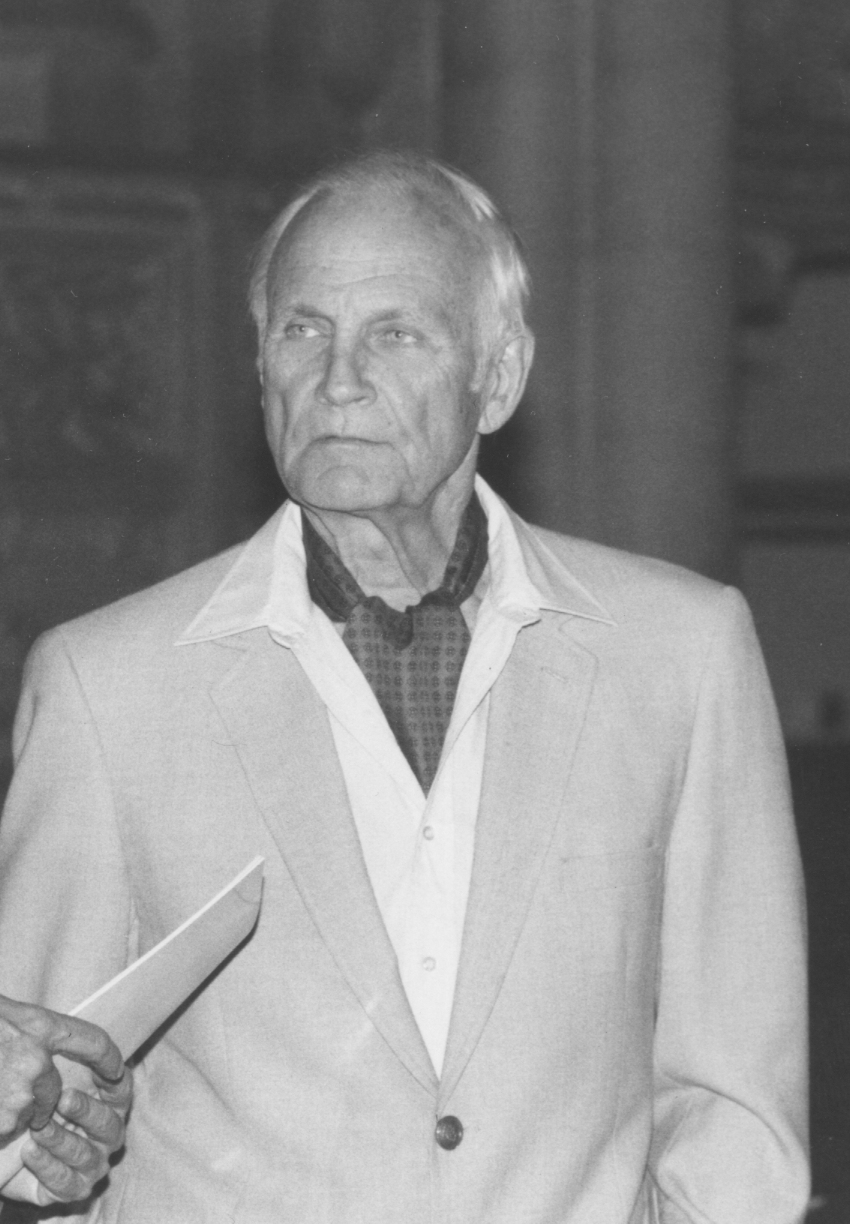
Paul M. Sweezy, Editor 1949-2004
Paul M. Sweezy (1910–2004), the founding co-editor of Monthly Review (with leo Huberman) was an unlikely socialist. The son of a Wall Street investment banker, Paul was educated at the elite Philips Exeter Academy and Harvard. It wasn’t until Sweezy arrived at the London School of Economics for graduate school in 1932 that he began to develop a radical consciousness. The deepening of the Great Depression, the rise of fascism in Europe, and contact with radicals on campus left Sweezy questioning the bases of what he had been taught about economics, and, more broadly, about society. By the time he returned to Harvard to complete his doctorate, he had declared himself a Marxist—a “convinced but very ignorant” one, as he put it.
The non-dogmatic approach and intellectual rigor of Sweezy’s analysis quickly earned him many admirers and grudging respect from his ideological opponents. He was mentored by the conservative economist Joseph Schumpeter, and although the two developed a life-long friendship, they often engaged in heated debate that has since become the stuff of legend. Sweezy’s classmate and future Nobel laureate Paul Samuelson recalled one debate between Sweezy, the “young sir Galahad,” and Schumpeter, the “foxy Merlin.” “Unfairly,” Samuelson wrote, “the gods had given Paul Sweezy, along with a brilliant mind, a beautiful face and wit.”
Sweezy seminal work, The Theory of Capitalist Development, was a lucid description of Marxian economics that was hailed as the best of its kind, and continues to be read today. At the outbreak of the Second World War he took a leave at Harvard and spent four years working for the Office of Strategic Services as editor of the European Political Report. After the war, with years still on his Harvard contract, Sweezy resigned his teaching post. He thought it unlikely that he would secure a tenured position at Harvard, despite his proven intellectual brilliance, personal charisma, and support from Schumpeter. The Cold War and its climate of hostility and repression of radicals had begun.
Sweezy decided to leave academia altogether and devote himself entirely to the study and radical critique of the world around him. He became involved in Henry Wallace’s campaign for President of the United States on the Progressive Party ticket and headed the campaign in New Hampshire. In 1949 he launched Monthly Review magazine with Hubreman, as a forum for socialists to challenge the reigning ideologies and openly articulate the aims and goals of socialism. It would quickly become one of the most influential radical forums in the United States, and Sweezy would serve as an editor for the remainder of the century.
Five years after founding Monthly Review, Sweezy himself was targeted by McCarthy when he refused to hand over lecture notes to the New Hampshire attorney general and refused to name names of those involved in the Progressive Party or the Communist Pargy. He asserted his right to free expression under the First Amendment and received a jail sentence for “contempt of court.” The case eventually reached the U.S. Supreme Court where it was overruled on a 5-4 decision.

Out of this hostile atmosphere came the 1960s and an explosion of radical activity, both in the United States and globally. Many looked to for guidance, and his 1966 book Monopoly Capital, written with Paul A. Baran, became required reading. Their bold argument—that mature capitalist economies are prone to stagnation, and that moments of growth are the anomalies which need to be explained—represented a synthesis of Marxian and Keynesian analytical tools and has made a lasting impression on modern radical economic thought. Sweezy, along with new co-editor Harry Magdoff, continued to develop this analysis throughout his life, and made early investigations into the spectacular rise of financial capital which now so completely dominates our present moment.
At the time of his death at age 93, Sweezy was remembered, in the words of John Kenneth Galbraith, as “the most noted American Marxist scholar” of the latter half of the twentieth century. His flexible and non-dogmatic intellectual approach was matched only by his unwavering commitment to the struggle for a better world, one in which human need—and not private profit—is the key around which we organize society. Surely, Paul Sweezy lived Marx’s famous dictum that urges an “uncompromising critical evaluation of all that exists, uncompromising in the sense that our criticism fears neither its own results nor the conflict with the powers that be.”
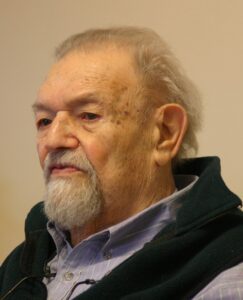
Harry Magdoff, Editor 1969-2006
Harry Magdoff (1913–2006) was born in the Bronx to working-class parents — his father was a house painter. He attended City College of New York where he studied physics and math and was active in a left discussion group called the “social problems club,” editing its monthly magazine Frontiers. In 1932 he went to Chicago to the founding national conventions of the National Students League (he was already editor of the local NSL magazine Student Review) and the youth League Against the War and Fascism. It was during the convention that he married a fellow student, Beatrice Greizer, better known as Bd.
After a political confrontation with the CCNY administration, Harry was expelled and went to New York University, where he majored in economics. He got his degree in 1936. While at school he also taught Marxism to workers through the Jewish Workers’ University.
In 1936 Magdoff went to Philadelphia to direct studies of the labor force, unemployment, industrial capacity, and productivity for the WPA’s National Research Project. In 1940 he moved to Washington, D.C., where he was put in charge of the civilian requirements division of the National Defense Advisory Commission. When the United States entered the Second World War in 1941, he was assigned the task of watching over the progress of war production for the war production board, and then put in charge of planning and controls for the crucial metalworking machinery industries. Toward the end of the war he became chief economist in charge of the “current business analysis division” of the department of commerce, where, among his other duties, he oversaw the monthly publication of the Survey of Current Business. His final years in government were spent as special assistant to the secretary of commerce, Henry Wallace.
Beginning in 1948, however, Magdoff was subjected to inquiries by congressional committees and the FBI. He moved to New York and for the next ten years struggled to make a living. He worked as a stockbroker and as a financial analyst for an insurance company. He persuaded a firm to front for him in putting out a circular newsletter about the state of the economy which was sold to banks. He taught at the New School for Social Research. In the mid-1950s he, along with (among others) Annette Rubinstein, Irving Kaplan, and Bd Magdoff, founded the Fund for Social Analysis, which raised money for scholarly studies in the area of Marxism. The fund gave grants to such scholars as Gordon Lewis and Paul Baran. In 1959, Harry joined Russell & Russell, a publisher of scholarly out-of-print books, where he remained until the company was bought in 1965.
Following the death of Leo Huberman, Harry joined Monthly Review as co-editor in 1969. He has taught and lectured around the world, and, besides co-authoring a number of books with Paul M. Sweezy, is the author of The Age of Imperialism (1969) and Imperialism: From the Colonial Age to the Present (1977).
At Monthly Review, Harry specialized in the analysis of economic statistics, and took a leading role in creating the remarkable series of analytical articles on the United States and on the world economy that have appeared in Monthly Review over his thirty-five year tenure. Harry also undertook the greatest part of the magazine’s correspondence with authors and friends around the world. In the 1990s, he was the leading figure in carrying out the transition at Monthly Review to the new editors and directors responsible for the enterprise.
In his final years, Harry lived in Burlington, Vermont, with his son Fred and daughter-in-law Amy. He continued to participate actively in editing the magazine. He died on January 1, 2006, at the age of 92.
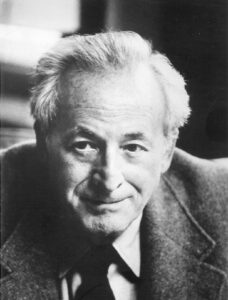
Leo Huberman, Editor 1949-1968
Leo Huberman (1903–1968) was Monthly Review’s co-editor from its beginning in 1949 until his death in 1968. Arguably without Huberman’s editorial and publishing skills, his radical imagination, and his commitment to the idea of an independent, clear-sighted socialism, MR might well have been stillborn. Instead, the magazine—and Monthly Review Press—became a leading voice of independent Marxian socialism both in the United States and worldwide.
He was born in Newark New Jersey in 1903, in his words, “the last but one of eleven children of whom six had died before his birth. By the age of eleven, he’d worked in a celluloid factory—nightly from 6pm to 6am—was a runner for a wall street brokerage house, sold orange drink at Nedick’s, was a laborer in a glass factory, an electrician’s helper, and a clerk in a post office. “After graduating from high school he began teaching elementary school while earning his bachelors degree at New York University. Huby was many things—publisher, author, journalist, and a writer—but primarily a teacher. His books: Man’s Worldly Goods, We the People, and The ABC’s of Socialism were not written in fancy language but in words which were clear and understandable. Through his work with the labor movement in the nineteen-thirties and -forties, particularly as the head the education program of the national maritime union, he had a gift for drawing the very best from those who had little formal educational background.
With the founding of Monthly Review in 1949 Leo assumed a new role as co-editor of a monthly magazine: the philosophy of him and Paul Sweezy was: “better smaller but better.” Their audience was the lay reader with a minimum of time to read and a minimum patience with convoluted or technical prose.
In the nineteen-fifties and sixties, with Monthly Review’s growing international reputation, Leo and Paul traveled widely, meeting with writers and militants. Increasingly Asia, Africa, and, especially Latin America became a focus. In 1959 and 1960 Monthly Review‘seditors visited Cuba, touring the island with Fidel Castro and Che Guevara.
In addition to begin co-editor of the magazine, Leo was the first editor-in-chief of Monthly Review Press. The first book on the MR Press list was The Hidden History of the Korean War by I.F. Stone. Because of its controversial content, Stone had been turned down by several other publishers and only a chance meeting with Leo and Paul at the Central Park zoo led to its publication. At the time of his Huby’s death, MR Press had published some seventy titles, including Che Guevara’s Guerrilla Warfare and Reminiscences of the Cuban Revolutionary War. During this timeHuby was pretty much a one-man operation running the entire press.
In the last years of his life, Leo probed and challenged the ongoing tragedy of white supremacy in the United States. In 1958 Monthly Review published as a special summer issue (and later a book) The Wall Between. Anne Braden’s book, a National Book Award finalist, offers an insider’s view of the early history of the modem civil rights movement.
“Live as you think,” Huby once said, “or shortly you will think as you live.” No phrase more aptly sums up him up.

Robert W. McChesney, Editor 2000-
Robert (Bob) Waterman McChesney (1952–2025) was born in Cleveland, Ohio. His father, Samuel Parker McChesney sold advertising for This Week magazine, His mother Edna (Meg) McChesney (née McCorkle) was a former nurse, turned homemaker. After attending high school at Pomfret, a private boarding (prep) school in Connecticut, he enrolled in college at Antioch in Ohio, transferring there to The Evergreen State College in Olympia, Washington.
Soon after his arrival at Evergreen, McChesney met John Bellamy Foster, who had been studying at Evergreen for two years. They became fast friend and roommates. They were both in enrolled in a group contract titled “Revolt In/By Economics.” On the way to Evergreen, McChesney had discovered The Dynamics of U.S. Capitalism by Monthly Review editors Paul M. Sweezy and Harry Magdoff in an airport bookstore. He read it immediately, deciding it was the best analysis of the economy to be found, introducing Foster shortly after to Monthly Review, which they explored together. He did intensive studies in economics mainstream economics up to graduate level analysis and also studied Marxian economics. With Foster and others, he helped organize a national conference, the Northwest Symposium on Chile, after the U.S.-supported coup against Salvador Allende in Chile. After Revolt In/By Economics, he enrolled (together with Foster) in a group contract called “Marx and the Third World,” examining historical materialism in a global context.
Upon graduation from Evergreen, McChesney moved to Seattle, where he worked for a time as a stringer for United Press International covering sports. He became the publisher of a weekly newspaper, The Seattle Sun in 1979-80, and, in 1979, of The Rocket, a free music and culture magazine devoted primarily to rock and roll, which started out as a supplement to The Seattle Sun and then became an independent publication. The Rocket was honored in the in the Rock and Roll Hall of Fame for having engendered and promoted the Seattle rock science. McChesney later sold his interest in The Rocket to fund his graduate education.
Having taken some courses in the Department of Communication at the University of Washington, McChesney decided that he could pursue a graduate program there, specializing in critical historical and political economic studies of communications in the United States. His 1989 Ph.D. dissertation was turned into his first book, Telecommunications, Mass Media and Democracy: The Battle for the Control of U.S. Broadcasting 1928-1935 (Oxford University Press, 1993). At the University of Washington, McChesney met Inger Stole, who was studying communications. They were married, and were to have two daughters, Amy (born 1988) and Lucy born (1995). In 1988, they moved to Madison, where McChesney was hired as a professor at the University of Madison, initially to teach advertising, though he soon branched out into critical communication. In 1999, they both took positions as professors in communication at the University of Illinois at Urbana-Champaign. The same year McChesney published his pathbreaking book, Rich Media, Poor Democracy (University of Illinois Press, 1999.
In 2000, Monthly Review was facing a transitional crisis, and McChesney and Foster joined Magdoff and Sweezy, who were in their late eighties/early nineties, as coeditors of the magazine. In 2004, he published The Problem of the Media (Monthly Review Press, 2004). However, McChesney’s leading role in the media reform movement, which led to his founding of the Free Press media advocacy group in 2003 together with John Nichols and Josh Silverman, placed enormous demands on him, and he stepped down from his position as a Monthly Review coeditor in 2004, while remaining on the Monthly Review Foundation Board, and continuing to write for Monthly Review and Monthly Review Press.
McChesney’s book Communication Revolution: Critical Junctures and the Future of the Media (2008) provided a historical and theoretical account of the development of the new political economy of communication and how this had converged with the media reform movement. His book Digital Disconnect: How Capitalism Is Turning the Internet Against Democracy (New Press, 2013) was a powerful analysis of the political economy of the Internet Age. With Nichols, he wrote The Death and Life of American Journalism (Nation Books, 2010), Dollarocracy (Nation Books, 2013) and People Get Ready: The Fight Against a Jobless Economy and a Citizenless Democracy (Nation Books, 2016). In response to the 2008-10 economic crisis, Foster and McChesney wrote The Endless Crisis: How Monopoly-Finance Capital Produces Stagnation and Upheaval from the USA to China (Monthly Review Press, 2012). McChesney’s Blowing the Roof off the Twenty-First Century: Media, Politics, and the Struggle for Post-Capitalist Democracy (Monthly Review Press, 2014) brought together crucial critical analyses, demonstrating the breadth of his thought.
McChesney was faced with growing health problems beginning in 2016. He retired from the University of Illinois in 2020. In his last years he introduced his Local Journalism Project, designed to restore investigative reporting in the United States, best described by Victor Pickard in “Reinventing Local Journalism: Carrying Forward Bob McChesney’s Unfinished Project,” Monthly Review, December 2025. He died on March 25, 2025.

Ellen Meiksins Wood, Editor 1997-2000
Ellen Meiksins Wood (1942–2016) was born in New York City. Her parents, Gregory and Bella Meiksins, were Jewish immigrants from Latvia, where they had been Bundists (members of the General Jewish Labour Bund). They fled Latvia in the late 1930s when her father who was a leader of a socialist youth organization was about to be arrested. In 1941, they came to the United States. Wood grew up surrounded by left ideas. She was influenced in this respect not only by her parents—her mother worked for the Jewish Labor Committee (JLC)—but also those within a wider Jewish labor movement that she encountered in growing up, including her father’s uncle who was editor of the Jewish socialist magazine Der Vecker. Her father, a committed Marxist, went to work for the United Nations, while her mother was sent by the JLC to Germany to work with displaced persons, hence her parents split up, and Wood was educated in boarding schools, partly in the United States and partly in Europe.
In 1962, Wood received a B.A. in Slavic languages at the University of California at Berkely, and went on to do graduate studies, specializing in political theory, at the University of California at Los Angeles UCLA), during which she met her future husband, Neal Wood, a professor of political science at UCLA. In 1967, Ellen and Neal took positions as York University in Toronto. Ellen taught at York’s bilingual (English/French) satellite campus, Glendon College from 1967 to 1996. Neal and Ellen taught in the graduate Political Science and graduate Social and Political Thought programs at York.
Ellen’s academic specialties, areas in which she worked closely with Neal, were ancient and early modern (primarily English) political theory. A major work was Class Ideology and Ancient Political Theory (with Neal, Blackwell, 1978). Her research, however, took a leap forward in the late 1970s due to: (1) an encounter with the ideas of the Marxist historian Robert Brenner on the origin of capitalism in the English agrarian society; and (2) in relation to debates over analytical Marxism, in which she strongly opposed the economic determinism of G. A. Cohen, and articulated a less deterministic, more politically nuanced Marxism. Much of this work to the form articles written primarily for New Left Review, some of which was later reprinted in her Democracy Against Capitalism (Cambridge University Press, 1995). Her book, The Retreat from Class (Verso, 1986), opposing new post-Marxist trends, won the prestigious Isaac Deutscher (later Isaac and Tamara Deutscher) Memorial Prize. The term “political Marxism” came to stand for the general approach to historical materialism represented by Brenner and Wood. In 1996, she was inducted into the Royal Society of Canada, in recognition of her distinguished scholarship.
In the late 1980s Wood participated in annual socialist conferences in Cavtat and Yugoslavia, where she first entered into discussions with Harry Magdoff and Paul M. Sweezy, the editors of Monthly Review. They found themselves adopting very similar political positions. Ellen and Harry became particularly close, due to their shared cultural heritage and ability to converse in Yiddish. This was a time in which Magdoff and Sweezy were both in their late eighties and the future of Monthly Review was in doubt. In 1997, Ellen was invited to be a coeditor of the magazine with Magdoff and Sweezy. In the next few years, she helped revive the publication and played a leading role in the critique of mainstream analyses of globalization. During this time, she published her book, The Origin of Capitalism (Monthly Review Press, 1999), reflecting the political-Marxist view, centered in English agrarian development, pioneered by Brenner and Wood. However, a number of disputes related to the direction of MR arose between Wood and Magdoff and Sweezy, and in 2000 Wood departed from the magazine.
In her later work, Wood was to develop her perspective on global capitalism in The Empire of Capital (Verso, 2003) and to extend her work on early modern capitalism in Citizens to Lords (2008) and Liberty and Property (2012). Neal had died in 2003,
Associate Editors
Brett Clark, Associate Editor 2004-present
Brett Clark (1972–) was born in Rapid City, South Dakota. His parents were raised on small, impoverished, cattle and sheep ranches. Following a two-week training course, his father, Ben Clark, became a computer programmer using punched cards, until his position was rendered obsolete. His mother, Darlys Clark, was a nurse, working in a long-term care facility. Clark grew up regularly hiking in the Black Hills, witnessing the ravages of the mining and timber industry on the unceded territory of the Lakota, Dakota, and Cheyenne nations. He participated in and contributed to a vibrant punk rock community, where he was able to further cut his political teeth. Throughout high school and college, he worked first in an oil warehouse and auto parts shop and then as a counselor for youth who experienced extreme trauma.
At Black Hills State University, where he earned degrees in sociology and human services, Clark was able to pursue studies of Marxism thanks to supportive faculty and classmates. This included Capital, issues of Monthly Review, and Harry Braverman’s Labor and Monopoly Capital. At this time, Clark started following John Bellamy Foster’s early publications in Monthly Review and Capitalism Nature Socialism. He aspired to someday study with Foster, especially after The Vulnerable Planet was published in 1994. At Colorado State University, in a sociology master’s program focused on analysis of global development, Clark gained a broader exposure to Monthly Review and monopoly-capital analysis through studies of Paul Sweezy, Paul Baran, Harry Magdoff, Samir Amin, Andre Gunder Frank, and Eduardo Galeano, in addition to further reading of Karl Marx, Frederick Engels, Rosa Luxemburg, and V. I. Lenin. His thesis research, however, took him back to South Dakota to study the structural conditions that contributed to racial inequalities and homelessness.
The doctoral program at the University of Oregon fulfilled Clark’s interests in studying political economy and environmental sociology. He arrived as Foster was starting his studies of what has become known as Marx’s theory of metabolic rift. The time in Oregon was transformative, as Clark read alongside Foster, discussing Marx’s materialist analysis and critique of political economy. The two spent many hours digging through the card catalog and combing the bookshelves in the library, tracing the historical development of ecology as a science and its relationship to socialism. During this time, Clark, working with Richard York, provided the first application of metabolic rift analysis to a contemporary ecological issue—climate change—setting up part of his research agenda studying the planetary crisis. With Foster and York, he published The Critique of Intelligent Design (2008), The Ecological Rift (2010), with York, The Science and Humanism of Stephen Jay Gould (2011), and, with Foster, The Robbery of Nature (2020), all with Monthly Review Press. He also coauthored The Tragedy of the Commodity: Oceans, Fisheries, and Aquaculture with Stefano B. Longo and Rebecca Clausen (Rutgers University Press, 2015).
In 2000, during the transition in editorship at Monthly Review, Clark assisted with the proofreading the magazine and in 2004 joined the editorial committee. From 2006 to 2008, he served as the editorial director of Monthly Review Press, coordinating the production many books including Biology under the Influence, by Richard Lewontin and Richard Levins, and The Political Economy Media, by Robert W. McChesney. In 2018, he became the Associate Editor of Monthly Review magazine and shortly thereafter a board member of Monthly Review Foundation.
From 2008 to 2012, Clark taught at North Carolina State University. In 2012 he began teaching sociology and environmental studies at the University of Utah, where he continues to study the political-economic drivers of global environmental change, metabolic rifts, imperialism, and the sociology of science. Working with Andrew Jorgenson, Lazarus Adua, Daniel Auerbach, Ryan Thombs, and others, Clark has published in leading sociology journals—such as the American Sociological Review, American Journal of Sociology, Social Forces, and Social Problems—providing analyses of how economic and military interactions, as well as military spending in general, influence carbon emissions and other forms of environmental degradation; and the structural reasons for the ineffectiveness of efficiency for reducing energy consumption. In a series of articles with Brian Napoletano, Pedro Urquijo, and Foster, he has detailed the foundational contributions of Henri Lefevre to environmental sociology and ecological Marxism. In 2026, Clark was appointed as a Distinguished Professor at the University of Utah.
Michael D. Yates, Associate Editor, 2000-2018
Books by Michael D. Yates
- Wisconsin Uprising: Labor Fights Back (editor, 2012)
- The ABCs of the Economic Crisis: What Working People Need to Know (with Fred Magdoff, 2009)
- Why Unions Matter (2nd ed., 2009)
- Cheap Motels and a Hotplate: An Economist’s Travelogue (2006)
- Naming the System: Inequality and Work in the Global Economy (2003)
- Rising from the Ashes?: Labor in the Age of “Global Capitalism” (co-authored with Ellen Wood and Peter Meiksins, 1997)
- Longer Hours, Fewer Jobs (1994)
