
Sign up for the Today newsletter
Get everything you need to know to start your day, delivered right to your inbox every morning.
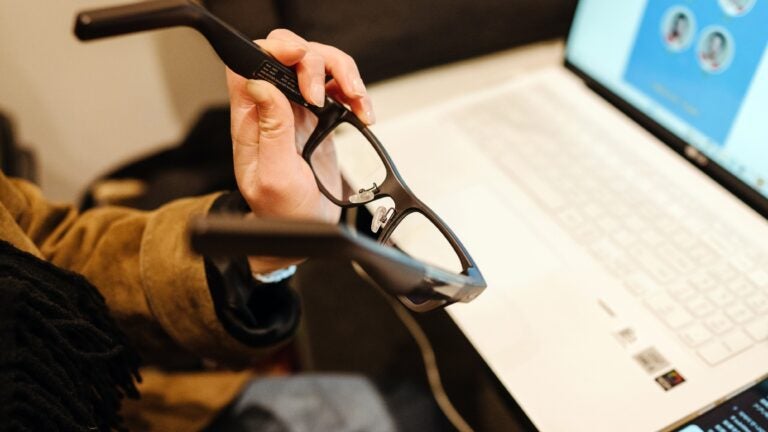
Smart glasses are starting to look less like futuristic tech and more like something you might see on the street, at a concert, or across from you at a train station.
That last scenario recently became the subject of a Reddit post, where one user described an unsettling encounter inside Boston’s South Station. The Reddit user said they were walking toward the exit when an older man wearing Meta glasses appeared to recognize them and called out their full first name — a name they said they typically only use professionally, including on LinkedIn.
The user wondered whether they had been identified through live reverse-image search, but acknowledged the claim was anecdotal. Still, they said having a stranger appear to recognize them in public felt “violating and spooky.”
The comments quickly turned into a broader debate over privacy and wearable cameras. Some users said it was reasonable to worry about being recorded or identified in public without consent. One commenter wrote that people should not have to justify not wanting to be “constantly under surveillance” by the government, corporate algorithms, or strangers.
Others questioned whether Massachusetts recording laws apply to smart glasses, while a few pointed to possible uses for the technology, including accessibility, travel, sports, and job training.
In March, Sen. Ed Markey pressed Meta over reported plans to integrate facial recognition technology into smart glasses, warning that the devices could make it easier to identify, track, or record people without their knowledge.
Google recently offered a new look at its Android XR smart glasses, which are being developed with Gemini built in. The company has described glasses that could help users send messages, take photos, get directions, and see live translations without pulling out a phone.
The concern is not only about what the person wearing the glasses can do. It is also about what everyone else around them may not know is happening.
At the same time, supporters argue that smart glasses could make everyday tasks easier, offer accessibility benefits, and help people stay more present than they would while looking down at a phone.
So we want to hear from readers: Are you excited or worried about smart glasses becoming more mainstream? Do you think smart glasses are the future, or a privacy nightmare? Would you wear them yourself? Would you trust someone near you wearing them in public?
Tell us in the form below or e-mail us at [email protected]. Your response may be featured in a future Boston.com article.
Get everything you need to know to start your day, delivered right to your inbox every morning.








Be civil. Be kind.
Read our full community guidelines.To comment, please create a screen name in your profile
To comment, please verify your email address