Scott O’Neil has run NBA and NHL franchises. Now he’s betting on a golf revolution. The LIV Golf CEO joins Rapid Response to reveal what it really takes to disrupt a legacy sport, the unique pressures of answering to Saudi Arabia’s sovereign wealth fund, and why golf may be the most underleveraged business in all of sports. Plus, inside the startup mindset Scott’s instilling his team, and what every leader can steal from the way LIV is chasing opportunity.
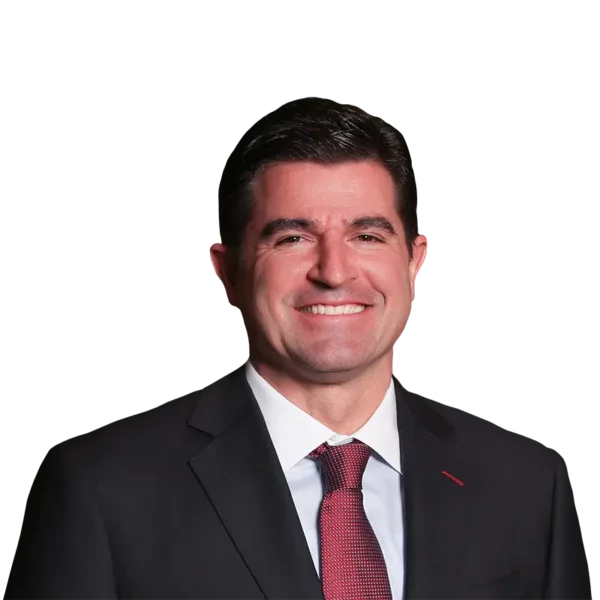
About Scott
- CEO of LIV Golf; drove Fox TV deal, sponsorship growth, and 2026 U.S. Open access
- Led Madison Square Garden Sports, overseeing the Knicks and Rangers (2008–2012)
- CEO of the 76ers and New Jersey Devils under Harris Blitzer Sports & Entertainment
- 30+ years in sports leadership, with early roles at the Nets, Eagles, and NBA
Table of Contents:
- Why Scott O'Neil embraced LIV's biggest challenge
- What makes LIV different from traditional golf
- How team ownership could unlock long-term franchise value
- Why player partnerships and personality matter more than ever
- How LIV is attracting younger fans with a broader experience
- How Scott O'Neil thinks about Trump & Saudi backing
- What is and isn't unique to LIV
- What's next for LIV Golf
- Episode Takeaways
Transcript:
LIV Golf’s gambit to rewrite global sports
SCOTT O’NEIL: Bryson DeChambeau and Jon Rahm, Joaquin Niemann — they’re my partners, my business partners. Thirty percent of our fans have never been to a golf event before. This year we’re on track, knock on wood, revenue up 85%, expenses up 3%. Listen, it’s early. It’s a 5-year-old company. NFL is probably 90 years old. MLB, 100-and-some-odd years old. NBA, 85 years old. We’re doing okay.
BOB SAFIAN: That’s Scott O’Neil, CEO of LIV Golf, the upstart league that’s enticed top players away from the PGA Tour in a quest to change the game. Scott and I first met when he was CEO of the NBA’s Philadelphia 76ers and the NHL’s New Jersey Devils. He’s a disruptor at heart, and since he moved over to LIV a year ago, he’s brought that spirit to the fore with a new LIV season underway, including a big tournament this month in Mexico City. I wanted to ask Scott about what makes LIV different, why he stepped back into the fishbowl of the sports business, and golf’s allure to top leaders from the C-suite to the White House. Scott shares stories from both the course and the VIP area, with insights about untapped opportunities, multigenerational engagement, and the special role that sports plays in culture. So let’s get to it. I’m Bob Safian, and this is Rapid Response.
[THEME MUSIC]
I’m Bob Safian. I’m here with Scott O’Neil, CEO of LIV Golf. Scott, great to see you.
O’NEIL: Bob, it’s great to see you. It’s been a minute.
SAFIAN: Always great to get together. You and I first met when you were CEO of the Philadelphia 76ers in the NBA and the New Jersey Devils of the NHL, a post with a lot of eyes on it, but also a business that was grounded in local community.
O’NEIL: Yes.
SAFIAN: Then you went to Merlin. Merlin Entertainments.
O’NEIL: Merlin Entertainments, yep.
SAFIAN: Attractions, amusement parks, Legoland, and Madame Tussauds, right?
O’NEIL: Twenty-three countries, 30,000 employees, good brands, family entertainment.
SAFIAN: Global portfolio, but less media attention, right?
O’NEIL: Yes, much less.
Copy LinkWhy Scott O’Neil embraced LIV’s biggest challenge
SAFIAN: All right, so now the past year at LIV Golf, you’re back in the spotlight. Global scale as CEO of arguably one of the most intriguing, sometimes controversial, certainly talked-about sports businesses around. Are you having fun? You and I talked about how sports business is like a fishbowl and the eyes are on you. Are you happy to be back in the fishbowl?
O’NEIL: I’ve never had this much fun in my life. Okay? I’m happy. I work with incredible people. I get to travel the world. The success, trajectory, momentum — what we’ve done in the last 14 months is almost incalculable. And it’s a huge mountain to climb. I like a challenge, and this is certainly the biggest challenge I’ve ever had. And by the way, I’m working for a wonderful chairman. His name is Yasir Al-Rumayyan. He’s also the chairman of PIF, the Public Investment Fund, the sovereign wealth fund of the Kingdom of Saudi Arabia. And that’s why I took the job.
SAFIAN: I was going to ask you that, because when LIV Golf launched, it was like a grenade.
O’NEIL: We came out hot.
SAFIAN: It’s a disruptive challenger to the PGA Tour, throwing money around to lure players, money from Saudi Arabia, which sparked these claims about sportswashing and a country trying to buy respectability. That didn’t dissuade you, though? There were things about this that were appealing?
O’NEIL: I’ve learned, after 30 years in this business, that the one thing I understand is the power and influence of what we do and why we do it. I was just in Milan with my wife, watching the gold medal hockey game — by the way, next to Mike Eruzione, if you follow hockey, the captain of the ’80 championship team, and Mark Messier, former New York Rangers captain.
SAFIAN: That’s a good crew you got there.
O’NEIL: And my wife. That was our crew. To see Jack Hughes, who we drafted five years earlier at the Devils, score the winning goal in overtime, and see a country come together — at a time when the world needs a little bit of love — what a wonderful thing.
I was in Australia. We had a record-breaking crowd, 115,000 people. It’s arguably our most successful event. The country effectively shuts down, and we celebrate golf there. And Anthony Kim — I don’t know if you know the story of Anthony Kim, but it’s pretty remarkable. He was heralded as the next Tiger Woods, hurts his Achilles, develops a drug problem, and he’s down for 12 years. He had a cardiac arrest or two. It scared him. Then he had a daughter, and he said, “I’ve got to get it back together.”
He pulls his life back together. Hadn’t picked up a club in 12 years. Comes to LIV two years ago. And in Adelaide, he wins. I will tell you, it was as close to Rocky Balboa as you’ll ever see in your life. People were crying, including me. I grabbed my sunglasses really quickly on 18. His daughter runs and jumps into his arms, and it was one of those beautiful moments where you could actually feel the energy. But that moment when he talks about getting 1% better every day, and how he understands what addicts are going through and how important resilience is — “And I hope to be an example, because I know I’m here for a bigger purpose” — that is sports. So sign me up for that all over the world. Anybody willing to invest in that, in this moment and opportunity, in a world that’s filled with divisiveness, in a world of chaos —
SAFIAN: It’s one of the things that pulls us together at a time when we —
O’NEIL: It’s the one common language we can understand. And what about golf? I would argue — I don’t come from a world of golf. I don’t come from a family of golfers. And yet golf’s the world’s most important sport. Ninety percent of Fortune 500 CEOs play golf. World leaders play golf. I was in South Africa recently, a couple weeks ago, for our event there — 100,000 fans, biggest event in the history of the country for golf. And who’s with me on Sunday? The president of the country, who is an avid golfer. We’re in Korea. We’ve got 60 chairmen of companies in a VIP room. What other environment are you pulling those people together in?
SAFIAN: When you have them together, is there a message that you’re trying to deliver to them?
O’NEIL: Oh, for sure. My message is, “I need your help.”
All the best golf since Tiger Woods has been played in the U.S. Forty-six of the top 47 events in the world historically have been played in the US. And then there’s the Open Championship in the UK. There’s a whole rest of the world out there. I want to take the best players in the world to the world and grow the game. So, man, I will say: I’ve never been challenged more, never worked harder, never traveled more, and never had more fun.
Copy LinkWhat makes LIV different from traditional golf
SAFIAN: So for folks who aren’t golf fans and aren’t as familiar —
O’NEIL: Yes, of course.
SAFIAN: What makes LIV different? There does seem to be an emphasis, from what I’ve seen recently, on teams versus individual players.
O’NEIL: Yes, of course.
SAFIAN: But for folks who may be familiar with PGA golf, what’s different?
O’NEIL: There are several things that are different. We have teams, so you’re assigned to a team. Most of the teams are regionally based. We have Stinger GC, a South African team. Ripper GC is an Australian team. Majesticks are a UK team. Iron Heads, a Korean team.
SAFIAN: So it’s like a Ryder Cup sort of feel to it?
O’NEIL: Yes, it is. We go to these countries, and there’s a lot of nationalism. In South Africa, I’ll tell you, on the first tee our players were crying. They’re singing the national anthem. People are screaming their names, and they were so overcome. Our Aussie team, when they go to Australia, it’s like U2 walking down the street. It is unbelievable, the love and passion. So teams are definitely a unique aspect. Now there’s a visual competition.
SAFIAN: There’s a business model to that too, right?
O’NEIL: There sure is. Because the captains — the Bryson DeChambeaus, the Phil Mickelsons, the Bubba Watsons, the Jon Rahms, the Cam Smiths, names you may know — are the captains of those teams, the stars. And they are our business partners. They have equity in those teams. And we’re actually going to market. We had so much inbound interest, we’re actually selling a couple of stakes in a couple of teams this year. I was with the New Jersey Nets as a marketing assistant in 1992, and I remember the Utah Jazz sold for $13 million. I went to work for Jeff Lurie in Philadelphia just after he bought the team for $188 million, and people thought he had lost his mind.
SAFIAN: To spend that much money.
O’NEIL: I think he just raised over $6 billion. And I think the Jazz just sold for about $2 billion. So you start to think, franchise values have worth. There’s a scarcity value. And we believe of our 13 teams — I think we’ll eventually go to 15 teams — there’ll be a really strong asset value there.
SAFIAN: So there are the events that are part of the tour.
O’NEIL: That’s right.
SAFIAN: And then there are the teams.
O’NEIL: That’s right.
SAFIAN: And the league — I don’t even know what you call the league.
O’NEIL: It’s a league. Yeah, absolutely.
SAFIAN: The league owns both, and you might sell pieces of the teams —
O’NEIL: Eventually, teams will be owned just like the NBA or just like the NFL.
SAFIAN: But the league will also stay separate as its own business.
O’NEIL: Separate, absolutely.
Copy LinkHow team ownership could unlock long-term franchise value
SAFIAN: Did you know when you came in that that’s where you were going to go?
O’NEIL: Yes, absolutely. The value of teams is indisputable in sports. And most of our teams are profitable, which helps the investment thesis. But they’re profitable small businesses. The question is, do you want to create a big business? If you’re Australian and you buy our Aussie team, what could you do? Could you create a media company around them? Could you create a clothing brand around them? Could you buy a golf course? Could you create an academy? Of course. So I think there’s a real interest and understanding of how to drive value there. The teams are different. Our format — we have what they call a shotgun start. I know you’re not much of a golfer yet. Everybody starts at the same time.
SAFIAN: Right. You’re not waiting.
O’NEIL: No. The reason that’s an advantage, for those of us who’ve gone to golf events for so many years, is that you’re not sure when your guys are playing and it lasts a good 10 hours.
SAFIAN: Right.
O’NEIL: Ours, we’ve got a smaller field, 54 players, and they all go off at the same time. In 4 hours and 35 minutes, you’re done. So our hospitality is akin to Formula One. We consider ourselves the Formula One of golf — elite hospitality. Now, when I’m entertaining you, I’m not inviting you from 7 a.m. till 7 p.m. I’m saying, “From noon to 4:30, I’d love to have you come.” So it’s a little more fixed, a little more regular. Also, good, shorter TV windows.
SAFIAN: Yeah, it’s still a long TV window compared to basketball and hockey.
O’NEIL: It sure is. Absolutely.
SAFIAN: But different from the open-ended ones where you’re spinning off to other networks just to try to get the coverage.
O’NEIL: Exactly. Those are the primary differences.
SAFIAN: And I guess the teams mean that you could be interested in players who are not winning the tournament because they’re contributing to their team?
O’NEIL: Absolutely. And this team concept — people are like, “It’s crazy.” I’m like, is it crazy at the Ryder Cup? Is it crazy at the Olympics? Is it crazy in college? We are not splitting atoms here.
SAFIAN: I was curious because I had read that you talked about the relationship between LIV and the PGA Tour as being complete, not compete.
O’NEIL: Complete, not compete.
SAFIAN: Oh, complete.
O’NEIL: They’ve got the U.S. on lockdown, and they do a wonderful job. For us, I’ll take the 7.2 billion people. I’m going to take that bet. I’m going to take the 199 countries that we broadcast in outside the U.S. I’ll take that bet over time. I like the growth a lot. I like where the sponsorship market’s going. I like where the broadcast media market’s going.
SAFIAN: The rivalry — I was thinking, is it Apple and Samsung or OpenAI and Anthropic? How do you think about it?
O’NEIL: In my most cynical view, I’d say it’s like the iPhone coming in. We’re different for sure, but the same. You still talk on it, take photos, take video, maybe access the worldwide web.
SAFIAN: Although you’re more Samsung because you’re pushing global first?
O’NEIL: Absolutely. The global piece is everything. Tom McKibbin is one of the best players to come out of Northern Ireland ever. I said, “Hey, Tom, why us?” He said, “Well, the music I thought was really cool. I went to your event in the UK and absolutely fell in love with it. And my parents love the notion of me learning from Jon Rahm, one of the greatest players on the planet. I learn how to dress. I learn how to eat. I learn how to work out. I learn how to handle myself on the range. I learn how to handle myself in the media. I get to play with him.”
How about that for an education? One of the loneliest sports in the world, and now you have mentorship, now you have a role model.
SAFIAN: You said 54 players. So it’s a finite group.
O’NEIL: It’s a small field, yeah.
Copy LinkWhy player partnerships and personality matter more than ever
SAFIAN: You’ve had some players leave, you have other players who’ve renewed. How much do you personally get involved in that talent part of it? The contracts can be hundreds of millions of dollars. It’s a lot of cost.
O’NEIL: Yeah. The contracts are a little misunderstood, for whatever it’s worth. It’s like we’re acquiring your rights. So if you’re Jon Rahm and you’re sponsored by Callaway or Mercedes or Rolex, they’re paying for certain rights, which we’re acquiring. So it’s a good headline price and it’s good for the agent to talk about.
SAFIAN: I see. So the money they would have gotten for that is now going to you, and you’re selling it, and they don’t have to worry about it. They’re getting a flat fee.
O’NEIL: That’s right. Now, in Jon’s case, he has equity in the team, so he has a lot of incentive for us to keep driving revenue, which builds value in his team. So it’s a bit of a cycle. But some of the deals for guys — I don’t know. I think I read Taylor Swift made over a billion dollars on her tour. I read a couple of PGA Tour players did OK last year as well. So I never — I don’t know. I’ve been in this business so long. I’ve seen contracts high and low. What we’re looking for is stories and personalities. Bryson DeChambeau — I don’t know if these names mean anything to you —
SAFIAN: Yeah, yeah.
O’NEIL: He’s a YouTube superstar. He’s got 10 million followers. I can tell you, we can go to Singapore and kids will lose their minds. And we can go to Korea or Bedminster and it’s equally crazy fan energy.
SAFIAN: Do athletes in golf understand the business of it more than some of the athletes in other sports?
O’NEIL: Absolutely, because they’re businesses in and of themselves.
SAFIAN: Because they’ve had to run themselves as businesses?
O’NEIL: They are businesses. They are the brand. They are the business. Maybe they had a head start, because now you’re seeing everybody else catch up, but they had the head start.
I would say what we ask of our players — in South Africa, this woman ran up to me and said, “Scott.” And I was like, “Uh-oh, what happened?” And she said, “My 10-year-old daughter — Victor Perez, one of our players, came over during play, took his glove off, took a Sharpie out of his bag, signed it, and handed it to this 10-year-old girl.”
Bryson and Jon Rahm will spend 60 minutes outside of the press area signing stuff. Sixty minutes. We don’t rope the stands away from fans. We rope them through fans. Our players understand their role. They know they have to sign more. They know they have to take selfies. They know they have to engage. This notion of managing a brand, and how you think about media relationships, and how you think about relationships with players — think of what Adam Silver has done at the NBA in transforming the relationship between league and player. Well, that’s what we have. I travel with these guys. I’m with them for seven months.
SAFIAN: Instead of it being adversarial.
O’NEIL: I know their caddies, their families, their children, their wives. I know what they like. And they know the same about me.
SAFIAN: Scott is all in on LIV’s mission. He’s attacking the opportunity with the zeal reminiscent of a Silicon Valley startup. So what makes LIV the same as and different from other sports businesses? And does he feel any special pressure working for Saudi Arabia’s sovereign wealth fund? We’ll talk about that more after the break. Stay with us.
[AD BREAK]
Before the break, LIV Golf’s Scott O’Neil talked about what makes the league different from the PGA Tour. Now we talk about how golf compares with other sports businesses, his most important metrics for success, and whether a women’s LIV league is coming. Let’s jump back in.
There was a phrase you became associated with in Philadelphia: Trust the Process. Is there a Trust the Process part of what you’re doing at LIV? I know you mentioned some of the younger golfers you’re bringing in. Is there a version of that?
O’NEIL: I think there is. Also, I don’t know if you remember Madison Square Garden — we had Linsanity. I think LIV Golf is Linsanity meets Trust the Process.
SAFIAN: But Linsanity was short-lived, right?
O’NEIL: Yeah, but the —
SAFIAN: But I guess it had echoes, right? It had ripples.
O’NEIL: Yeah, echoes around the world. The way we used this was before the advent of social media as it is today, and we were putting out eight or nine videos a day, and people were coming from all over the world. We can drive personality-driven stories through social. That is real. And then Trust the Process — the essence of our Joel Embiid era was: Look, we don’t know the future, but given the information we have today, let’s make as many right decisions as we can and just keep walking forward, because we know that light at the end of the tunnel is not an oncoming train.
Copy LinkHow LIV is attracting younger fans with a broader experience
SAFIAN: Bryson, you mentioned, I saw him talking about attracting new fans to golf. And he said more people watch the NFL than play organized football, but for golf it’s the opposite. More people play than go to watch.
O’NEIL: I will say that 30% of our fans have never been to a golf event before. Forty percent have never picked up a club.
SAFIAN: What makes a LIV event feel different?
O’NEIL: It’s fun.
SAFIAN: It’s not stuffy, which is the way —
O’NEIL: We have walk-up songs for our players. So they walk up, it’s like, “Onto the tee now, Jon Rahm.” And Jon will have picked his walk-up song, just like you find in baseball.
SAFIAN: Can I yell at him when he’s putting, or is that still —
O’NEIL: No. People are still respectful and quiet when these guys are hitting.
SAFIAN: It’s not like shooting foul shots at all.
O’NEIL: No. We’ll have parachuters come down. We’ll have fireworks. We’ll have concerts. I don’t know if you’re in the DJ scene, but we had Dom Dolla and Fisher. We have Thomas Rhett coming to Indy this year. Big-time artists. So after play, there’s a concert. And people are like, “Why would you have a concert?” Well, what if we can attract new faces and people of different ages and genders to the sport?
SAFIAN: So it makes the experience different, but it’s also a marketing lure to pull people in?
O’NEIL: Absolutely. Sixty percent of our fans are under the age of 40. You go anywhere else, it’s like, “Shh.” Here you have parents pushing strollers. Twenty-three percent of our audience are families. You see packs of kids roaming around.
SAFIAN: How fast is all that changing? A year ago, who was coming to the events, who’s coming now, and what do you think that’s going to look like?
O’NEIL: I’ll give you a couple of stats and facts. In South Australia, where we have the event in Adelaide, growth in girls ages 12 to 18 playing golf is up 212%. The golf clubs — there are eight of them in the market — all had openings, now have waiting lists. Forty percent of the new members are 45 and under. Maybe that’s just a coincidence. I don’t think so. We were just in South Africa. Forty-five percent of the sports-watching audience in South Africa watched our event, double who watched the Masters there. We are creating a cultural experience. And we do that because we have a local tie with local athletes, and because we leverage social media in a different way. We’ve been batted around about our ratings, and I just said, “We had 5 million people watch our Australia event. Sign me up.”
SAFIAN: And the Trust the Process part is that as long as that keeps moving in the right direction, you keep moving.
O’NEIL: Yes. Revenue up 108% last year, expenses up 8%. This year we’re on track, knock on wood, revenue up 85%, expenses up 3%. So how many years are we going to stack these big gains on? But listen, it’s early. It’s a 5-year-old company. We’re building a global business, changing the tire on a moving car, because we’re changing a lot of things on the fly. But if that doesn’t pop you out of bed in the morning, it’s the wrong business.
Copy LinkHow Scott O’Neil thinks about Trump & Saudi backing
SAFIAN: So in your job, you engage with two cohorts that I have to ask you about because other people are intrigued by them. First, I have to ask you about President Trump.
O’NEIL: Okay.
SAFIAN: He’s talked about trying to partner up LIV and the PGA Tour. He’s hosted LIV events. What’s your relationship with Trump like? Does that association help LIV?
O’NEIL: I think anytime the leader of the free world plays the sport, and I run one of the major businesses in it, I think that’s a good thing. We played a couple of his courses this year. He’s been pretty vocal about trying to help. And it’s a pretty simple formula in terms of what needs to happen, and hopefully something happens there.
SAFIAN: But having an agreement with the PGA Tour isn’t necessarily a priority or necessary for your business model to keep advancing?
O’NEIL: Maybe. History will write the story, but generally they are U.S.-focused and we are globally focused. They’re two different markets. Are there things we could, should, would do together? Of course. Should we align our global calendar? Of course. Should we maybe be on each other’s cap tables? Probably. Can we create content together? Simple and easy. It doesn’t take a rocket scientist to do this. And over time, we’ll find our way to some of that.
SAFIAN: So the other entity, which you mentioned earlier, is Saudi Arabia. LIV is owned and primarily funded by the Public Investment Fund there. Having a country as a backer — this is different. How is that different for you from reporting to public shareholders or to an investment company?
O’NEIL: I’ve worked in public companies before. I’ve worked in private equity before. I’ve worked for a league that’s technically owned by, I guess, the owners. The weight of the responsibility might be a little heavier, but it’s not too much different. PIF’s a private equity firm.
SAFIAN: They’re investing in lots of sports.
O’NEIL: Yes.
SAFIAN: F1.
O’NEIL: Newcastle.
SAFIAN: Soccer and all kinds of things. Does LIV operate as part of a portfolio? Are these things linked strategically?
O’NEIL: The leaders of those businesses and I stay in contact, touch base, and try to help each other along the way. So if that’s connecting partners, if that’s exchanging some talent —
SAFIAN: But we’re not going to see an F1 and a LIV tournament happening in the same place over the same weekend?
O’NEIL: Wouldn’t that be wonderful? Yeah, that’d be wonderful. Hopefully someday.
SAFIAN: When folks who are less familiar with Saudi Arabia look at Saudi ownership of teams, they’re like, “Ah, they don’t really care about the money.” How much of your success is based on the metrics you were talking about — the finances — versus the larger brand footprint over time?
O’NEIL: I guess there’s ROI and ROI. The return on investment is real, and we are run — they’re set up as a private equity company. So we are managed just like Blackstone and Apollo, and I’ve been in those systems. It is no different. It is hardcore. We have real KPIs. We’re measured weekly. We are managed very tightly. So don’t make any mistake about it — this is private equity. And there’s return on image, and I think that’s part of the magic of sports.
If you’re a country — I don’t want to speak specifically about Saudi, because I can’t speak for them or on their behalf. I’ll just speak about a country. There’s a reason countries bring in the World Cup. There’s a reason countries bring in the Olympics. We were in South Africa and brought in $80 million of economic impact in a weekend. So we filled hotel rooms, we filled airplanes. We also assembled the who’s who of South Africa in suites, and we do that everywhere we go. I mentioned we were in Korea — you’ve got 60 chairmen there. Now, are those 60 chairmen good candidates to build plants in different places? Maybe. Or trade agreements? Maybe. That’s not for me to say. Our job is to make sure we represent their investment in a way that makes everybody proud to be part of it and associated with LIV Golf.
Copy LinkWhat is and isn’t unique to LIV
SAFIAN: Comparing the golf business with where you’ve been before — basketball, hockey — now that you’re in it, what’s similar and what surprised you by being different?
O’NEIL: The business is exactly the same. There is no difference. You can move from NFL to NBA to NHL to Premier League — media contract, an arena deal or a course deal, sponsorship, premium, tickets, merchandise, the athletes being at the forefront of what we do and leading our brand. You have to manage communications. You’re in the fishbowl you mentioned.
SAFIAN: Yeah.
O’NEIL: Exactly the same. The importance of impact and what we’re doing to put more clubs in kids’ hands. The fact that we run the most environmentally friendly golf events in the world. The fact that we do quite a bit on the refugee front and have a partnership with the United Nations — all stuff that’s really important and very similar to everywhere I’ve been. Not the actual execution, but this notion that impact matters, that we don’t just have an opportunity but a responsibility to make the world a bit better.
SAFIAN: You get that community aspect.
O’NEIL: All that stuff is core. What’s different here is it’s global. Try to name three global sports leagues: F1, LIV — there aren’t too many, or any, at scale. So the global nature is fascinating. The interest by the powers of the world in this business — the leaders of the media companies of the world, the leaders of the businesses of the world, and the leaders of the governments of the world — all very interested. That’s unique and different. And then this notion of players as partners — I like that notion. In some ways, in the NBA and NHL they have a collective bargaining agreement, and they get 51% or 52% or 49%, depending on the league. But these guys — Bryson DeChambeau, Jon Rahm, Cam Smith, Joaquin Niemann — they’re my partners, my business partners.
And then the last difference would be this is year 5. NHL is, I think, over 100 years old. NFL is probably 90 years old. MLB, 100-and-some-odd years old. NBA, 85 years old. We’re 5 years old. We’re doing OK.
Copy LinkWhat’s next for LIV Golf
SAFIAN: So what’s next for LIV? Are we going to see a women’s tour coming?
O’NEIL: Maybe.
SAFIAN: Am I going to see sponsors like Polymarket and sportsbooks, which we haven’t seen yet?
O’NEIL: We’re fortunately on a sponsor roll with Rolex and HSBC and Salesforce and Qualcomm and Ping and Callaway. Big global brands, very nice, and that will continue.
In terms of women’s golf, PIF, the Public Investment Fund, and Aramco are the largest investors in women’s golf in the world, period, end of sentence. So how we integrate with LIV, or whether that’s separate and run differently, we’re not really sure. We have our hands full here and we have plenty to do.
SAFIAN: Plenty of runway still with what you’re doing.
O’NEIL: If it were my preference, I’d ask for a few more years to make sure we’re on the right track and have a strong enough foundation. The biggest change is we’re going to have owners, outside owners. And think of how challenging that might be.
SAFIAN: It’s complicated.
O’NEIL: It creates friction.
SAFIAN: Yes.
O’NEIL: And that’s OK. That’s good friction. It’s not bad friction. It’s good friction. It’s like, “OK, well, how am I building my roster? Is there a salary cap? How are we sharing revenue?” All this stuff I don’t have to deal with now.
SAFIAN: Right.
O’NEIL: And we will have to. But that’s a champagne problem. That’s a champagne problem I look forward to having. That’s probably the biggest change. And then this transformation from golf to golf and music, to golf and music and food, to golf and music and food and art, to golf and music and food and art and fashion — you’re starting to see a cultural experience come through, especially at our more advanced and more successful events. It’s been intellectually fun to think about.
SAFIAN: It’s a lot of balls in the air for you, though, and a lot of choices because you can’t do everything, right?
O’NEIL: Yeah. I think Steve Jobs said it best. He said, “I want to know what you’re saying no to. And it has to be something that you really care about.” That’s when you know you understand what your priorities are and you’re sticking to them.
SAFIAN: Is there something you said no to recently?
O’NEIL: I’m a yes person.
SAFIAN: I know you are.
O’NEIL: So it’s agonizing for me, especially when there’s so much opportunity. I’ll give you one that we’re looking at now: creating a gaming company, online and console. I know it’ll work. With the stars we have — Anthony Kim, Bryson DeChambeau, Cam Smith, Dustin Johnson, Jon Rahm — it’s a lot. That’s somebody’s attention and time. Should we do it? How about betting? We have a really small handle. They’re sizable things that I would love to do now.
SAFIAN: If you’re going to do them, you really have to have the capacity to go in and do them.
O’NEIL: Yeah. What’s the trade-off?
SAFIAN: You can’t do them all.
O’NEIL: What’s the trade-off? Because that’s the key. What am I not going to do then? That’s life, that’s priorities. By the way, that’s in marriage, that’s in raising children, and that’s in business. You’ve got to stick to what’s most important.
SAFIAN: So I’m thinking of your book, and I want to ask you: Where are your feet right now?
O’NEIL: Right here. Be where your feet are. Look, I don’t often have a problem with that. I’ve got other Achilles’ heels, but I’m often present. I take my ringer off. I don’t have a buzzer on my phone. So when I’m connected to you, I’m 100% connected.
SAFIAN: Well, I’m glad you came in to be connected with us today. Thanks, man. Thanks for doing this.
O’NEIL: I miss you, my friend. So good to see you.
SAFIAN: I’ll confess that when LIV Golf first came out, I thought, “Really? We need another golf league?” But after talking with Scott, I’m coming around. LIV is a disruptor in a sport that can use some freshening up. Whether he and his team can capitalize on the opportunities they see without overreaching or burning themselves out, it’s a fascinating situation to watch. Most of all, I cheer the way Scott talks about sports as a unifying force. The spirit of sport is cheering each other on, appreciating even those you compete against, and being open to new people and new approaches. And there’s no question our world needs more of that in business and everywhere else. I’m Bob Safian. Thanks for listening.
Episode Takeaways
- Scott O’Neil says LIV Golf thrives on challenge, global ambition, and sports’ power to bring people together, framing golf as a uniquely potent platform for leaders, brands, and fans.
- He argues LIV is different because it leans into teams, player equity, and a tighter event format, betting that franchise ownership can unlock the kind of long-term value other leagues enjoy.
- Scott says LIV is built around personality and access, with stars like Jon Rahm and Bryson DeChambeau acting as business partners who are expected to engage fans far more directly.
- To attract new and younger audiences, LIV packages golf as a broader entertainment experience, with walk-up music, concerts, and family-friendly energy that feels a lot less buttoned-up.
- Even with Saudi backing and ongoing PGA Tour comparisons, Scott insists LIV is being run with hard-nosed business discipline, while staying focused on growth, outside team owners, and careful expansion.
